
Verdeindex Edition 18
By Oscar Petterson Fuentes
Introduction:
In this edition, we’re exploring the intersection of climate action, from using bioacoustic cameras to listen to fish to streamlining corporate emissions reporting with AI. We’ll unpack the politics driving new oil and gas expansion, and why the economics don’t add up, before turning to a hopeful note: a billboard campaign in Edinburgh that makes climate action feel personal. And we’ll close with the global stage, where Xi and Trump offered starkly different visions for our climate future. I hope you find it insightful and inspiring.
Oscar Petterson Fuentes
Non-profit: FishEye Collaborative
This edition’s non-profit feature, FishEye Collaborative, is advancing marine conservation through innovative bioacoustic tools. Bioacoustic conservation involves monitoring wildlife through audio recordings, which are then processed using advanced machine learning algorithms to create actionable data. By listening to ecosystems rather than only observing them, researchers can gather high-quality insights into the presence, abundance and behaviours of species, often surpassing traditional methods such as netting, visual surveys and sonar.
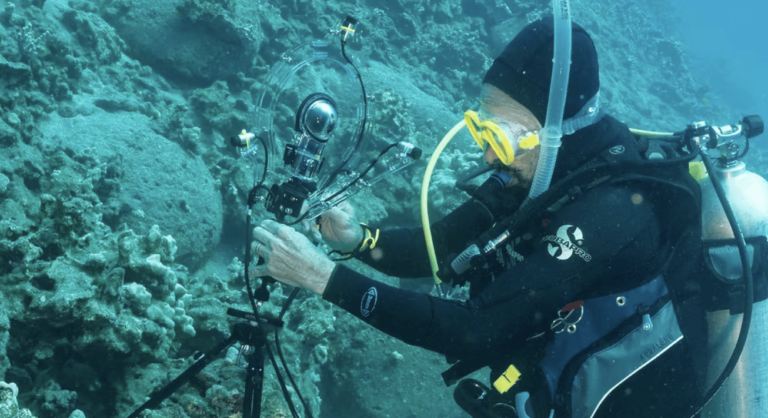
Since its inception in 2023, the FishEye Collaborative, under the leadership of founder and executive director Marc Dantzker, has made significant strides. They have partnered with universities worldwide, including Cornell University, Aalto University (Helsinki) and FORTH (Foundation for Research and Technology- Hellas). These partnerships have enabled FishEye to develop a unique, technology-driven system of conservation.
Their 360° underwater acoustic cameras simultaneously capture sound and video, which are processed by powerful machine learning algorithms to match sounds to individual fish, build vocal repertoires for each species, and identify associated behaviours. Another cornerstone technology is Passive Acoustic Monitoring (PAM): hydrophones that continuously record and analyse underwater soundscapes, enabling detection, localisation, and species identification without the need for visual surveys.
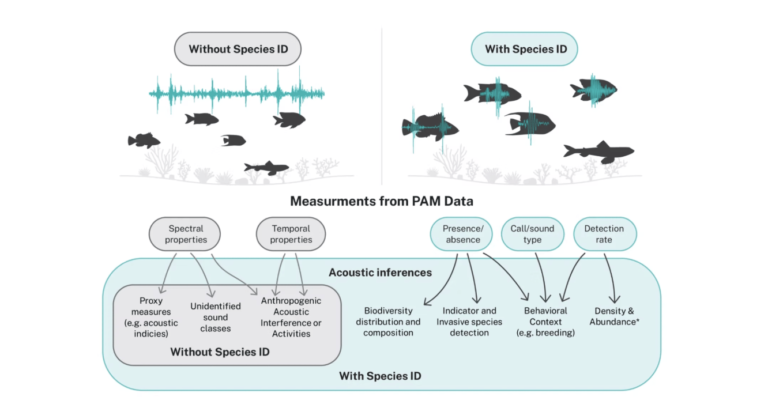
These insights, backed by robust data and powered by state-of-the-art technology, are pivotal in guiding conservation strategies that maximise impact and protect biodiversity hotspots and fisheries worldwide. Beyond conservation, the applications are wide-ranging: noisy mass spawning events can be mapped and incorporated into policy to safeguard breeding areas, while the same technology can help monitor illegal fishing and strengthen enforcement of marine protected areas and global treaties. With each breakthrough, FishEye Collaborative proves that technology can be a powerful ally in restoring balance to our oceans.
Website: https://www.fisheyecollaborative.org/
Tech start-up: Greenly
But it’s not just conservation where innovation is thriving; companies like Greenly are reshaping how firms account for their climate impact. Greenly is a software-as-a-service (SaaS) platform that builds carbon accounting and emission tracking tools to help organisations automate carbon measurement and reporting across Scope 1, 2, and 3. Founded by Alexis Normand, Greenly helps simplify what is otherwise a lengthy process requiring manual data entry, complex software, and often external consultants. This not only increases costs for firms but also creates challenges as new mandates require emission disclosures.
Greenly takes full control of this process: businesses connect existing systems such as accounting software, ERP tools, cloud services and utility bills to the Greenly platform. The software then gathers all the relevant data points, saving days of manual entry work, and applies emission factors, standardised values that convert business activity into CO₂e. They draw these values from recognised national and global databases, which is crucial for accuracy. For example, 1 kWh of electricity in France does not have the same CO₂ footprint as 1 kWh in Poland. They also provide product-level insights through Life Cycle Assessment (LCA) tools, which generate the information needed for Environmental Product Declarations (EPDs).
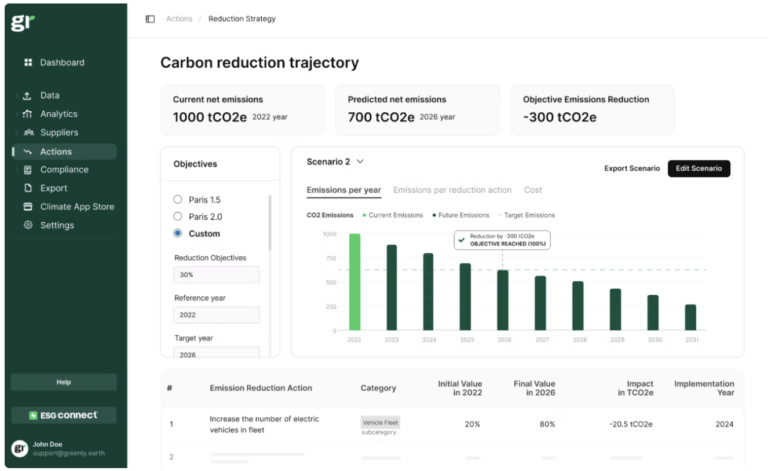
EPDs are one of many regulations pushing firms to disclose their environmental footprint, and Greenly produces regulation-ready data that not only makes disclosures easier and less costly, fostering greater support for regulation, but also enables accurate, standardised climate reporting across industries, which is essential for comparability, accountability, and informed policy.
Greenly has also deeply integrated AI into their platform, which provides AI-powered strategies that can unlock effective decarbonisation across a firm’s entire operation. Their AI tool also acts as a “co-pilot” for firms, enabling proactive engagement with the platform. In a world with rising regulatory demands, having up-to-date and accurate emission data is essential, and Greenly’s platform streamlines this process for firms. This impact is significant, with the company already helping over 3,500 customers, thereby broadening climate accountability across the private and public sectors.
Website: https://greenly.earth/en-gb
Challenge: The Politics of Oil, the Economics of Illusion
“If you don’t move away from this green scam, your country is going to fail”, was declared by Donald Trump at the recent UN General Assembly. Trump’s vendetta against the green economy has fuelled a climate policy culture war, casting net zero as an “elite scam” and a threat to freedom. Trump fanatics, including Nigel Farage in the UK, have picked up the ‘Net Zero scam’ as a battle cry to attack globalists, and somehow this rhetoric has trickled down into a debate about economics.
Nigel Farage’s Reform UK wants to continue oil and gas exploration in the rapidly depleting North Sea basin, but this is a short-term economic patch with significant long-term risks. There is, of course, the question of jobs. North Sea jobs are real and politically powerful, but production has been declining for decades and will continue to do so regardless. The choice is whether to acknowledge that decline and invest in retraining, or to artificially prolong the industry and risk repeating the painful collapse of UK mining communities in the 1990s.

And what about consumer bills? Supporters claim that more domestic drilling will cut household energy costs. The reality is different: oil and gas are priced globally, not nationally. Even with billions poured into new projects, the UK would only produce marginal amounts, too small to move global markets, and with little to no benefit for UK consumers
If we look into the long term, oil and gas demand has been forecasted by the IEA to peak before 2030. This means projects are becoming increasingly hard to finance because investors see them as high-cost, high-risk, and vulnerable to becoming stranded assets. Even if fields are developed, they may never deliver a full return. By contrast, the economics of renewables are future-proof: projects lock in long-term contracts, generate stable cash flows, and are attracting unprecedented investment. In 2024 alone, clean energy drew $2.1 trillion, double the amount going into fossil fuels.
Oil and gas still make money, but only in the short term. This is the danger of this new right-wing rhetoric adopted by Trump and his followers. If governments rip up renewable energy planning permits and stall infrastructure developments in the name of more drilling, we’ll be worse off in the long run. Real economic security will come not from more drilling, but from leading the clean industries that will power the future.
Hope: Hope on the High Street
Walking the streets of Edinburgh recently, I have noticed something that genuinely inspired some hope. Justdiggit, a non-profit that focuses on regreening degraded land in Africa by restoring ecosystems through community-led projects, including water bunds, tree restoration, and sustainable land management, has been advertising all over the city.
I spotted the charity on a bus stop billboard:

Then again, in my local cinema:
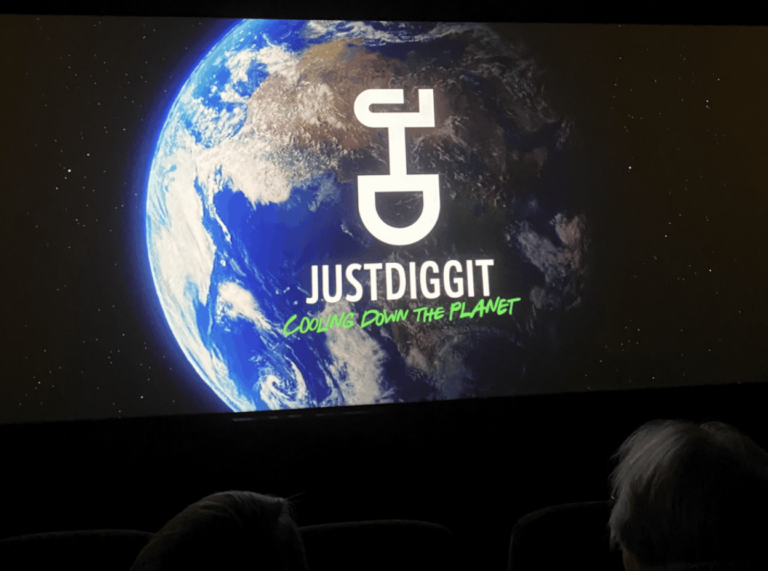
It was a pleasant surprise to see such an impactful non-profit promoted this way, and it made me think. In a world where the solutions to climate change seem so distant and abstract to the public, this kind of advertising brings power back to the people. ‘For just £7 you can make a difference’ – a powerful reminder that climate change is not in the hands of the elites, but it’s accessible to everyone. This reflects a wider trend of NGOs professionalising their marketing, treating conservation more like a consumer product, rather than a niche cause. This shift could be crucial for unlocking the funding they need.
These advertisements are ingenious because, beyond the extra funding Justdiggit will receive, they remind people that they can make a difference. Instead of climate doom, the narrative is regeneration; instead of waiting for governments, it’s about individual participation. Amid culture wars over net zero, campaigns like Justdiggit’s remind us of something simple: climate action is not out of reach, it’s in our hands.
Image of the week:
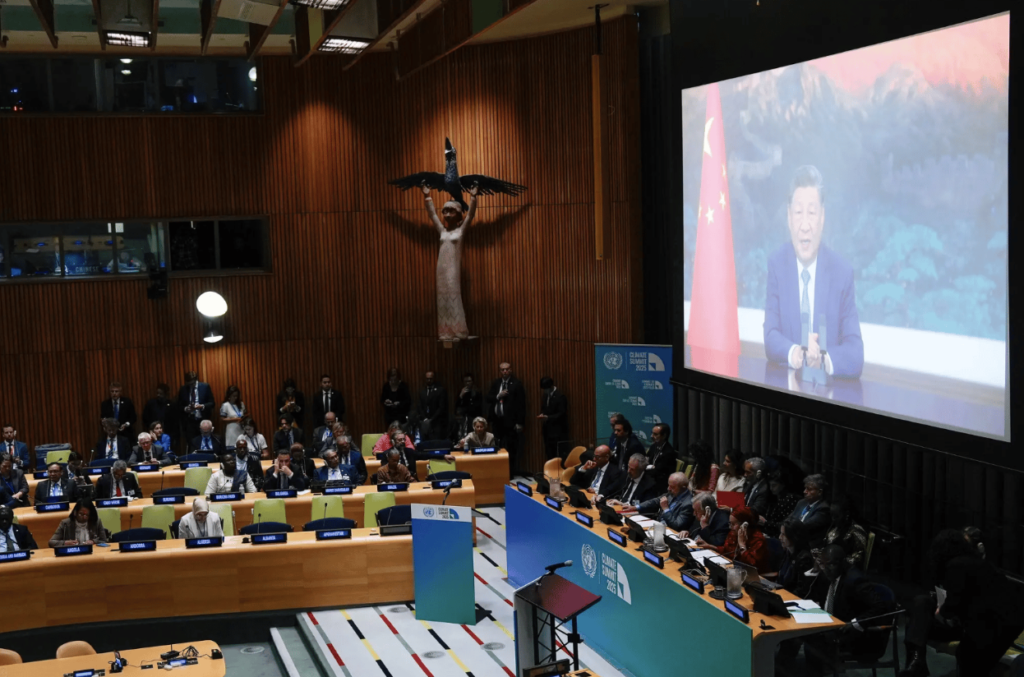
This edition’s Image of the Week comes from the UN Climate Summit on 24th September 2025, where Xi Jinping declared that “green and low carbon are the trend of our time.” His comments stood in stark contrast to Donald Trump’s speech just a day earlier, when the former president dismissed climate change as the greatest “con job” made by “stupid people.”
China’s visible support for the green economy is part of a broader strategy to stand as an antidote to America First. With the US retreating from climate leadership, Beijing sees an opportunity. While China announced lacklustre climate goals earlier in the month, it has a record of overdelivering, backed by immense growth in renewable energy deployment. At the same time, their continued reliance on coal questions how far their climate leadership will go.
What is clear is that China wants to be seen as a stable, morally righteous actor in the face of MAGA politics. Whether this translates into genuine global climate leadership remains to be seen, but the economic and geopolitical opportunity is undeniable.
Article: https://www.nytimes.com/2025/09/27/world/asia/china-un-trump-leader.html
Articles you may have missed:
1. Climate change scepticism is rising. Will Starmer hold firm or buckle?
2. Climate change is making trees grow larger in the Amazon rainforest
3. A Turning Point for the Ocean: What the High Seas Treaty Means
4.COP30 urged to link climate justice with reparations for historical crimes
5.Fighting climate change takes more than data — it needs wonder, love and hope
Thank you for reading!
To sign up to the newsletter, go to www.verdeindex.com
Or follow Verdeindex on LinkedIn at: https://www.linkedin.com/company/verdeindex/