
Introduction:
This edition explores the intersection of climate action, gender equity, and institutional influence. We spotlight Mossy Earth and Mati Carbon, two innovative initiatives reshaping carbon removal and ecological restoration. We then examine how climate change disproportionately affects women, focusing on India’s tea industry as a powerful example of global inequality. Finally, we reflect on Pope Francis’s environmental legacy and consider what the election of Pope Leo could mean for the future of faith-led climate leadership. Together, these stories highlight the diverse actors driving sustainability—and the systemic change still needed. I hope you learn something new and enjoy reading!
Oscar Petterson Fuentes
Non-profit: Mossy Earth
Mossy Earth is a rewilding firm based in Britain that seeks to create wild, biodiverse spaces to allow nature to recover on its own terms. Although they are a British company, founded by Duarte de Zoeten and Matt Davies, their operations span across the globe. From coral rival projects in Indonesia to restoring the great Caledonian forests in Scotland, there are no rewilding challenges that Mossy Earth fails to tackle.
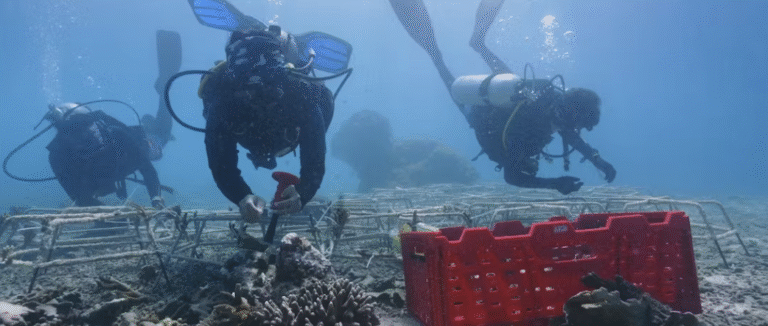
Unlike many NGOs, Mossy Earth is a private limited company and is entirely independent of external investors or philanthropic funding. This independence allows the team to allocate resources to where they feel they can make the most impactful change. Instead, Mossy Earth operates on a membership model. Members are given a unique insight into Mossy Earth’s conservation projects, including detailed management plans, 360° photos, GPS coordinates, field reports, and videos from project sites. In addition to this, members have voting rights and can attend Q&A sessions, which makes the membership interactive and personal. In addition to the regular project updates, cost breakdowns and even a personalised dashboard for members to track their individual impact and foster a deep level of trust within their community. This level of openness sets Mossy Earth apart from many other rewilding organisations.
Project selection is rigorous, and this is initially achieved through a rigorous multi-criteria analysis, analysing variables such as the scale of impact and community value. Once a project has been selected, Mossy Earth’s team works closely with biologists while incorporating the latest scientific findings to develop a robust and flexible project plan with monitoring tools to ensure that interventions are sustainable in the long term.
Beyond direct conservation, Mossy Earth has expanded their impact through education. Their 5 week rewilding course targets anyone who wishes to learn about the principles of rewilding and use this knowledge to implement their own rewilding initiatives in their local area, further spreading the benefits of their work.

Mossy Earth exemplifies a new model for conservation: transparent, science-driven, and community-powered. Their commitment to maximising ecological impact and engaging members at every stage makes them a standout in the rewilding movement.
Website: https://www.mossy.earth/
Tech start-up: Mati Carbon
This edition highlights one of the fastest growing and most innovative carbon removal tech companies: Mati Carbon. With a gigaton-scale carbon removal potential, Mati Carbon not only tackles climate change, but they also empower over 100 million smallholder farmers in developing economies. The company’s core solution is Enhanced Rock Weathering (ERW), a proven and scalable method for removing carbon dioxide from the atmosphere.
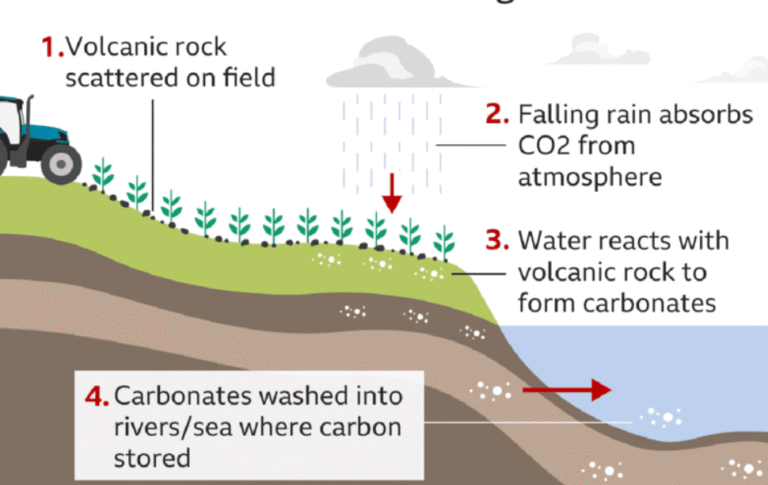
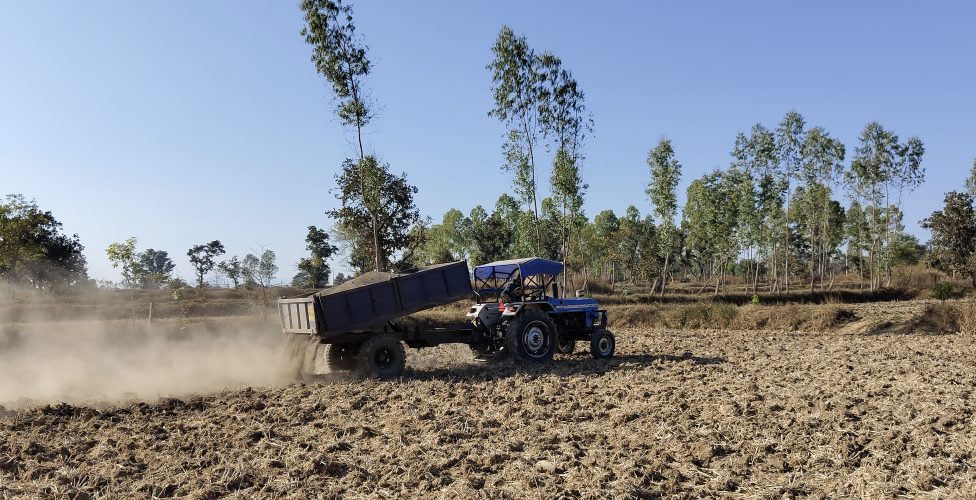
Rock weathering is a natural process that helps regulate Earth’s climate. It is a process by which rocks and minerals break down, reacting with CO2 in the presence of water to form bicarbonate ions. These ions are eventually washed into the oceans and aquifers, resulting in long-term carbon storage lasting over 10,000 years. Recognising the potential to enhance this process, Shantanu Agarwal founded Mati Carbon in 2021. The process of ERW involves applying crushed silica-rich rocks to agricultural land or soil to accelerate rock weathering. Mati Carbon believes that Basalt, a volcanic rock rich in silicates, has the most scalable potential due to its effectiveness in reacting with CO2 and its abundance globally. In addition, Basalt improves soil health by supplying essential minerals and regulating PH levels.
Apart from the effective carbon removal potential of ERW, Mati Carbons’ focus on the social aspects of this innovative technology is exemplary. By concentrating their efforts on small-scale farmers in developing nations, they improve incomes, food security and the climate resilience of these farms. This is particularly important as many farmers in developing nations are facing the first-hand impacts of climate change, putting them at a greater risk of losing their livelihoods.
Scaling up ERW to achieve significant CO₂ reductions requires overcoming logistical and environmental challenges. Hence, the ecological and engineering challenge to extract, crush, process and distribute this amount of material cannot be underestimated and must be managed sustainably to avoid negative social or environmental consequences. Mati Carbon, however, has proved its alignment with sustainability, winning the grand prize of $50 million in the XPRIZE Carbon Removal competition from a pool of 1300 innovative carbon removal companies. This funding will significantly help Mati Carbon scale and improve ERWs’ standing as an effective strategy to mitigate the impacts of climate change.
Website: https://www.mati.earth/
Challenge: Women Carry the Weight of a Warming World
Tea is the second most consumed beverage in the world, making the impacts of climate change on this industry impossible to ignore. India is the second largest tea producer behind China and the largest consumer, using up 30% of global tea output, placing this nation at the epicentre of this brewing crisis.
Women form the backbone of the tea industry, and as a result of climate change, their work has become a test of endurance. These women face harsh conditions. In 2024, India experienced its hottest year on record, with frequent heat waves making their work physically demanding. The health implications of extreme heat include dehydration, exhaustion and in extreme cases, heat stroke; implications that are not accounted for in their low wages. Exposure to the increased use of pesticides and lack of protective gear further compounds health hazards, leading to skin disorders, respiratory issues, and even increased cancer risk.
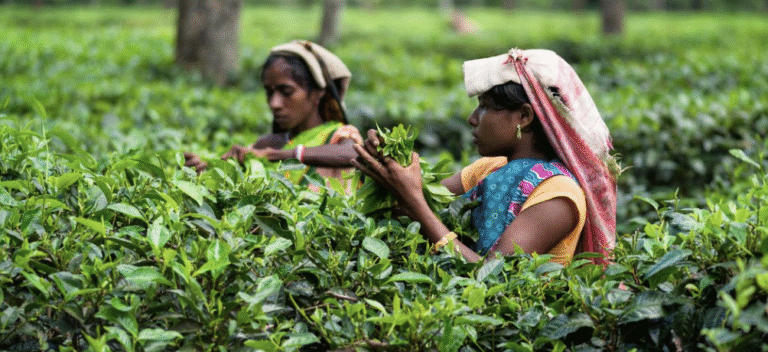
Women are clearly experiencing the brunt of climate change, but this is not unique to the tea industry. Across the world, women hold a position in society that revolves around working for the land and collecting water due to the unequal access to education, training and decision making roles. This inequality means that droughts, floods and extreme weather, all increasing in frequency and intensity, have a disproportionate impact on women.
India’s tea industry is a microcosm of a global crisis: climate change is hitting agrarian societies hardest, and women are bearing the brunt. Addressing this injustice will require not only climate adaptation and innovation in agriculture, but also a commitment to gender equity-ensuring women have the resources, recognition, and voice they need to build resilience in a warming world.
DownToEarth: Brewing crisis: How climate change is unravelling India’s tea heartland
Hope: Why the New Pope Matters for the Planet
Recently, Pope Leo was elected following the death of Pope Francis. While some may question the relevance of this in a sustainability newsletter the sheer influence of the catholic church on billions across the globe makes the Pope a significant consideration in the quest for sustainability.
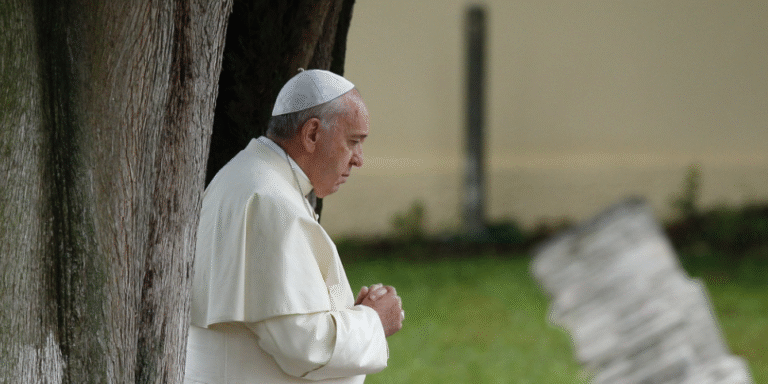
Pope Francis leaves a legacy that is not only catholic, but also profoundly global. This global aspect is notable through his contributions to the climate discourse, notably his 2015 encyclical ‘Laudato Si’, which became highly popular in over 140 countries worldwide. In this book, he focused solely on the environment, outlining how economic development and our current practices are causing our ‘common home’ to fall into despair. He advocated that Christians have a responsibility to engage in this reality and should see themselves as stewards and not dominators of the natural environment. Practically, Christian stewardship is significant as the church controls over 177 million acres of land globally, giving it both the responsibility and the opportunity to model sustainable land management.
This book, alongside his outspoken concern for the environment throughout his papacy, was crucial as it existed in a time in which there was a real need for a moral voice on the climate issue. Many have argued that Pope Francis established a much broader space for the climate discourse to exist, beyond just a scientific, economic or political challenge and instead a space that incorporates the moral aspects of this crisis.
Now, with the election of Pope Leo, attention turns to the future. While most observers believe that Pope Leo will not formally reverse or close any of the climate initiatives brought forward by Pope Francis, the extent of his commitment to environmental activism remains to be seen. This stance will likely become clearer in November, during COP 30, where the Pope’s message on climate change will be a focal point. The election of Pope Leo is a moment of hope for those who see faith as a driver of climate action. As the world watches, the Catholic Church’s next steps could play a pivotal role in shaping the moral and practical dimensions of the global sustainability movement.

Image of the week:

Sun Yu: ‘Iceberg Melting’, 2022
‘In the foreground of the image, a woman is seen sunbathing on the sand—an embodiment of society’s pursuit of material pleasure. Beneath her lies a tiger skin, symbolizing the exploitation of animals and the degradation of nature at the hands of humans. Surrounding elements—melting icebergs, polar bears adrift on shrinking ice, and lifeless penguins—underscore the devastating effects of global warming and environmental destruction on wildlife.
In the distance, a volcano looms ominously, representing the looming threat of catastrophe. This stark contrast between leisure and disaster creates a deeply unsettling, absurd visual narrative. The image disrupts the logic of everyday life, prompting the viewer to pause and reflect. It reveals a surreal irrationality that, while jarring, mirrors the contradictions present in our own world.
Su Yu’s work stands apart from the dreamlike absurdity often found in Salvador Dalí’s art. While Dalí explored the surrealism of the unconscious and the fantastical, Su Yu draws attention to the surreal nature of lived reality itself. His absurdity does not escape into dreams—it confronts us with the truth. At its core, this work expresses a profound humanistic concern, compelling viewers to engage with urgent social and environmental issues. Its value lies in its ability to provoke thought and inspire critical reflection through visual storytelling.’
Artwork: https://art.kunstmatrix.com/en/artwork/1619983/su-yu/iceberg-melting
Articles you may have missed:
1. Don’t Mention Climate: Now, Clean Energy Is All About the Money
2. AI could account for nearly half of datacentre power usage ‘by end of year’
3. Cocoa, coffee and wheat: The EU food imports threatened by biodiversity and climate crises
4. My advice to the new Green party leader? It’s time to expose the climate deniers | Carla Denyer
5.The Impact of Climate Documentaries on Environmental Activism
Thank you for reading!
To sign up to the newsletter, go to www.verdeindex.com
Or follow Verdeindex on LinkedIn at: https://www.linkedin.com/company/verdeindex/