
Verdeindex Edition 04
By Oscar Petterson Fuentes
Non-profit: NOS Noroeste Sustenable
Noroeste sustentable (NOS) is a non-profit based in Baja California, Mexico, which I came across in my ‘Business Sustainability’ course at university. We were shown a video by Peter Senge, an American systems scientist, in which he introduces the idea that within the fishing industry the most important actors, when it comes to the levers of the system, are not the scientists or the government, but the leadership for the local fishing communities. This is to say that if we want to tackle the issue of overfishing we can’t solely rely on quotas and no-fishing zones placed by the government. Instead, we have to prioritise the fishermen and nurture their communities in order to change their traditional, multi-generational methods for a more sustainable approach.
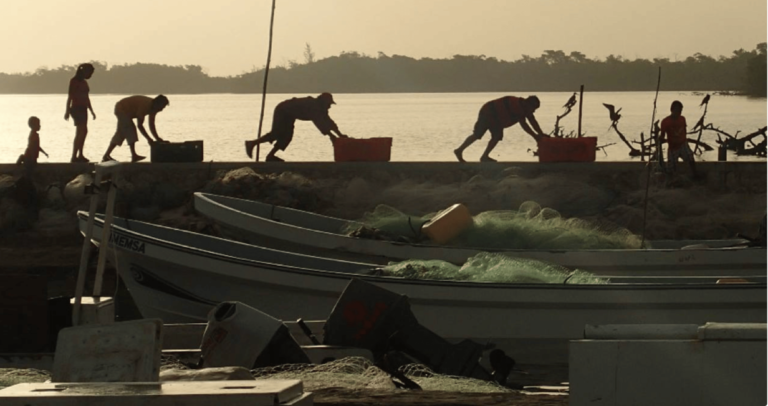
One of the examples we looked at was in the Bay of La Paz, which is located at the tip of Baja California which lies in the Californian gulf, a fishing hotspot. Over 70% of Mexico’s fishing industry is located here, which has led to a surge in interest in the region for scientists and NGOs trying to tackle the depletion of our seas. The clam industry is incremental to the fishing community in the Bay of La Paz, however, in 1978 the catarina clams population became extinct as a result of overfishing and extreme weather. Hence, there was a sudden disappearance of jobs and income for a large part of the fishing community in Ensenada de La Paz. These events are particularly damaging for these communities as they have little option for an alternative income stream due to their lack of education and more importantly, the lack of opportunities in rural parts of Mexico. This makes the restoration of fisheries not only pivotal for our ocean’s biodiversity but also for the livelihoods of the 260,000 small-scale fishers who depend on Mexico’s fisheries.
In 2011, NOS in partnership with the fishing community in Ensenada de La Paz, began their focus on regeneration, which was initially based on the catarina and pen shell clams. After scientific evaluation of the bay and sustainable regeneration practises the population began to recover to the point where the bay now has over 350,000 clams. The recovery of these once extinct species motivated the community to organise a community led organisation called the Organización de Pescadores Rescatando la Ensenada (OPRE). In July 2017 they obtained a fishing concession for 2048 hectares of the Ensenada de La Paz to continue deploying the sustainable practices introduced by NOS.
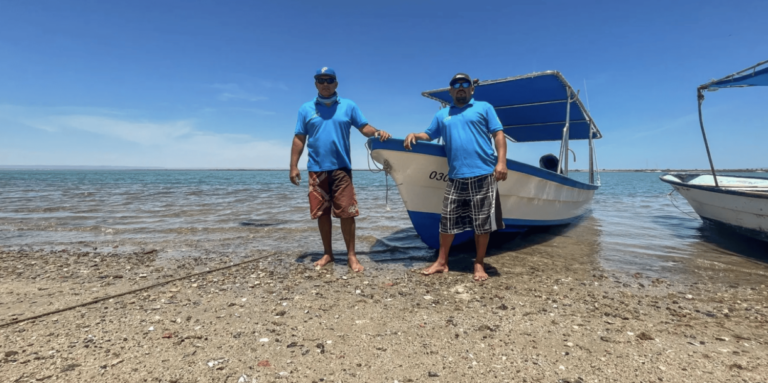
The success of the fishing community in Ensenada de La Paz should not only be seen through the revival of their fisheries, but also through the renewed social entrepreneurship which has empowered and uplifted the entire community. A large reason for this can be attributed to NOS who took an approach which, for me, is a winning strategy when it comes to promoting sustainable practices. In 2011, when NOS first came to Ensenada de La Paz, NOS marine biologists didn’t arrive and ‘educate’ the fishermen on what they could and could not do. This approach is something we see all too often, a group of ‘over-educated’ scientists entering communities with long-standing practices and traditions; demanding them to suddenly change their ways.
NOS understood the important relationship between them and the local community and rather than stopping them from fishing, which was needed at the time, they provided the people of Ensenada de La Paz the tools to begin organic farming as a source of food and income whilst they temporarily stopped fishing. They also uplifted the community by creating a football pitch for the kids in Ensenada de La Paz, which became a common gathering place for families to watch the fiercely contested rivalries that followed. This promoted a sense of community and placed NOS in a position to effectively implement sustainable practices within the community due to the trust and open discourse between them and the members of the community.

NOS’s work in Ensenada de La Paz has been an enormous success they have rejuvenated an entire community that were on their knees only 20 years ago and simultaneously reached their goal of restoring ocean biodiversity. If more NGO’s take note of the strategy of NOS, which is first and foremost their integration into the community; we will begin to see a transformation from age-old unsustainable practices. These practices can no longer support communities, due to increased demand from consumers, over-fishing from commercial fisheries and our changing climate. Ultimately, a shift to sustainable and scientifically grounded methods that promote biodiversity and uplift fishing communities, is the only way we can ensure a sustainable future in our fishing industry
Website: https://nos.org.mx/en/
Tech start-up: Natural Fibre Welding
Founded by Luke Haverhals in 2015, Natural Fibre Welding (NFW) makes use of nature to create scalable plant-based consumer goods. In last week’s newsletter I wrote about the impact of microplastics from clothing which leaks into oceans and rivers across the world. Furthermore, now that 65% of the textile market is made from synthetics like polyester; it is not only microplastics that pose an issue, but the creation of these materials requires the burning of fossil fuels, which is driving global warming. While recycling may be an option due to plastics durability it has been found that only 9% of plastics ever made have been recycled, leading to the current tragic state of our oceans and beaches. Haverhals, who worked as Assistant Research Professor at the US Naval Academy spent years exploring all-natural alternatives to petroleum-derived synthetic plastics and from this research NFW was born.
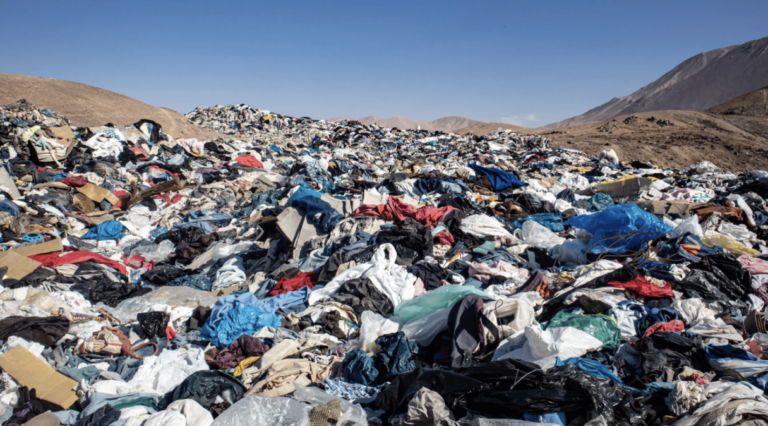
NFW makes 100% natural materials from leather alternatives to shoe soles, which adhere to industry standards whilst being free from any plastic and toxic chemicals that currently contaminate the clothing industry. The companies blueprint outlines three key objectives: start well, stay clean, end well. NFW believes that just as we need a transition from fossil fuels to renewable energies we need a material transition from petrochemical plastics to renewable inputs. Their use of natural ingredients provide benefits such as capturing carbon and making use of regenerative farming, whilst also having the ability to scale, which is crucial in the extensive clothing industry.
For example, they have partnered with Terra Genesis, a regenerative design firm, who deploy a regenerative rubber farming technique in Thailand called Wanakeset. This practice ensures both biodiversity and economic wellbeing through planting rubber trees with a variety of other cultivable plants to mimic native forests; supporting surrounding ecosystems. Economically, these farmers can sell their rubber at a premium due to the environmental benefits of this practice. Furthermore, NFW has been successful in commercialising their plastic free leather, MIRIUM. Notably, they have worked with the renowned fashion icon Stella McCartney, who now advises luxury fashion mogul Bernard Arnault (owner of the largest luxury brands on the planet) on sustainability. She is a huge advocate for MIRIUM and in a recent interview with Bloomberg she stated that
- “It’s absolutely the same as real leather to touch and look and it goes through the same rigorous testing. But it’s plastic-free, it’s natural and it’s absolutely incredible. And its scalable, and that is one of the most important questions for sure”

NFW also lives by the motto ‘starting well is important, but staying clean matters just as much’ which is why they ensure that no synthetic toxins or plastics are added at any stage of manufacturing. The biobased ingredients are characterised by low-carbon and low-water usage which provides as much of a benefit for the planet as it does for brands who want to become greener. NFW have partnered up with Bared Footwear, a shoe brand on a mission to transform the footwear industry from synthetic materials towards the triad of style, comfort and sustainability. Their work began in 2023 and since then they have debuted their PLIANT collection, featuring 100% biobased outsole and MIRIUM leather. Founder and CEO of Bared Footwear, Anna Baird states in the NFW impact report that:
- “I’m really proud to be working with companies such as NFW who are world leaders in creating better materials for our planet. I believe the biggest impact we can have is to create our products using the greenest materials in the world.”
Finally, what really compelled me to write about NFW was their emphasis on a circular rather than linear approach. For me this is becoming increasingly important in the consumer goods industry. Their main achievement in striving for product circularity can be seen through their EndWell program, which returns cuttings, scraps and 100% bio based post-consumer goods to earth. The program was established in 2023 and one of the ways they try to achieve a circular production cycle is through combining their materials with agricultural byproducts, to produce arena sand for horse-riding. Currently, plastic fibres are added to the sand in arenas to give it structure and stability. This leads to the plastics being kicked into the air by horses, leaching into surrounding soils and water. Furthermore, they are working with their brand partners to install a take-back program for their products to be re-utilised. This is a key characteristic of an ideal circular product life-cycle.

NFW’s focus on nature as the solution is something I strongly align with. NFW has been a success and has been nominated as one of 15 finalists in Prince William’s Earthshot Prize, which was established in 2020 in order to celebrate the most innovative solutions to the world’s greatest environmental challenges. The winner will be announced on the 6th of November and there’s no doubt that NFW are fully deserving of this honour. Nature can be our greatest aid in reaching sustainability and it is start-ups like this that give me great hope that we can revolutionise the consumer good industry in accordance with this ideal.
Website: https://nfw.earth/
Challenge: Generative AI
AI has seen an exponential growth in interest and investment over the past 5 years and has been hailed by many as a techno-fix to our world’s problems. Although AI possesses a tremendous ability to compute data and solve complex problems, the environmental impact of AI has become a growing concern. Unfortunately, not enough is being done with tech leaders such as Bill Gates stating that the massive power draw required for AI processing is nothing to worry about; as AI will ultimately identify ways to help cut power consumption and drive the transition to sustainable energy. This view can potentially be dangerous as not only do we have very little transparency on where AI is headed, but the impacts of this surge in energy and water usage will be a definite set-back for the climate movement.

I read a great article by Sharon Adarlo in futurism.com in which she illustrated the environmental toll of a single ChatGPT query. If one in 10 Americans use ChatGPT once a week to write an email, Shaolei Ren, a UC Riverside researcher, estimated that this would ‘guzzle’ 435 million litres of water and burn 121,517 megawatt-hours of power. This translates into all the water used up by every household in Rhode Island for a day and a half, and enough electricity to light up all the households in Washington DC for 20 days. This I found pretty astonishing considering that we have likely just touched the surface of AI and who knows how much more powerful it will become in the coming years. In particular, the problem comes from generative AI which as a result of being incorporated in search engines such as Google has become embedded in our internet usage. In this AI model, each word is generated through probability and modelling, meaning many more bits are used and this leads to a substantial increase in energy. The increase in energy as a result of AI expansion can be seen through the growth in Microsoft and Google emissions, which have grown 30% and 48% respectively. Unfortunately, this puts almost all of their net zero pledges under threat.

My first experience with this disparity was when I read up on longtermism, an ideology in which an existential risk to humanity is one which annuls the long-term potential of the human race. Climate change according to this ideology is not an existential risk as people will survive even in the worst-case scenario. Instead longtermists such as Toby Ord cite unaligned-AI, one in which humans lose control, as the biggest existential risk to humanity. I find this view not only dangerous but foolish. Yes we must be wary of the dangers AI can pose, but why are we focusing so heavily on that and not the tangible here and now. In a United Nations Environmental Programme article Golestan Radwan Chief Digital Officer of the United Nations Environment Programme (UNEP) states that:
- “Governments are racing to develop national AI strategies but rarely do they take the environment and sustainability into account. The lack of environmental guardrails is no less dangerous than the lack of other AI-related safeguards.”
We cannot constantly rely on an imminent techno-fix to something as complex and volatile as climate change and disregard its potential existential risk.
AI does have the potential to be a benefit to the climate movement if used for specific tasks such as: spotting warning signs for a building flood or storm, making simulations of the earth’s climate more accurate or its usage in agriculture to promote efficiency whilst ensuring soil quality. The problem arises due to the rapid expansion in generative AI that has occurred without the protocols in place to safeguard its impacts on the environment. As a result, I believe that the speed of expansion and the direction that generative AI is heading, risks doing more to damage our hopes in mitigating the effects of climate change than solving them.
Articles on the topic:
Techradar: Generative AI’s energy demands are “accelerating the climate crisis”
Financial Times: US climate change targets threatened by tech energy surge from AI
Futurism: The environmental toll of a single ChatGPT query is absolutely wild
UNEP: AI has an environmental problem. Here’s what the world can do about that.
Hope: Combating invasive species
Climate change has changed climactic conditions and many studies has found that this has lead to more favourable conditions for the increased spread of invasive species. There is a significant intersection between eradicating invasive species and combating climate change, which has not been a central discourse within the sustainability movement. Leigh Greenwood, TNC’s Director of Forest Pest and Pathogen Program stated in a The Nature Conservancy article that:
- “US federal agencies have not yet actively integrated invasive species management into climate action planning, funding, and implementation- and they must take clear steps to do so in order to meet their own climate goals,”
Moreover, Alix Murdoch, TNC’s Senior Policy Advisor on Natural Climate Solutions states that:
- “Invasive species and climate change are both boundaryless. By integrating proactive policies into climate change strategies and guidance, federal agencies could lead the way to prevent and manage invasive species nationwide”
Two key papers have been released in the last few weeks that highlight the crucial role of invasive species removal in enhancing climate resilience. The first paper, published by scientists from the Island Conservation, studied the importance of maintaining biodiversity on small islands, not only to ensure thriving ecosystems, but also as a tool to combat climate change. The research looked at the eradication of invasive mammals in Palmyra Atoll, an American island in the central pacific, which led to a 5000% growth in native forest over four years.
This is important as it shows that invasive species have huge impacts on this island’s biodiversity. This was a common trend over the 1078 islands studied and all showed positive improvements when eradication strategies were implemented. Collectively, these islands sustain over 940,000 hectares of forest and 53 million metric tonnes of forest carbon. Therefore eradicating invasive species can restore globally unique carbon sinks, thereby making it an effective nature-based solution to climate change. The biodiversity crisis is something I have highlighted in previous newsletters because I think by solving this crisis we can solve so many of the climate issues that we face today.

The second paper titled: ‘Promoting adaptation and resilience to invasive species and climate change’ , was conducted by the University of Massachusetts. The paper highlights the importance of ecosystem resilience. Resilience can generally be defined as the “ability [of an ecosystem] to experience disturbances or environmental change without changing to a fundamentally different state.” Climate change, invasive species and other external factors have pushed ecosystems past tipping points, permanently changing the composition of species within these areas. These new states are marked by decreased biodiversity and productivity, resulting in a reduced ability to sequester carbon dioxide and perform its essential functions. Unfortunately, many ecosystems have passed this tipping point and their previous states largely become unrecoverable. The paper outlines three methods in conserving ecosystems with the most effective strategy being promoting ecosystem resilience. This method ensures that external factors have a limited impact on the overall functions of ecosystems with the scientists referring to the management and eradication of invasive species as playing a central role.
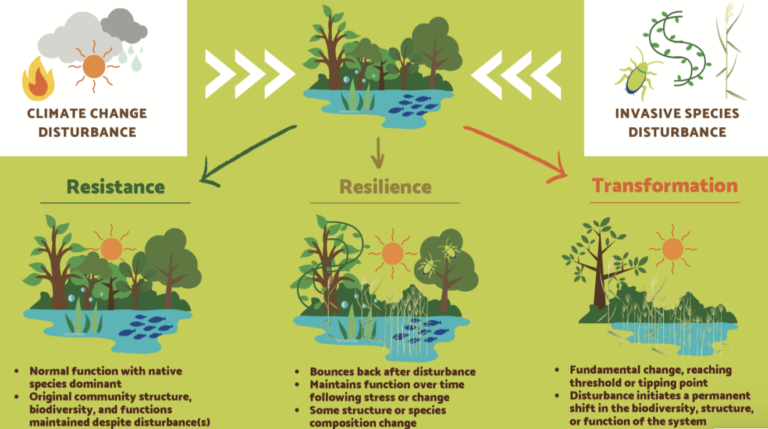
Both these papers highlight one of the key factors driving the biodiversity crisis. It is one we may overlook: with deforestation, agriculture and changing temperatures all dominating the discourse. The studies show that managing invasive species can have immediate benefits to ecosystems which ultimately is a win-win. We promote biodiversity, protecting native species and also ensure that these ecosystems continue to thrive and act as valuable carbon sinks.
Articles on the topic:
Salon: Invasive species are thriving thanks to climate change while worsening global heating
The Nature Conservancy: Invasive Species Threaten Climate Change Preparedness and Resilience
Island Conservation: New Paper Shows Invasive Species Removal is a Nature-Based Solution for Climate Resilience
Image of the week
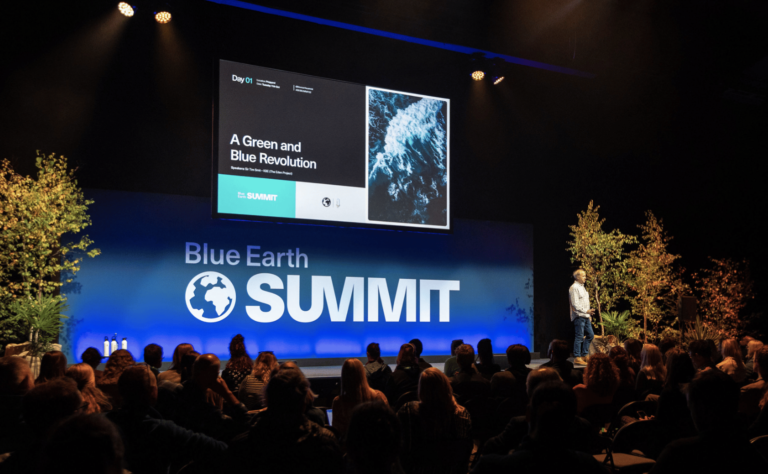
This is a picture from the Blue Earth Summit and I chose this as my image of the week as today on the 16th of October the summit kicks off. The Blue Earth Summit will take place in London and it spans 3 days with talks on themes such as: nature, climate tech, finance and energy. It brings together innovators and leaders from various different industries who, in carefully chosen panels, discuss pressing issues facing sustainability and the environment. Speakers this year include TV investment star Deborah Meaden, regional manager of Northern Europe of Patagonia Alex Beasley , Louisa Casson global project leader at Greenpeace, Joycelyn Longdon founder of Climate in Colour , Hugo Tagholm executive director at Oceana and Emily Renshaw-Smithexecutive director of operations at Open Planet.
Overall these events will be bringing together 7,000 passionate innovators, startups, investors, corporations, politicians, adventurers, academics, media, and campaigners. Their mission is to find and fund solutions that regenerate our natural world. I would recommend taking a look at the stories and discussions surrounding this summit as these events will no doubt bring to light key solutions to the problems facing the planet.
Link to the summit: https://blueearthsummit.com/