
Verdeindex Edition 03
By Oscar Petterson Fuentes
Non-profit: Earthjustice
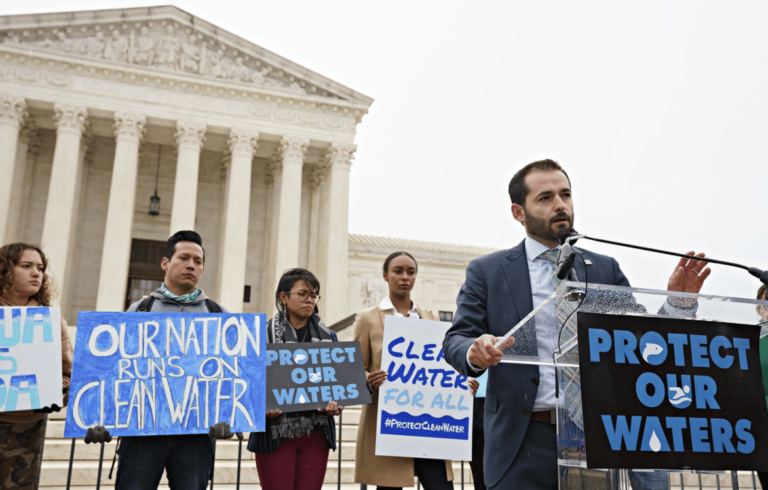
Nonprofits in the climate movement play a huge role in the conservation and restoration of our planet’s biodiversity. Today’s featured non profit fights as much for the planet, but does this through the court of law. Earthjustice was founded in 1971 and Abigail DIllen sits as the current president of the organisation. Earthjustice began as the legal defence fund for one of the oldest American environmental organisations, the Sierra Club (founded in 1882), but in 1997 they changed their name to Earthjustice to reflect their role not only as a legal advocate for the Sierra Club, but also for a large and diverse group of clients within the USA. Earthjustice represents more than 1000 public-interest clients including Greenpeace, Friends of the Earth and the Environmental defence fund, who as we all know are joined by their fight for a healthy environment for all. The non profit comprises a team of over 200 attorney’s in 15 offices across the USA allowing them to effectively deploy these resources up and down the country. I found Earthjustice’s approach intriguing as it is so easy to forget about the thousands of court rulings happening across the globe that have tremendous impacts on our environment. Therefore, having an organisation whose sole purpose is to fight for the planet is so valuable to the climate movement and as they neatly put it, they do this ‘because the earth needs a good lawyer’
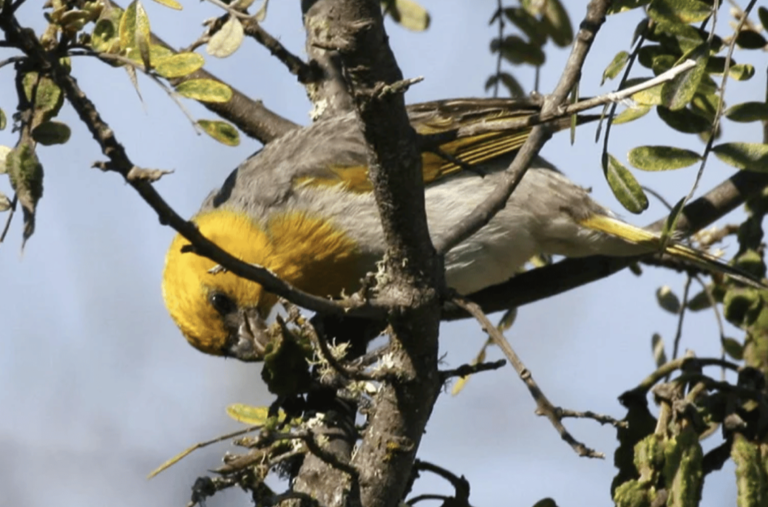
Earthjustice fights on several fronts and firstly I wanted to talk about a specific case which happened during their time as the Sierra Club defence fund. It’s 1981 and a court case has begun centred around the endangered Palila, an endemic species of finch-billed Hawaiian Honeycreeper. Over the past two centuries, feral sheep and goats introduced in the late 18th century had become an issue. Damaging the endemic ecosystem of the Palila bird which had become critically endangered. Earthjustice, then the Sierra Club defence fund, filed a lawsuit against the Hawaiian department of Land and Resources claiming that they were violating federal laws of conservation. What is important to note here is that in 1973 the Endangered Species Act (ESA) was introduced by the US government as one of the first laws globally which sought to protect species on the brink of extinction. This Act was the centre of the prosecuting attorney’s case, which argued that as a result of the feral game animals, a threat was posed on the Palila’s ecosystem. This infringed on the ESA, that extended its protection to “critical habitats…the loss of which would appreciably decrease the likelihood of the survival and recovery of the listed species.” Earthjustice won the case and the court ordered the process of removing feral sheep in the island within two years, which set precedence for conservation in the court of law. Not only did it establish the right to the protection of endangered animals within human conventions, but also illustrated the ability of endangered species to have legal standing in their own right. ‘The Palila (Psittirostra Bailleui) seeks the protection of this Court . . . .” This case was the first of many times that Earthjustice has fought to enforce the ESA, allowing it to realise its visionary promise.
Verdeindex places a huge importance on biodiversity as one of the central components in achieving a sustainable future. Earthjustice has made significant progress in fighting the coal and pesticide industries, but Earthjustice also places great emphasis on mobilising their extensive lobbying resources, using leading lawyers and policy experts, to ensure that the USA ‘implements every initiative at its disposal to expand the safety net for life on this planet’. This claim is not unfounded, last year with the help of donations, Earthjustice, represented 570 public interest clients. Their successes include giving Wolverines a protected status under the ESA after decades of delay by the US Fish and Wildlife Service. They also stopped the Peregrine oil exploratory project and repeatedly challenged the Willow project, the largest proposed oil and gas undertaking on U.S. public lands; possibly saving valuable wildlife for generations to come. Earthjustice is unlike many nonprofits in the conservation space, but their equivalent importance provides an underlying message that in order to solve our climate and biodiversity crises, we must mobilise all areas of our society such as behaviour, conservation, law, policy etc.
Website: https://earthjustice.org/
Tech start-up: Matter.
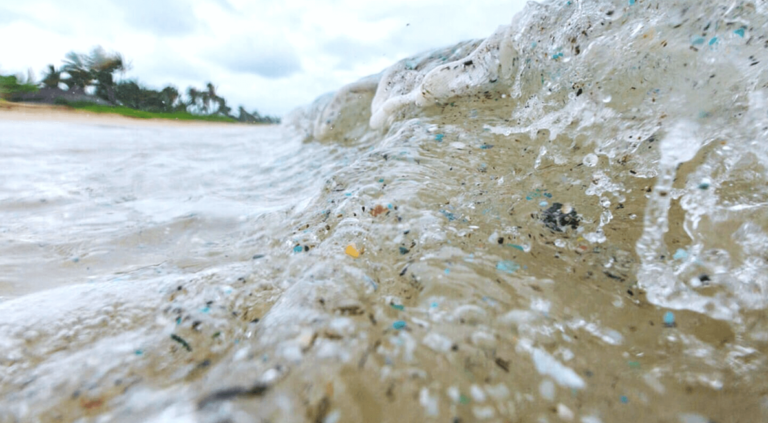
Today’s featured tech start-up is centred around one of the big environmental concerns that penetrates both biodiversity and human health discussions across the globe; Microplastics. Matter is a tech company founded by mechanical engineer Adam Root in 2018. After finding this company I listened to the ‘Hardware to Save a Planet’ podcast episode, hosted by Dylan Garrett, in which Root talked in conversation about his beginnings and aspirations with Matter. What stood out to me from this podcast was the large amount of domestic material (240g) including microfibres and microplastics that leave domestic washing machines in a singular household per year. This enters our water treatment facilities and ultimately into rivers and oceans. To put this into numbers; laundry alone causes around half a million tonnes of plastic microfibers to be released into the ocean every year—the equivalent of almost three billion polyester shirts. Root in a recent interview with Forbes stressed the importance of recognising this pollution stating that:
- “Microplastics are the new asbestos… They are so pervasive in everything, and the big question is what are the safe levels of concentration? How much can you have before you get poisoned?
A United Nations Development Programme article states that humans have been found to constantly inhale and ingest microplastic through contaminated seafood, and even through plastic items such as cutlery and water bottles. These microfibres cannot be broken down by organisms and as a result, a bioaccumulation of microfibres occurs in our ocean food chains to the point where a recent study has found that a median of 60% of fish contain microplastics. The implications of this from a human health stance are not fully understood but links to cancer, weight gain and decreased reproductive health have already been made. From an environmental perspective the introduction of this foreign agent into the world’s ocean is impacting its biodiversity, which is the backbone of the oceans ability to sequester more carbon dioxide (approximately 25% of all carbon emissions) than any carbon capture and storage technologies would ever do. There is an overwhelming consensus that plastic does not belong in the environment and with an estimated 50-75 trillion pieces of microplastics having entered our ocean to date, this is becoming a serious problem.
Matter’s solution is a filtration system technically known as regenerative pressure consumption technology (their technology being called Regen), which uses different pressures and filtration layers to collect microfibres and other additives. Matter recently partnered with Bosch, one of Europe’s leading domestic washing machine manufacturers to install their self-cleaning filtration technology into their washing machines; to enable people to ‘to tackle the global issue of microplastic pollution in their own homes.’ Matter also offers their solutions on an industrial level providing the textile industry with the same Regen technology on a larger scale with the ultimate aim of repurposing filtered textiles to make new products. Recently at last weeks Climate week NYC, Matter announced a new collaborative project with manufacturer Paradise Textiles to tackle around 120,000 tonnes of microfibre pollution. The two announced the introduction of the Regen technology into a ‘low impact’ fabric mill in Egypt which Root says will:
- “…show the fashion industry that a viable solution to this colossal problem of microplastic pollution is within reach. As this technology scales, there will be no reason and no excuse for letting microfibre pollution continue.”

The simple method of filtration can have tremendous benefits and Matter’s focus on home appliances is particularly effective. It is difficult to find home appliances that boast environmentally friendly technology and in an age where the consumer is becoming increasingly environmentally conscious; Matter’s technology becomes a benefit for large manufacturers such as Bosch. Their ability to say that their washing machines do not contribute to the microplastic problem not only provides their product an edge over their competitors, but also gives them the ability to adhere to important ESG goals. This approach can be the winning ticket for innovative tech companies that can both thrive economically but also make industry and products more sustainable.
Website: https://matter.industries/
Challenge: European floods illuminate a harrowing future
It has been known for years that climate change is driving extreme weather and it is a link that many within the climate movement have tried to highlight to the general public. Last week a group of scientists published a study which we’ve all been expecting. The flooding that killed 24 people in central Europe earlier this month was made twice as likely by human induced climate change.
The researchers from the World Weather Attribution (WWA) said that the four days of rainfall from Storm Boris was the heaviest ever recorded in Central Europe by a significant margin. Friederike Otto, co-author of the WWA study, stated that this is “definitely what we will see much more of in the future” with the research finding that such storms will be 50% more likely if we reach a temperature increase of 2 degrees. Moreover, a large part of the reason for the extreme flooding was that Storm Boris stalled, releasing huge quantities of water on the same area. Research has also been conducted to see how climate change is impacting the jet stream (fast flowing currents in the earth’s atmosphere), which may be making this ‘stalling’ phenomenon more common. Rainfall is increasing, without a doubt, from the burning of fossil fuels. This is due to warmer air being able to hold more water in the form of vapour. It has been found that for each degree celsius warmer the planet gets, the atmosphere is able to hold 7% more water. It is not only precipitation however: droughts in southern Italy, wildfires in Spain and Portugal and extreme heat in Southern Europe are all symptoms of climate change.
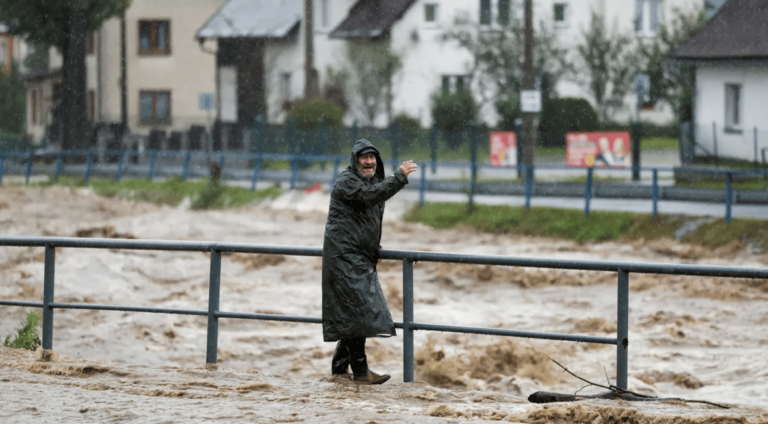
This study highlights a harrowing future which puts many areas not just in Europe, but across the world at risk. The consequences do not only fall on people but the reparation costs from these extreme weather events are having serious economic consequences. The recent floods in Central Europe have been estimated to cause damages of between €2-3 billion, a small proportion of the estimated $2.8 trillion in damage that has been caused globally(between 2009-2019) as a result of increased storms, floods and heatwaves. The cost of these events has been enough to spur many countries in Europe into action, including a €10 billion EU pledge in emergency repairs. Advanced weather forecasting technology and flood defences in cities such as Brno and Vienna have made countries adaptable to such events. Sorm Boris claimed 24 lives, which is unacceptable, but Central European flooding in 2021 killed over 200 people with a further 203 lives being claimed in a similar event in 1997. It shows adaptation is happening across Europe but this is not fixing the problem.
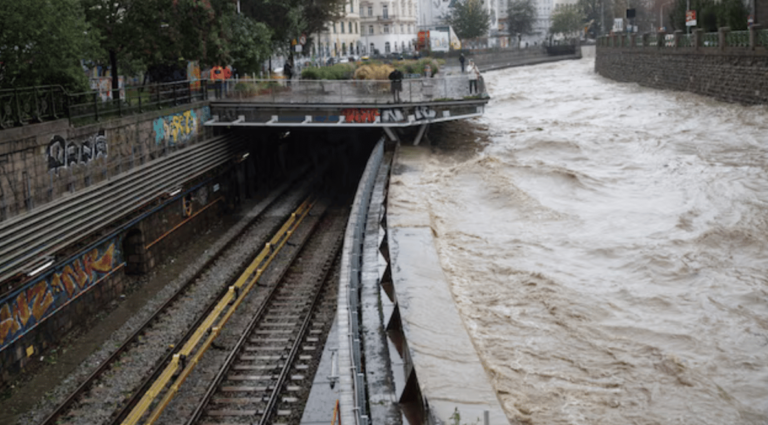
As temperatures rise, weather systems become more volatile leading to more frequent extreme weather events. This will put additional stress on communities, infrastructure and economies making the ongoing adaptation to these events critical. Adaption alone won’t be enough and as explored earlier in the article, temperature increases of just 2 degrees will have devastating effects. It is therefore paramount to mitigate the worst impacts of climate change, whilst also using adaptation methods to prevent a perilous future for our society.
Articles on the topic:
New York Times: Study Finds Climate Change Doubled Likelihood of Recent European Floods
NPR: Europe’s intense rainfall in September twice as likely thanks to climate change
Euronews: Climate change made Central Europe’s deadly flooding twice as likely, scientists say
BBC: Climate change supercharged Europe floods – scientists
Hope: Combating climate anxiety
‘Hurricane center warns of ‘historic and catastrophic flooding’ as Tropical Storm Helene barrels into North Carolina’. ‘Britain’s tropical rain and parched Amazon are new norms in a messed-up climate’ . ‘Japan floods: six dead after rain pounds region still recovering from earthquake’.
These are a few of the headlines I found on the day of writing. This alongside our leaders’ inaction makes it no surprise that people across the globe are becoming increasingly worried about the state of our planet. As a result, climate anxiety is a growing concern with a 2021 Lancet Planetary Health Survey finding that 59% of young people (16-25) across a variety of countries were ‘extremely worried’ about climate change. The feeling of having a lack of control over what is happening around us makes anxiety a completely natural and rational human response, but recognising this anxiety is an important step in combating it.
Anthony Leiserowitz , a Senior Research Scientist at Yale School of the Environment, stated in a Yale sustainability article on climate anxiety that worry itself is beneficial to the climate movement, as worry drives a motivation to solve the problem. This however as Leiserowitz stated is different from anxiety, which becomes a serious problem when it becomes “overwhelming and debilitating”. Leiserowitz also touched upon one of the key tools in combating climate anxiety. Climate action. He stated:
- ‘…taking action on climate change is really one of the most powerful ways to combat hopelessness and helplessness. Go do something- not as an individual, but as part of a group.’
The last phrase which I have highlighted is my reason for writing this article today as it is our individualistic view on the climate movement that is causing so much hurt and despair.
A couple weeks ago I read an article in the LA times titled: ‘To fix climate anxiety (and also climate change), we first have to fix individualism’ , written by Rosana Xia. It outlines that our current climate anxiety is growing as a result of the individualisation of the climate issue. If we see the issue of climate change from this perspective we fall into a trap, which instead of shaking us out of complacency it produces feelings of hopelessness. We have to look around us and see the progress we are making. If we simply read the headlines on the news or social media, which most young people today do, it’s so easy to become disillusioned with the future of the planet. Instead as Sarah Jaquette Ray puts it in her book ‘A Field Guide to Climate Anxiety’
- “…if you actually saw yourself as part of a collective, as interconnected with all these other movements doing meaningful things, you wouldn’t be feeling this despair and loneliness.”
Viewing the problem of climate change from a collective lens is no doubt beneficial, not only for the individual, but for the climate movement, as slowly that anxiety turns into worry and the helplessness turns into action.
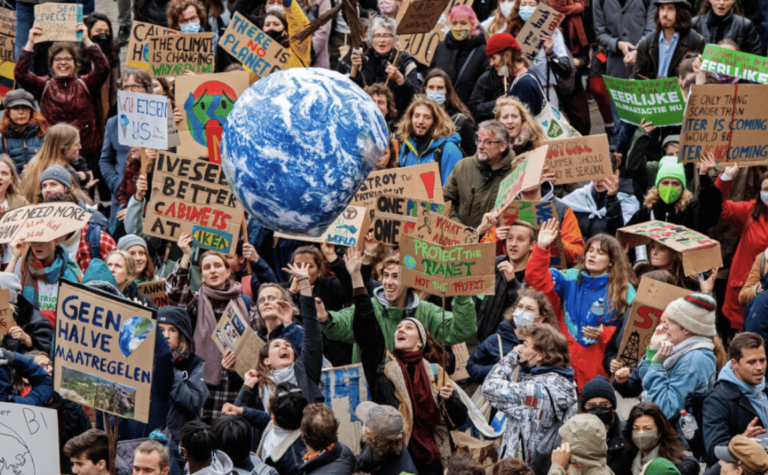
The LA Times article also introduced an interesting perspective which comes from the idea that this climate anxiety comes down to a certain privilege which minorities and people in countries currently being affected by climate change can’t afford. In communities around the world people are feeling the onslaught of a changing environment with all ten of the top ten most at risk nations of a climate disaster being developing nations. Climate change is not the first existential crises the people living in these nations have faced, from the impacts of colonialism to genocides; helplessness has never been an option. Kevin. J. Patel from South L.A. puts this nicely in the LA times article
- “one privilege many communities don’t have is the ability to turn it off. Not everyone can go on a vacation or take a day to recharge, he said. Even having the time to talk about your sadness can be a luxury.”
The way I interpreted this perspective was that we must realise that there are people around the world who are feeling the devastating impacts of climate change who simply cannot sit and feel helpless. As a white male growing up in the UK I have been free from any oppression and unlike many around the world it is only in the last few years that people like myself have had to worry about the safety of our future. If we understand that our climate anxiety may stem from a position of privilege, then we must recognise those who don’t have this luxury and mobilise as much for them as for ourselves.
Articles on the topic:
LA Times : To fix climate anxiety (and also climate change), we first have to fix individualism
Yale Sustainability: Yale Experts Explain Climate Anxiety
Image of the week
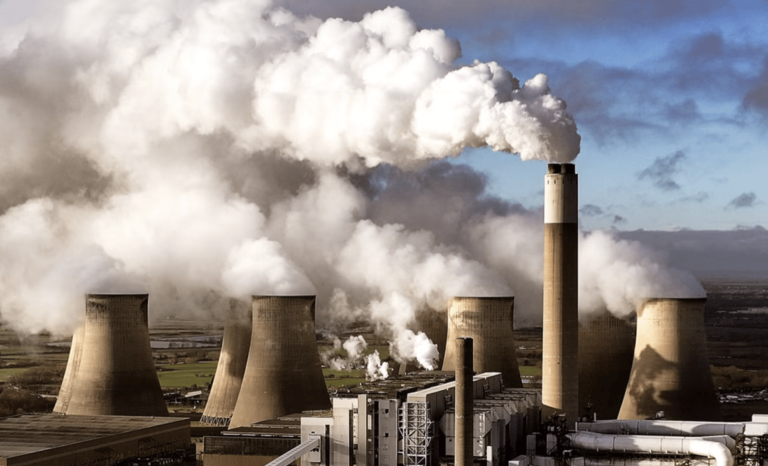
This week’s ‘image of the week’ is a picture of the Ratcliffe-on-Soar power station, near Nottingham in the UK. The reason I chose this picture is because this is the UK’s last coal power station. It has powered British electricity for the last 57 years, but on Monday the 20th of September 2024 it powered the grid for the last time.
In 2012, coal continued to generate 39% of the UK’s power with the environmental impacts from burning coal being detrimental for the environment due to: pollution, release of particulate matter and acid rain. The impact of coal will no longer be a worry in the UK as the rapid growth of renewables has allowed Britain to not only become greener but lead the world towards a more sustainable future.
The closing of Ratcliffe-on-Soar power station is highly symbolic. Britain led the world into the industrial revolution in the mid 18th century, on the back of the ‘King of the industrial revolution’. Coal. Now the UK is coal-free. The UK now has the opportunity(with the right people) to forge a new path for the future, just like it did in the industrial revolution, but this time into an epoch characterised by sustainability and respect for our environment.