
Verdeindex Edition 02
By Oscar Petterson Fuentes
Non-profit: Nova Scotia Nature Trust
This week’s non-profit in focus is the Nova Scotia Nature Trust which last week grabbed headlines in the conservation world by announcing the acquisition of over 1000 hectares of land in the Nova Scotia area. Nova Scotia for those that do not know is a large peninsula located on the east coast of Canada and is the most populous province in Atlantic Canada with a population of over 1 million people. Nova Scotia’s varying landscape and ecosystems make it a source of biodiversity in the region, but increased development and resource use threaten crucial natural areas in the province.
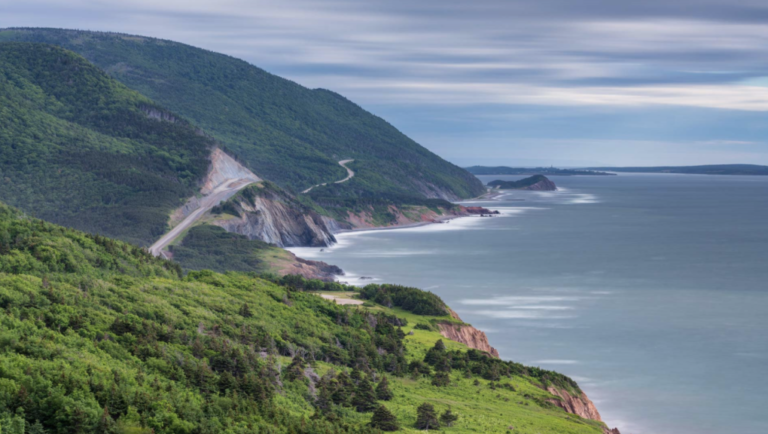
The Nova Scotia Nature Trust works directly to save and regenerate natural areas through conservation. At the time of writing the non-profit protects more than 30,000 acres of land across Nova Scotia. Their approach to conservation stood out to me as they have been able to acquire the stewardship of a vast amount of land due to their various approaches to conservation. In particular, their emphasis on working with existing landowners, who still want to maintain legal ownership, to conserve and maintain the biodiversity within their land. The Nova Scotia Nature Trust educates landowners on the benefits of rich biodiversity and help them determine the conservation value of their property. This is a great approach to conservation as not only does it null the expense of purchasing land for conservation, it benefits the private and public spheres simultaneously, an achievement which in the progression towards sustainability is difficult. The Nova Scotia Nature Trust also places great emphasis a volunteer program, with over 100 current volunteers, suitably called the Property Guardians. They help maintain the ongoing conservation efforts through: field research, property monitoring, enforcement of conservation restrictions, and habitat stewardship and restoration.
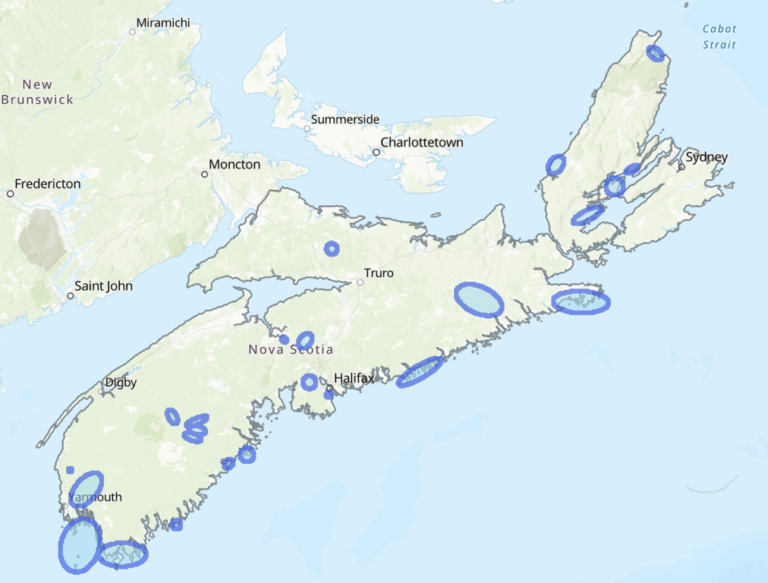
Hope for the coast is a campaign launched by the Nova Scotia Nature Trust and its mission is to protect the beaches, wetlands and estuaries that support Nova Scotia’s rich biodiversity and act as essential migratory corridors for countless birds. Moreover, as I mentioned in the last edition of the Verdeindex newsletter, coastal habitats provide ecological services that are so important to humans, such as: storing carbon, providing a buffer against storms and controlling floods. Over 85% of Nova Scotia’s coast is privately owned and in order to combat this, Nova Scotia is collecting the funds to be able to purchase almost 1800 acres worth of land known as the Blanche Peninsula. This peninsula is especially important to birds, with at-risk species such as the: Barn Swallow, Bobolink, Canada Warbler and Piping Plover, utilising this peninsula as a step-over for migration or as nesting sites. The Nova Scotia Nature Trust has already stepped up a potential $4.45 million with the help of federal funding and provincial grants and needs an extra $150,000 from donations by the 30th of September to complete this purchase.
The boldness of the Nova Scotia Nature Trust is a large part of the reason as to why I featured them in this week’s newsletter and I find their approach to conservation, notably working with existing landowners, a particularly effective approach. Their emphasis on volunteers and working with the local community is one of the recipes for success for any conservation project and hopefully they succeed in generating the funds required to purchase the important Blanche Peninsula.
Website: https://nsnt.ca/
Tech start-up: MORFO
This week’s interesting tech is a Paris-based startup which takes full advantage of our most advanced technology in order to ‘restore, regrow and revive biodiversity’. This crucial intersection between technology and conservation is one of the many ways forward in our aim of regenerating biodiversity in order to achieve sustainability. I discovered MORFO after listening to the great podcast series ‘Hardware to save a planet’ and MORFO was founded in May of 2021 by two brothers Hugo and Pascal Asselin who grew up in French Guiana and the current CEO Adrien Pagés.
Deforestation is a critical issue in the sustainability debate and when figures such as 17% of the Amazon having been cut down and over a billion acres of forest having been lost globally becomes a fact, we must understand that this is a serious problem. We all know deforestation in itself is bad, but what are the actual consequences? Deforestation leads to the possible habitat loss for over 70% of land animals and plant species that exist in our world’s forest. Furthermore, forests are valuable carbon sinks and the loss of this natural carbon sequestration leads inadvertently to increased CO2, fuelling climate change. Soil erosion is also a major environmental concern as trees are vital in retaining water and topsoil. As a result, we have seen soil degradation on a global level.
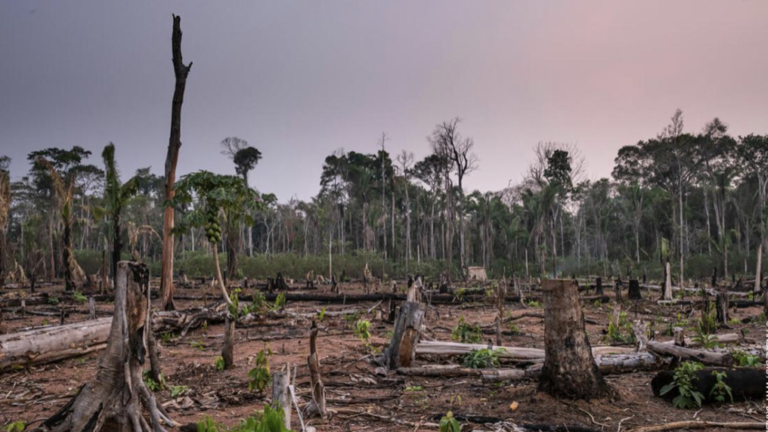
Founders Hugo, Pascal and Adrien understand the severity of deforestation and they use innovation to combat climate change. They outline three areas in particular: agritech, artificial intelligence and drone technologies, which over 4 main stages can be deployed to regenerate forests anywhere in the world.
First a diagnosis takes place in which Morfo analyses key elements such as soil quality and environmental conditions of the land to begin planning the vegetation types and conservation needs of the land. The importance of analysing soil can sometimes be understated as the quality and type of soil will allow conservationists to determine the most beneficial species, to allow for a successful forest regeneration project. Secondly, a planning stage begins where vegetation type, density and planting methods are determined. Morfo has a catalogue of over 300 species of plants using findings from the diagnosis stage and utilising local communities so that the most genetically diverse and suitable plants are selected. Following on from this, the crucial planting period begins in which Morfo uses drone technology to enable efficient and safe planting of seeds. Yet crucially, MORFO also allows for up to 20% of planting to be carried out manually, to support the role of local players in the forest’s regeneration. Finally, the job is never done after planting and the monitoring that follows is equally as important. MORFO continues their monitoring program from between 5-30 years, depending on the complexity of the project. Monitoring includes utilising the power of AI to translate drone imagery into biomass information such as plant cover and species diversity. This can then be used to carry out necessary improvements to the regenerating forest.
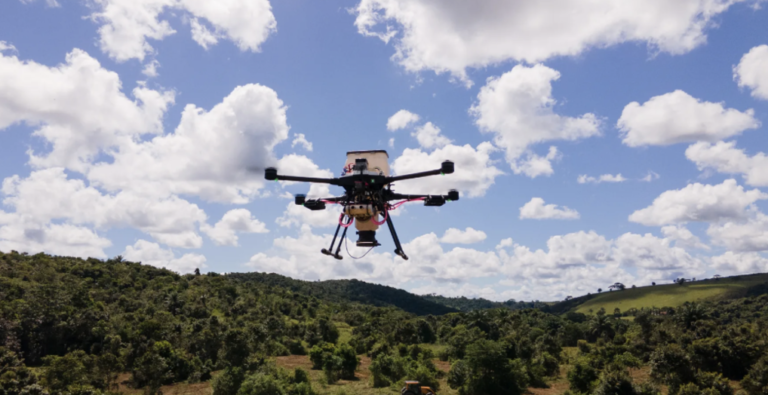
The MORFO forest regeneration process is rigorous and due to their emphasis on advanced technology MORFO’s ease of scalability is ensured. Adrien Pages in a recent article in the Maddyness tech magazine explained that:
- “We want to reforest the equivalent of the surface area of Germany and Spain by 2050,” This will start to have a real impact on a global scale. But even if we succeed, it still won’t be enough and other companies will have to do it.”
Whether it is the small local grassroot initiatives or larger more advanced tech companies that guarantee the regeneration of our lost forests, the progress must continue. Seeing the mission and ambition of companies such as MORFO is hopeful. It makes me fully believe that harnessing technology can be one of our great tools, in not only conservation, but in fighting climate change.
Challenge: US elections
Last week we witnessed the first presidential debate and meeting between Kamala Harris and Donald Trump. The debate which illustrated Harris as confident, prepared and presidential, put Trump on the defensive, with many hailing the debate a Harris win. There is no doubt that if Trump loses in the November elections it is a win for the climate movement, but the challenge is to what extent is Harris a win for the climate movement?
Very little was said on the issue of climate change despite both candidates being asked what they would do to fight climate change. Harris outlined Trump’s claim that climate change was a ‘hoax’ and insisted it was ‘very real’, but fell short of any meaningful reassurance on how she would tackle the problem. Instead, she stated that investing in diverse sources of energy (including oil and gas) was a matter of national security. Trump on the other hand continued on the defensive and completely dismissed the question to talk about how he would put tariffs on foreign made cars. The lack of any real debate on this topic worryingly puts climate change low on the political agenda.

If Trump was to win in November, the energy transition in the USA would not be halted and the removal of the inflationary reduction act would be a highly unlikely outcome. However, Trump’s history on climate change and his links to the oil and gas industry would have a profound impact on the global stage. The USA’s hegemonic status on the global stage gives them the responsibility to encourage and influence the rest of the world in decision making. Having a leader such as Trump, who is so dismissive of the climate movement, could dangerously set back global climate talks for years.
Harris to the dismay of many in the environmental movement boasted her support for fracking. Although this was expected from Trump, Allie Rosenbluth, campaign manager at Oil Change US said:
- “We need a climate president, one who will invest in clean energy, end fossil fuel subsidies, and phase out fossil fuels to protect the communities most exposed to oil and gas pollution and the climate crisis. It’s time for Harris to show she can be that president.”
Yes, Harris could have been stronger on her support for climate policies, but we must bear in mind that this debate is occurring in one of the most politically polarised nations in the developed world where climate change has become an increasingly liberal rhetoric. Without much digging we can see Harris’s impressive track record in dealing with climate change.
During her time as California’s attorney general between 2011-17, she investigated Exxon mobile for misleading the public about climate change, prosecuted Plans All American Pipeline over an oil spill off the California coast in 2015 and secured $86 million settlement to the state from Volkswagen for cheating diesel emission tests. These all show a common trend, that Harris as a result of her attorney general past, has a view on climate change that comes from a deep sense of justice. The injustice of unaddressed climate change is so stark that this could easily provoke a possible president Harris into achieving incredible progress in terms of sustainability. More recently the Biden-Harris administration introduced the Inflationary Reduction Act, which was enacted in August of 2022 to help bolster the clean energy transition in the USA. The act, which consisted of an over $200 billion investment in renewable energies, placed the USA in a much better position to transition away from oil and gas with an estimated 170,000 jobs also being created.

If Trump is elected as president, there is no doubt that progress in terms of solving climate change on a global level will be thwarted. If Harris is elected, she will have to battle with the entrenched fossil fuel culture of the USA which disappointingly, despite her accomplished climate record, has not been a key talking point of her election campaign.
Articles on the topic:
Scientific American – Presidential Debate Features Fracking while Climate Change Is Mostly Ignored
The Guardian – Climate experts lament Harris’s vow to keep fracking in debate with ‘walking oil spill’ Trump
abc news – The presidential debate proved that climate change is not at center of 2024 election, experts say
Independent – What to know about fracking, false claims and other climate issues mentioned during the debate
CBC – Why talk of fighting climate change is muted in the U.S. presidential campaign
Hope: The energy revolution is here
If you follow climate news, you will know that the vast majority of headlines are negative. In today’s hope section it is so easy to become completely disheartened with the future of the planet. In May of this year I had the pleasure of attending a talk at the annual Hay Festival in which Hannah Richie, head of research at Our World in Data, outlined her book Not the End of the World. The book offers an inspiring and hopeful view on climate change, crucially based on data, which is more to do with how far we have come, as opposed, to how far we are away from solving climate change. One of the arguments she made that surprised me was the success of renewable energies.
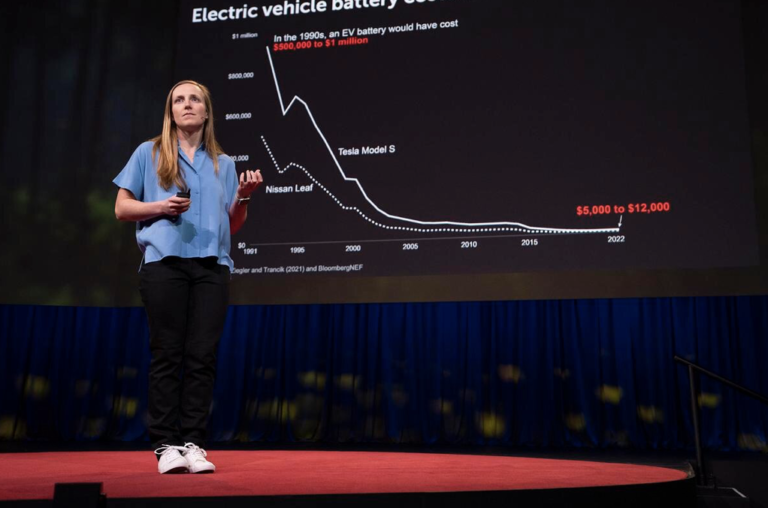
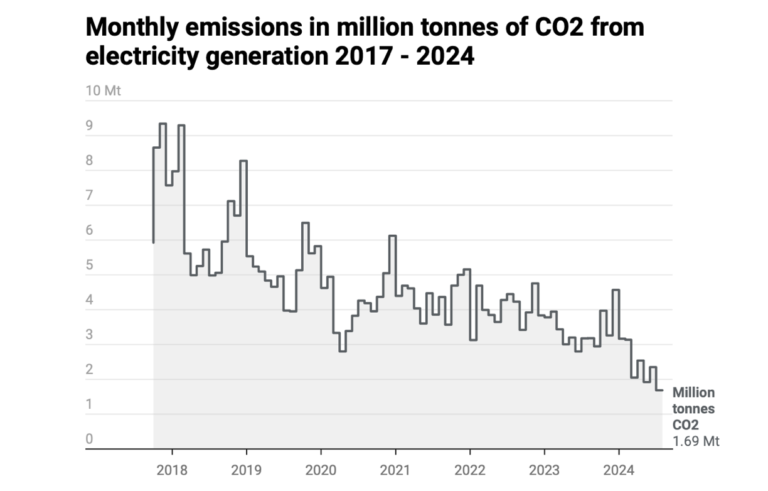
The truth is renewable energies have been scaled like no-one would have predicted and prices have dropped so much that they rival the dirt-cheap prices of coal and oil. The price of solar energy has fallen by 80% since 2010 with the price of off-shore wind falling by 65% in that same time period. This has led countries such as Norway, Paraguay, Albania and Iceland to have a completely renewable electricity grid. The incentive for this is strong. Not only can these countries accelerate towards net-zero but they become increasingly energy secure: an important feat in today’s unpredictable geopolitical climate. Even the USA, a country with a strong oil and gas culture, has seen a twelve-fold increase in solar energy and 2.6 times as much wind power as it did a decade ago. In the UK this August, electricity generation from fossil fuels fell to 3.6 terawatts, the lowest level in over a century. On top of this, Britain is on track to end the year with power sector emissions of between 30 and 35 million tonnes, which would be 40-50% below emissions just five years ago (article). The data shows that renewables are on an irreversible rise and as we electrify industry and daily life, we move towards a self-sustaining and sustainable power generation.
However, there is a caveat. As renewable energy projects accelerate, we must be wary of where these projects are being installed. For example in North Queensland, Australia, the Upper Burdekin wind farm proposal will remove 769 hectares of endangered species habitat relied on by Sharman’s wallabies, koalas and northern greater gliders. Land is clearly needed if we want to become reliant on renewable energies, but this does not have to come into competition with our essential biodiversity. In California for example, a test project to enhance nature and renewables simultaneously is being tested and by planting native plants under solar panels, prairie land and pollinator habitat is being restored. Either we do this or we ensure that installations are placed in degraded, ex-agricultural land. If we expand renewables and this comes at the cost of important biodiverse habitat the benefits that renewables so clearly have are hindered.
The advancements of renewable energies in the last decade is a reason for hope and provides evidence of humanity’s unique ability to adapt. Renewables are clearly the way forward and with countries becoming increasingly incentivised to develop renewables for their own energy security, I believe we will see more and more countries reach the impressive levels of Iceland, Albania and Paraguay.
Articles on the topic:
The Guardian – Not the End of the World by Hannah Ritchie review – an optimist’s guide to the climate crisis
Financial times – We must not mistake China’s success on green energy for a global one
The Conversation – Wind powers a record summer for renewable energy in Britain
Image of the week
Wildlife photographer of the year award
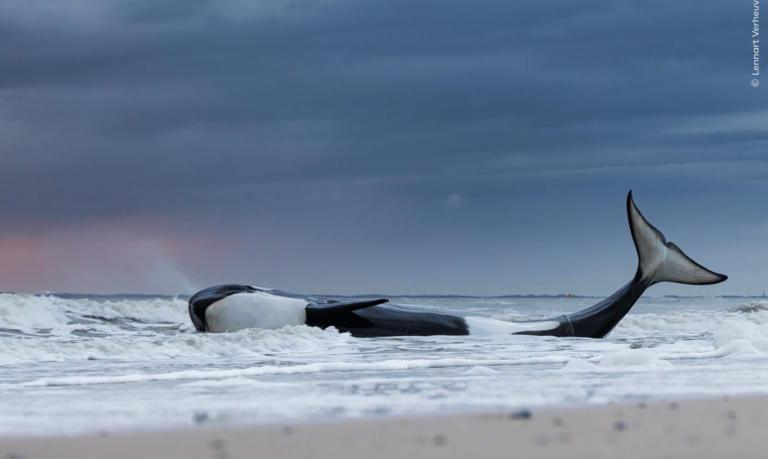
Lennart Verheuvel – Last Gasp
I had the pleasure of seeing this picture in the wildlife photographer of the year award’s exhibition in the National Museum of Scotland last year and it won the category for ocean- the bigger picture.
The crashing waves, the darkening sky and the red light from the setting Sun provide a dramatic background to the black-and-white beauty of the orca. The raised tail flukes and vapour ejected from the blowhole show distress and weakness.’ A study later revealed that not only was this orca severely malnourished it was also extremely sick.
Research shows that orcas in European waters have the world’s highest concentrations of polychlorinated biphenyls. These banned chemicals can persist for many years in marine food webs, weakening immune systems and reducing breeding success in whales, porpoises and dolphins.
Articles you may have missed:
1. To fix climate anxiety (and also climate change), we first have to fix individualism
2. How Trump Could Turn a $400 Billion Green Bank Into a Fossil Fuel Lender
3.Gaza is an environmental catastrophe
4.How to change people’s minds about climate change: what the science says
5.Why we must attack black carbon air pollution to protect the climate