
Introduction:
In this edition, we’re diving into the forces shaping our climate future, from surfers taking on sewage in the Thames to a start-up turning rocks into carbon sinks. We’ll look at political pushback on climate science, and end with a dose of optimism: a biotech breakthrough that could help save the world’s bees. I hope you learn something new and enjoy reading!
Oscar Petterson Fuentes

Non-profit: Surfers against sewage
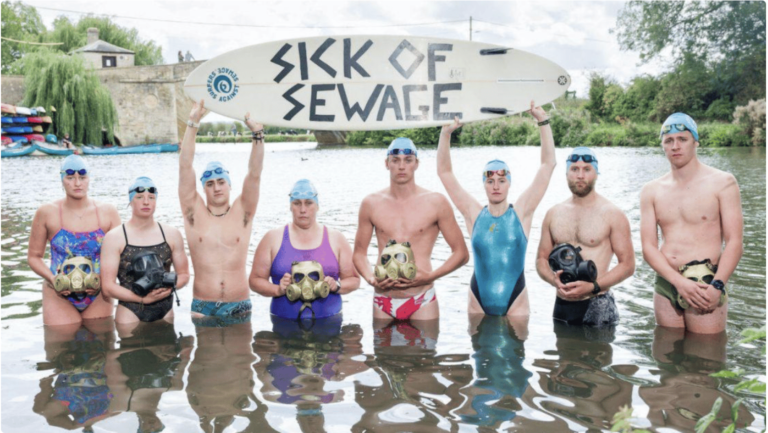
I was watching Channel 5 news this week when a striking campaign called ‘the Thames swim against sewage’, organised by a non-profit called Surfers Against Sewage (SAS), was covered. The initiative sees Olympic and record-breaking swimmers complete a 200km relay from the river’s source all the way to Westminster. Their goal: to raise awareness of sewage pollution and take demands for clean water directly to Parliament.
Why does this matter? Sewage pollution has become one of the UK’s most pressing environmental issues. Since water companies are privately owned, investment in infrastructure is often at odds with shareholder profits. The result is chronic underfunding of sewage systems It is estimated that sewage is discharged into waterways every 30 seconds. The outcome is waterways that are increasingly unsafe for both people and wildlife, with regulators slow to hold companies accountable.
Surfers Against Sewage was started by a group of alarmed surfers 30 years ago as a response to the state of Britain’s coastlines. Since then, it has grown into one of the UK’s most successful marine conservation charities with over 100,000 volunteers in the UK, under the leadership of Giles Bristow. Their national #EndSewagePollution campaign calls for systemic change, from citizen-led evidence gathering in local rivers to headline-grabbing protests like the Thames swim.
The charity has also embraced technology by developing a ‘Safer Seas and River Service’ app that provides real-time water quality and beach safety information at over 550 locations across the UK. In addition the non-profit has also developed a live sewage map which alerts when sewage is being discharged into waterways across the UK. These technological developments are pivotal in improving the transparency of these water companies and giving the population a visual aid to see the extent of this issue.
Surfers Against Sewage shows the power of combining grassroots activism with technology and bold storytelling. By bringing the crisis of sewage pollution into the public eye, it forces a conversation about accountability, governance, and the urgent need for cleaner water
Website: https://www.sas.org.uk/
Tech start-up: Heirloom
This edition’s tech start-up is Heirloom, an American direct air capture (DAC) technology company founded by Shashank Samala. Heirloom has quickly established itself as a leader in the field by combining natural processes with engineering to permanently remove CO₂ from the atmosphere. In nature, carbon dioxide is permanently stored in limestone over thousands of years. Heirloom’s innovation is to accelerate this process from years to days.
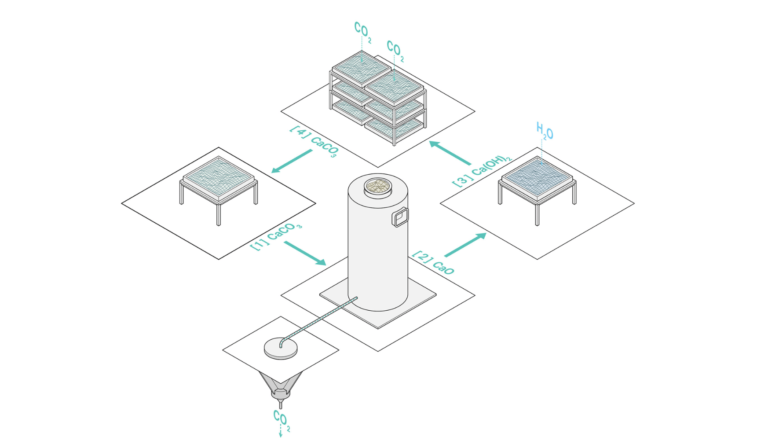
Heirloom’s technology is modular, scalable and designed to be more cost-effective compared to other expensive DAC technologies. Their process begins with crushed limestone, which is heated in a kiln powered by renewable energy. Heating separates the rock into calcium oxide and CO₂, with the CO₂ captured and stored underground. What’s interesting with heirloom is that the process continues. The calcium oxide is then spread onto large trays, and over roughly three days, this powder captures carbon dioxide from the atmosphere and turns back into limestone. This cyclical process is repeated, creating a continuous system of capture and storage.
Heirloom has two notable projects. Their flagship project is located in Northwest Louisiana, designed to scale in phases. The first facility, set to begin in 2026, will remove 17,000 tonnes of CO₂ annually. A second, larger facility in the same location will launch in 2027 with a 100,000-tonne capacity, expanding in later phases by another 200,000 tonnes. At full scale, this site will be one of the largest DAC facilities on earth. They also have another project in California, a commercial facility, which is a first in DAC. Heirloom have partnered with CarbonCure to use the captured CO2 in concrete. The CO2 is permanently embedded within the concrete, which is used in construction, with the added benefit of stronger concrete.
Heirloom Carbon’s main sources of income come from carbon removal purchases, partnerships, and government support rather than selling a physical product. On their website individuals, businesses and enterprises can purchase carbon credits to offset emissions and reach sustainability goals. This model allows Heirloom to fund growth while building confidence in DAC as a scalable climate solution.
Website: https://www.heirloomcarbon.com/
Challenge: Blinding the Satellites, Blinding the Truth
Trump’s onslaught on anything his administration deems “woke climate politics” has reached new heights. His latest move has been to scrap key satellite instruments, which his administration says go “beyond their primary mission” of predicting the weather.
The first set of Orbiting Carbon Observatory satellites has been measuring carbon dioxide levels for the past decade, providing unprecedented detail on how fast emissions are rising and how they vary around the globe. These instruments have been crucial in understanding the growing climate change impacts around the planet, including in the U.S, so many have touted this move as irresponsible and shortsighted.

In addition to this, the Trump administration has planned to replace the Atmospheric Composition Instrument, which tracks air pollution levels by the hour with the goal of improving air quality forecasts, and the Ocean Color Instrument, which monitors U.S. coasts and the Great Lakes to protect fisheries. These instruments have become increasingly important in our volatile climate system, where toxic algal blooms continue to devastate fisheries and smoke from wildfires presents an ever-growing air pollution health hazard.
These important instruments are being cut as part of a broader attempt to roll back climate research. Monica Medina, a former U.S. diplomat and environmental leader, critiques the move, stating:
- The weather isn’t political. The climate isn’t political. These are facts that we can know and be prepared to deal with, or not. I can’t imagine turning off satellites showing there were incoming attacks to our country. Why would we turn off the satellites that show incoming weather?”
These cuts go beyond budget trimming; they represent an attempt from the Trump administration to eliminate data that show the extent of the impacts of climate change on the American people and continue a long line of attacks on the scientific community. Cutting off the satellites won’t stop climate change. It only blinds us to its dangers.
The Washington Post: Trump is cutting climate satellites. That could affect weather prediction.
Hope: Superfood for Bees
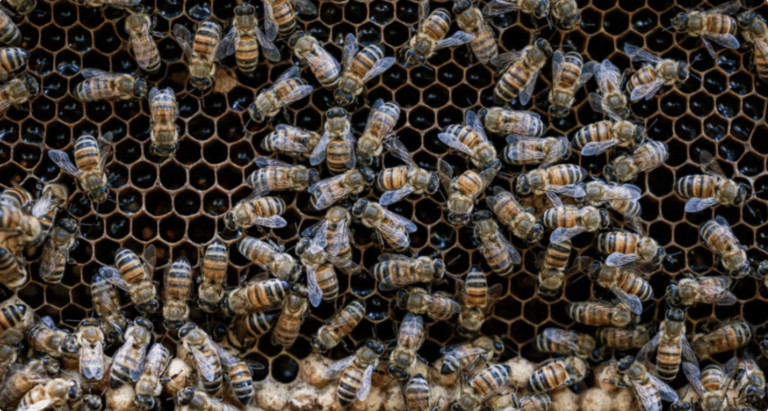
Global bee populations were found by a recent study to have fallen by 25% between 1991 and 2015; a decline that poses a serious threat to food security and biodiversity around the globe. Around 75% of all crops on earth rely on animal pollination to some extent, with 35% of global food production (by volume) relying on pollinators like bees. The culprits of their decline are familiar but no less alarming: pesticides, habitat loss, and climate change. Together, they have deprived honeybees of the floral diversity they need to thrive. Pollen, the major component of their diet, contains specific lipids called sterols necessary for their development. Without these nutrients, colonies struggle to grow. But a promising development out of Oxford may offer a lifeline.
Scientists have genetically engineered a strain of yeast called Yarrowia lipolytica to produce these vital sterols that are absent in the artificial pollen substitutes that beekeepers often use. In trials, bees given the supplement produced up to 15 times more larvae, and colonies were able to function at a high level even in the absence of natural pollen. Researchers are also excited by the promise of this supplement reducing competition between bee species for access to natural floral resources, which should stem the decline in wild bee populations.
While initial tests seem very promising, as is important with all scientific implementations in nature, the long-term impacts of this genetically engineered supplement on bee colony health and pollination efficacy will have to be monitored, but scientists believe that this yeast could be available to farmers within 2 years.
Bees are responsible for pollinating a third of the world’s crops, so their survival is inseparable from ours. While this yeast-based solution is no silver bullet, it shows how biotechnology can complement conservation efforts in protecting biodiversity. If successful, it could help secure both bee populations and global food systems within just a few years.
More on this: University of Oxford: Saving bees with ‘superfoods’: new engineered supplement found to boost colony reproduction
BBC News: Scientists make ‘superfood’ that could save honeybees
Image of the week:
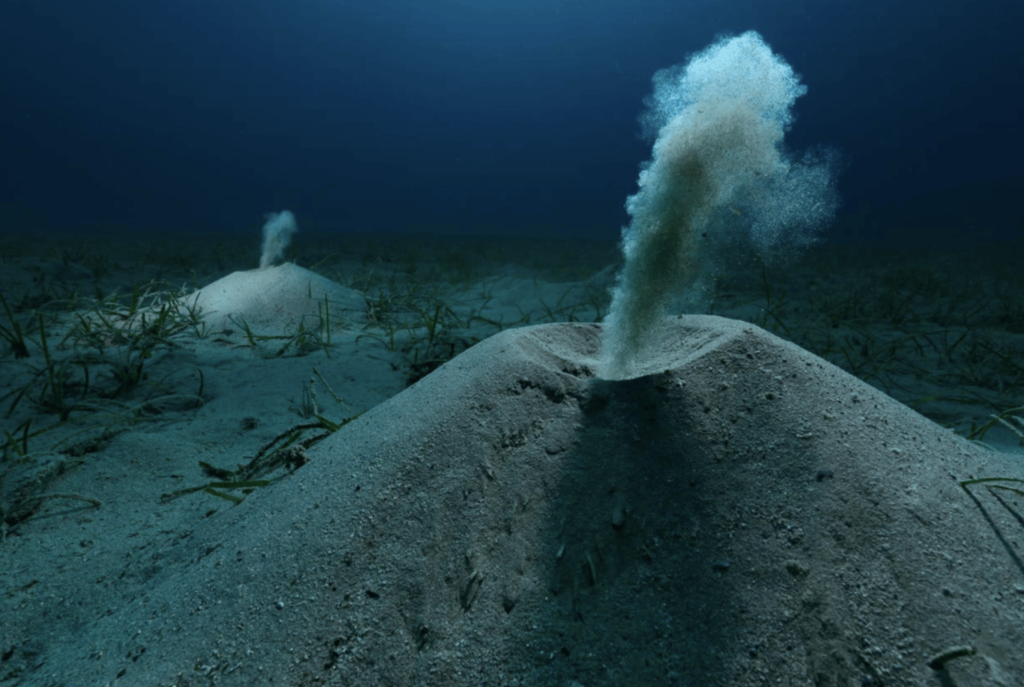
Environmental Photography Awards 2025
The Environmental Photography Awards is a competition that recognises photographers who document the environment and raise awareness about conservation and climate change. This edition’s image of the week is the 2025 Ocean Worlds category winner and the environmental photographer of 2025 winner.
The photographer Angel Fitor is a natural history photographer, photojournalist, and writer with a lifelong self-thaught background in marine & freshwater science, who has committed his life to give voice to Earth´s aquatic environments.
Angel Fitor
Unseen Unsung Heroes
Worms flush sand out of their burrows, Spain, 2023
‘As members of the endofauna – a huge, diverse community adapted to underground life at sea – these burrowing worms play a pivotal role in maintaining oxygen and nutrient circulation in the upper layer of sediment on the seabed, an activity that generates an entire ecosystem hidden under the substrate. All the seagrass beds along the world’s coasts, the riches of coastal estuaries and deep-water muddy beds, and the vast biodiversity associated with soft-bottom sea floors rely on the existence of these little-known worms. Their collective silent action thus has a massive impact on a global scale. On location, it was impossible to predict when the worms would be active. Some seemed dormant, others flushed for just a few minutes a day, while others were active throughout the day, but with an unpredictable frequency. This photo is the result of two month’s work, with twenty dives of five hours each, at a depth of eight metres.’ – Environmental photography award, Prince Albert II of Monaco foundation.
Articles you may have missed:
1. The Philippines to protect planet’s most climate-resilient coral reef
2. 6 Strategies that Achieve Climate Mitigation and Adaptation Simultaneously
3. Climate change fuelled wildfires of ‘unprecedented intensity’ in Spain and Portugal, experts say
4. Climate change mitigations for global energy infrastructure
5. Could company executives really be sued for causing climate change? – Business Green
Thank you for reading!
To sign up to the newsletter, go to www.verdeindex.com
Or follow Verdeindex on LinkedIn at: https://www.linkedin.com/company/verdeindex/