
Introduction:
This edition dives into four stories that show both the urgency of our environmental crises and the power of bold, smart solutions. We spotlight the Wildlife Justice Commission, a non-profit tackling the billion-dollar shadow economy of wildlife crime; NewPower, a startup giving old diesel buses a second, electric life; a stark warning on how Europe’s summers are turning deadly; and a success story from Switzerland, where clean water initiatives have transformed polluted rivers into public swimming havens. A reminder: when justice, innovation, and political will align, change is not just possible, it’s inevitable.
Oscar Petterson Fuentes
Non-profit: Wildlife Justice Commission
Wildlife trafficking isn’t just about endangered species; it’s a shadow economy built on inequality. This edition’s non-profit, the Wildlife Justice Commission (WJC), is driven by the aim of protecting vulnerable species from poaching.
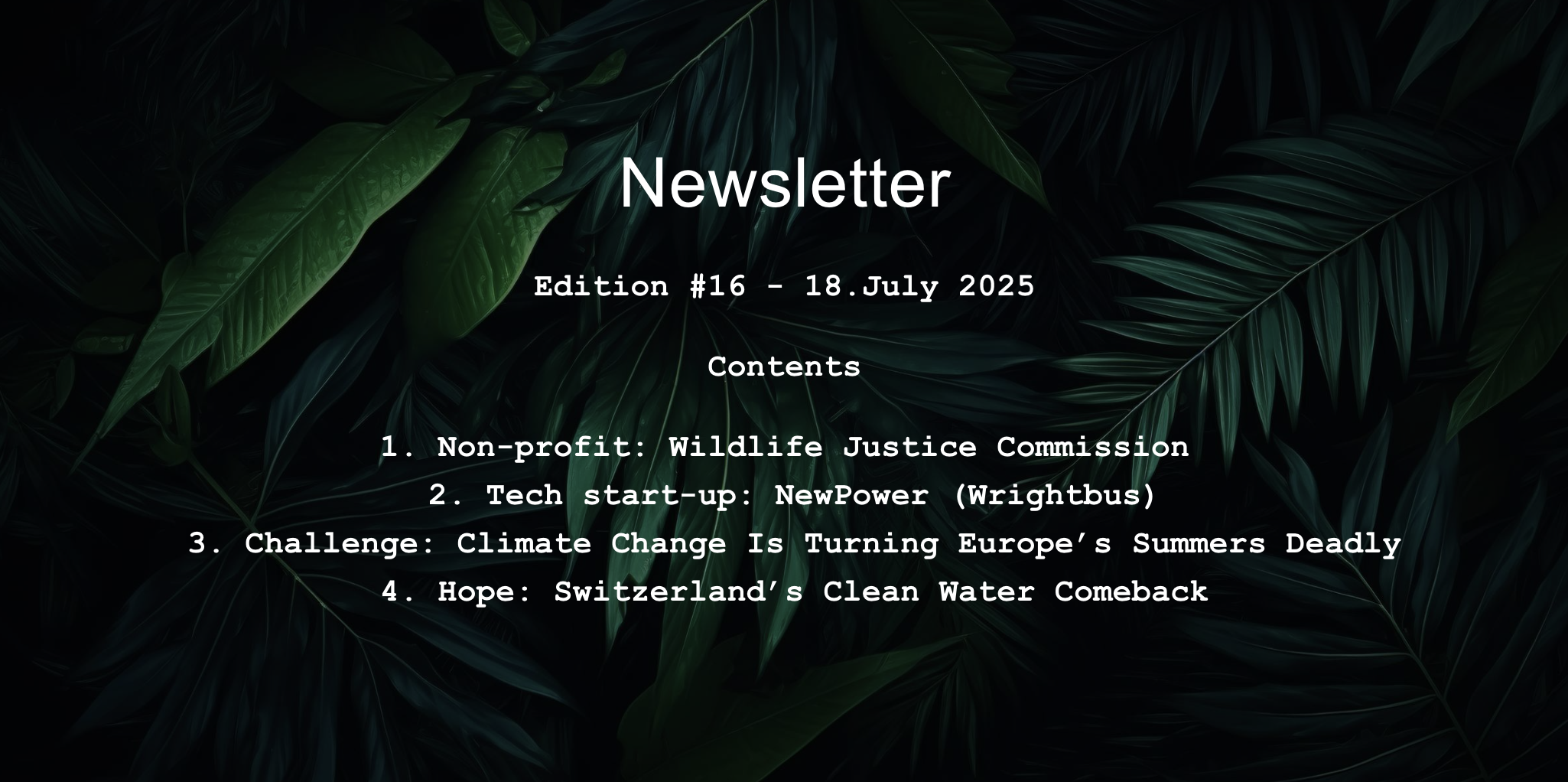
The illegal wildlife trade has long been seen as a low-risk, high-reward activity worth over $20 billion a year. This has naturally attracted organised crime groups who exploit people’s economic hardships to drive them into the needless killing or capturing of wild animals. It’s not surprising that people turn to poaching when a single Pangolin can fetch more than a month’s wages.
Apart from the societal implications of poaching, the impact on ecosystems can be devastating. Between 2010 and 2012, over 100,000 elephants were killed in Africa, a figure that captures the brutal scale of this crisis that ultimately leads to biodiversity loss and the destabilisation of entire food chains.
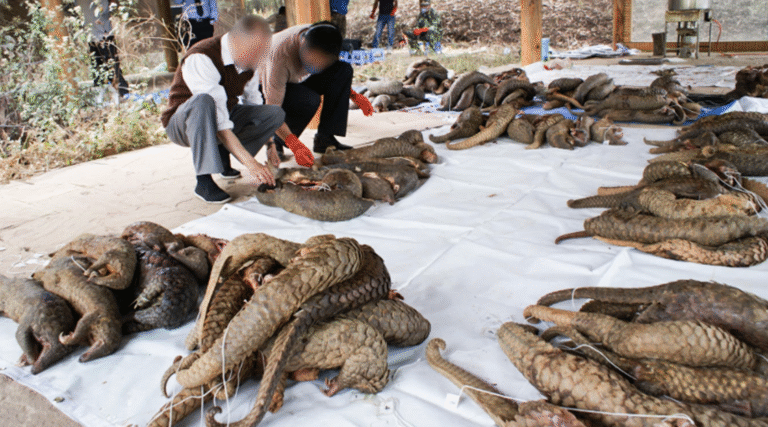
Fortunately, CEO Olivia Swaak-Goldman and her team at the Wildlife Justice Commission have developed a combined top-down and bottom-up strategy to combat wildlife crime. On the one hand, the Wildlife Justice Commission places a great emphasis on building the capabilities of local law enforcement agencies. This is predominantly done through equipping these agencies with specialised data intelligence that: highlights key actors within organised crime networks, predicts where and when poaching will occur and understands trends in geographic crime displacement and animal trafficking routes. This gives local enforcement a fighting chance in one of the world’s hardest crimes to police.
On the other hand, the WJC has played a central role over the last 10 years in building political will at the highest level to ensure long-lasting systemic change through a top-down approach. Their advocacy focuses on four key issues: exposing the failure of current enforcement strategies, tackling the corruption that enables trafficking, cutting off illicit financial flows, and recognising how wildlife crime intersects with arms, drugs, and human trafficking. These areas are highlighted by WJC in reports, conferences and webinars globally.
The fight against wildlife crime is winnable, but only if we stop treating it as a fringe issue. The Wildlife Justice Commission proves that justice, intelligence, and political will can protect both people and the planet.
Website: https://wildlifejustice.org/
Tech start-up: NewPower (Wrightbus)
Living in London, it’s been encouraging to see active steps taken to reduce the carbon footprint of public transport, especially the rise in new, purpose-built electric buses. But one question kept nagging at me: are brand-new electric fleets the most sustainable option? That’s when I came across NewPower, a “repowering” initiative by Wrightbus, the Northern Ireland–based bus manufacturer.
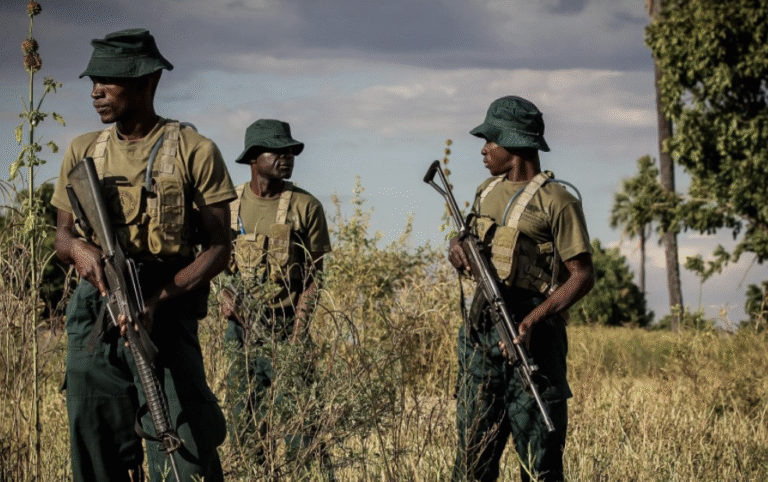
Wrightbus has been operating since 1946 and it currently headed by CEO Jean-Marc Gales. Its new initiative, NewPower, aims to transform sustainability within public transport. Instead of scrapping old buses, their solution is to repower them. This involves removing diesel components, such as the gearbox, fuel tank, and engine, and replacing them with electric powertrains, drivetrains, and electric heating and cooling systems.
This process saves up to 70 tonnes of CO₂ per year and enables bus operators to meet both municipal and company-level sustainability targets. And the benefits don’t end there. NewPower’s business model allows bus operators to decarbonise through electrifying their fleets at less than half the cost of buying new electric buses and even extends the lifespan of diesel buses by up to 10 years.
Wrightbus, a renowned innovator having developed the world’s first hydrogen-powered double-decker, has positioned itself as one of Europe’s fastest-growing bus makers. This momentum gives real weight to the NewPower initiative, a solution that could finally make affordable, scalable, and rapid decarbonisation of public transport a global reality.
Website: https://newpower.eco/
Challenge: Climate Change Is Turning Europe’s Summers Deadly
Europe’s summers are becoming deadlier, and we’re still underestimating the threat.
Deadly heat is no longer the exception in Europe; it’s becoming the norm. A recent study by scientists at Imperial College London and the London School of Hygiene and Tropical Medicine examined 2,300 heat-related deaths across 12 European cities. Shockingly, 1,500 of these deaths were directly attributable to additional warming caused by climate change. In some cities, temperatures were between 2–4°C higher than what would naturally be expected.
88% of these climate-driven deaths were people over the age of 65. A worrying stat that highlights the danger that heat poses. Unlike floods or hurricanes, heat leaves no trail of destruction. Its victims die out of the public view, in homes and hospital beds, making it an underappreciated and silent killer. With such limited visibility of the threat at hand, it is so easy to forget that a mere 2–3°C increase could mean the difference between life and death for thousands.
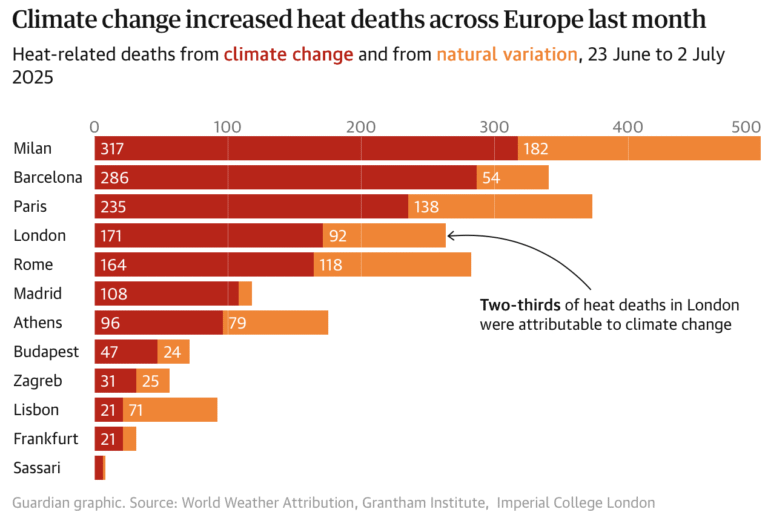
Yes, climate change is fuelling extreme weather events, but we must also recognise that global warming itself is extreme. Europe is the fastest-warming continent in the world, and these recent deadly heat waves are merely a warning for what’s to come. In any other context, 1500 preventable deaths would be enough to spur immediate action. So why do politicians and businesses continue to downplay the scale of the crisis?
Climate denial isn’t just ignorance anymore, it’s complicity.
The Financial Times: Deadly ‘early summer’ heatwave moves across Europe as climate scientists ring alarm bells
The Gaurdian: Climate breakdown tripled death toll in Europe’s June heatwave, study finds
Euronews: Climate change tripled deaths during Europe heatwave, scientists find
Hope: Switzerland’s Clean Water Comeback
This week’s edition highlights a success story from Switzerland. A country that has turned once-polluted rivers and lakes into pristine swimming spots through ambitious clean water initiatives.
In the 1960s Switzerland had some of the most polluted bodies of water in Europe. It wasn’t until a deadly typhoid outbreak in 1963 that Switzerland began to take water pollution seriously. Switzerland certainly has the financial means to invest in wastewater infrastructure, spending an estimated £174 per person on wastewater treatment compared to £90 per person in England and Wales. That level of spending may be difficult to translate into other contexts, but what is different about Switzerland’s initiatives is their emphasis on going beyond basic sewage treatment.
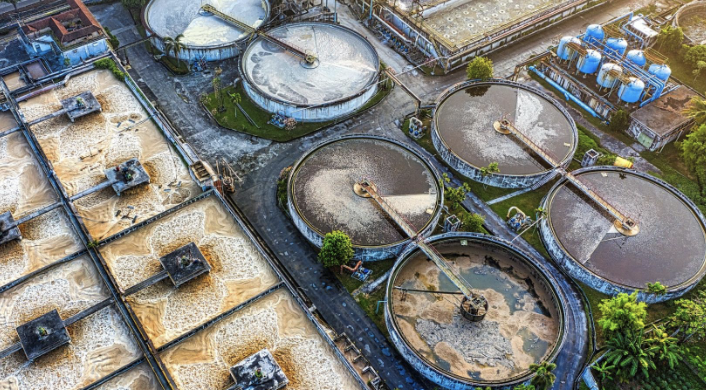
Switzerland became the first country in the world to create laws targeting harmful micropollutants, chemical residues from pharmaceuticals, pesticides and industrial waste. Since then investments in advanced water treatment technologies have played a significant role in improving the quality of water in the country. One standout example is the introduction of activated charcoal in wastewater treatment facilities that can filter up to 80% of these micropollutants from wastewater.
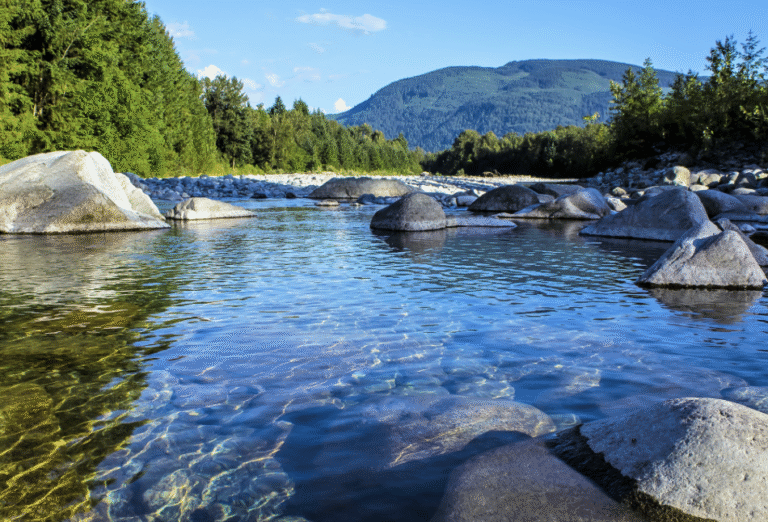
This long-term commitment to water quality hasn’t just delivered environmental benefits; it’s rekindled Switzerland’s cultural relationship with water. Water bodies once again have become a place for social gatherings, swimming and relaxation in Switzerland, reminding us that protecting the environment also enhances the quality of everyday life.
The Gaurdian: From sewage and scum to swimming in ‘blue gold’: how Switzerland transformed its rivers
Image of the week:
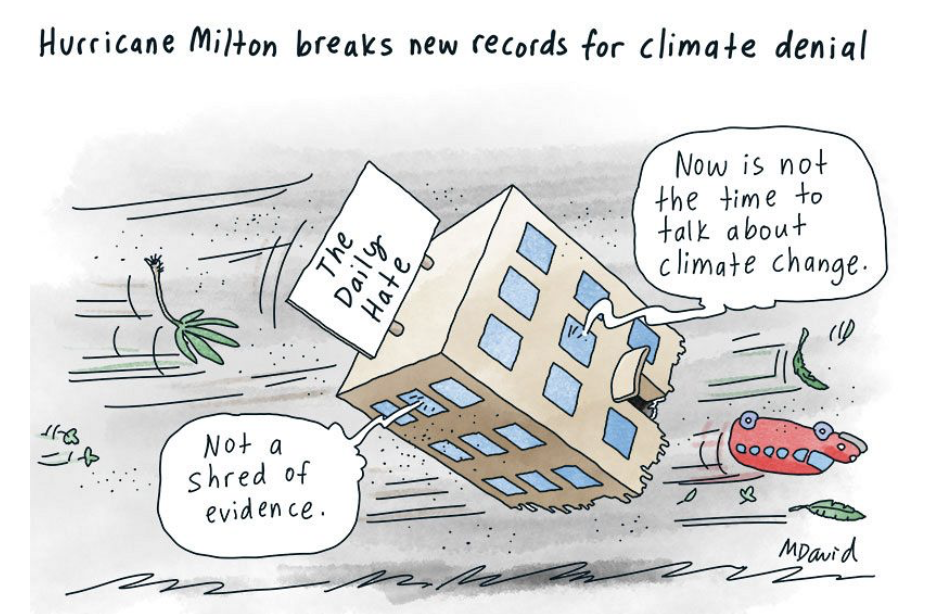
Mark David Cartoons
This great illustration from Mark David comes from last year’s Hurricane Milton, and it seeks to challenge climate change denial and highlight its absurdity.
Articles you may have missed:
1. Tax on AI and crypto could fund climate action, says former Paris accords envoy
2. Warming chalk streams a ‘perfect environmental storm’ – BBC News
3. Turning Mining Waste into Climate Hope – Daily Pioneer
4. Amazon’s carbon emissions jump as AI push tests company’s climate pledge
5. In Myanmar, a rush for rare earth metals is causing a regional environmental disaster
Thank you for reading!
To sign up to the newsletter, go to www.verdeindex.com
Or follow Verdeindex on LinkedIn at: https://www.linkedin.com/company/verdeindex/