
The Waste Behind the Reactor
By Oscar Petterson Fuentes
Introduction
Nuclear is a foundational electricity-generating technology, estimated to produce between 9 and 10% of the world’s electricity. Its ability to generate continuous 24/7 power has renewed interest in the technology, as grids look for ways to balance intermittent renewables and meet the growing demand from data centres for continuous supply.
The next wave of nuclear infrastructure rests on the promise of SMRs or Small Modular Reactors, which aim to transform the way nuclear projects are delivered, to give greater cost and schedule certainty with a standardised, factory-built approach, making the technology easier to finance than traditional large reactors.
As with any new technology, critiques have emerged. Mainly around the cost and time delays recent SMR projects have experienced, which many in the industry explain as a symptom of the relatively early-stage technology. With the focus now set on this short-term issue, one that further scale and supply-chain maturity may eventually ease, the nuclear industry’s biggest problem might not be building the reactors. It might be what happens to the fuel afterwards
The Problem
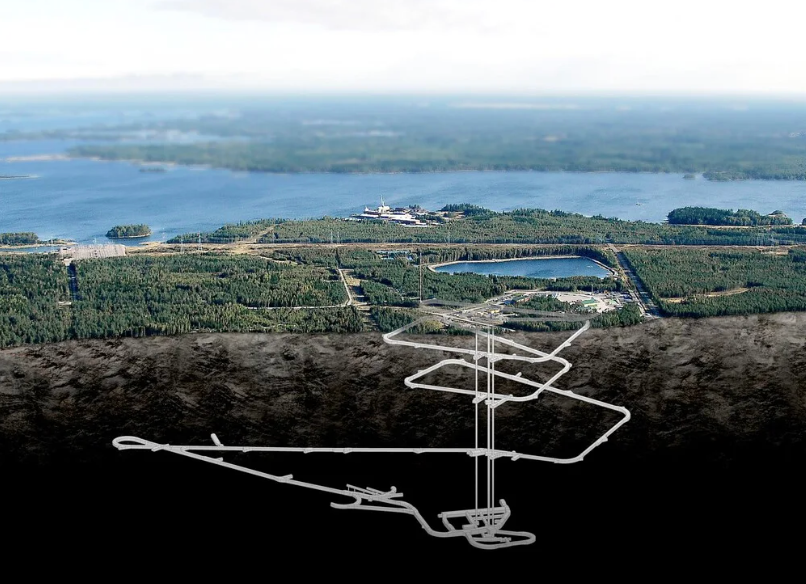
Since its inception, spent fuel (nuclear fuel within fuel rods that can no longer efficiently sustain a nuclear chain reaction) has been an unavoidable byproduct of the nuclear energy industry, and despite over 70 years of the technology’s existence, no country has yet completed an operational permanent disposal facility for it. Finland’s Onkalo repository is the closest any country has come, with final preparations underway and operations potentially beginning in late 2026, pending a final operating licence.
In the reactor, fuel becomes progressively less effective as fissile material is consumed and fission products accumulate. Once it can no longer efficiently sustain the required chain reaction, the fuel assemblies are removed and treated as spent fuel. After removal, spent fuel is initially stored in cooling ponds, where water both removes heat and provides radiation shielding. After sufficient cooling, some fuels can be transferred to dry storage in heavily engineered casks. These are interim solutions, with permanent disposal still not a fully developed technology.
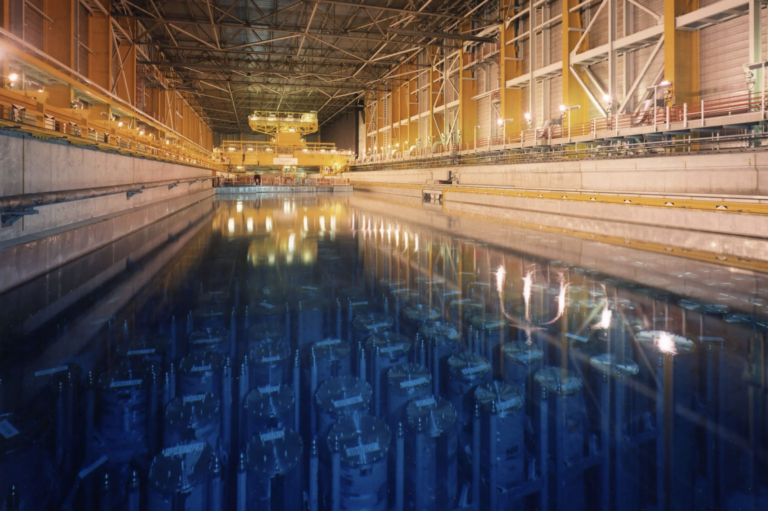
SMRs threaten to make this unresolved problem worse in two distinct ways: how much waste gets created, and where it ends up sitting in the meantime.
A 2022 study by Lindsay Krall, Allison Macfarlane, and Rodney Ewing analysed three specific SMR designs and found that, relative to a large conventional reactor, some could increase spent fuel volume by up to 5.5 times per unit of energy generated. This isn’t true of every SMR design; dozens are currently in development, and results vary significantly between them, but it shows that in some cases, SMRs may generate meaningfully more waste in the first place. Where it applies, the mechanism is physics rather than poor engineering: smaller reactor cores generally achieve lower fuel burnup, meaning more of the uranium inside each rod goes unused before it needs to be swapped out.
UK policy requires new-build reactors to maintain safe interim storage until their spent fuel can eventually move to a permanent facility. But the UK’s GDF isn’t expected until at least 2075. For any SMR built before then, interim storage will be the only option. A technology designed to make nuclear power smaller, more flexible, and more geographically accessible could therefore also create a far more geographically scattered stockpile of radioactive waste, held at many individual sites for decades. Every additional site adds its own requirement for security, monitoring, regulation, and eventual transport, meaning scaling SMRs could mean scaling this entire burden across dozens or hundreds of locations, all before a permanent disposal route exists anywhere.
On the Ground: Sellafield
Sellafield began in 1947 as a plutonium production site for Britain’s nuclear weapons programme. Now, Sellafield’s sole purpose is decommissioning: safely dismantling nearly 80 years of retired nuclear infrastructure, while managing 59% of the UK’s total nuclear waste currently stored there.
The biggest problem Sellafield has to tackle is decommissioning four historic legacy ponds and silos across the site that no longer meet the safety requirements that are required today and present some of the most difficult decommissioning challenges, not just in the UK, but in the world.
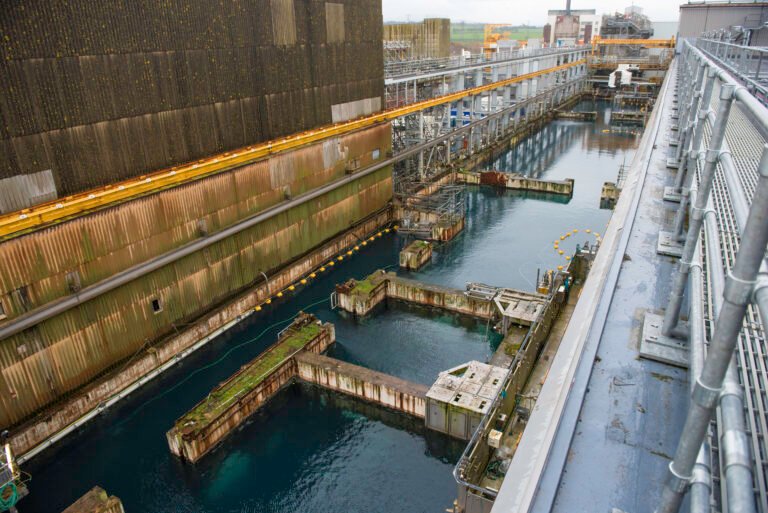
Decommissioning Sellafield’s ponds and silos is currently forecast to cost £136 billion, a figure that has already risen 18.8% between 2019 and 2024. On top of the financial overrun, one of the most hazardous buildings on site, the Magnox Swarf Storage Silo, is actively leaking radioactive water into the ground. Between the rising costs and a genuine, ongoing environmental risk, this is clearly a pressing problem, not a historical one. Therefore, if the UK’s example of a centralised nuclear energy waste facility demonstrates the enormous cost, complexity and institutional burden around nuclear waste management, what happens when that waste is distributed across dozens of sites and comes from hundreds of SMR reactors?
The Missing Piece
Ultimately, for SMRs to become economically viable, they need genuine scale. Manufacturers won’t invest billions into factory-based production unless they can count on demand for hundreds of units globally, not a handful of pilot projects. But scale is exactly what turns the waste problem from manageable into serious: one or two SMRs might generate an awkward but containable amount of extra waste. Hundreds of them, operating for decades, could create an entirely different challenge in both volume and in how you safely store, monitor, regulate, and eventually transport spent fuel across a geographically distributed fleet. That creates a fundamental issue for SMRs, which has to be solved before that scale is reached, not after.
Pieces of the solution exist. France, a country where 70% of its electricity is produced by nuclear, has had to deal with large amounts of spent fuel. The country has developed commercial-scale reprocessing at La Hague, recovering uranium and plutonium for reuse while reducing the volume of material requiring final disposal. This has become one of the world’s most established nuclear waste-management and reprocessing systems, infrastructure that many countries considering new nuclear deployment do not currently possess. Finland’s Onkalo repository, a Geological Disposal Facility, which permanently isolates nuclear waste deep in stable bedrock, has come even closer to solving the permanent waste disposal issue. Built at Olkiluoto, alongside an existing nuclear site, the facility demonstrates the advantages of concentrating waste infrastructure around established nuclear locations. But how easily could a similar model work for a future fleet of dozens of smaller reactors distributed across a country?
The UK has neither an operating geological disposal facility nor France’s current commercial-scale reprocessing capability. Britain tried to build an example of France’s reprocessing capability through Sellafield’s MOX plant. It was designed to convert recovered plutonium into usable fuel at a target of 120 tonnes a year; over 9 years it produced less than 14 tonnes, before closing down at a net loss of £2.2 billion. This Plutonium stockpile has now been classified as an asset of zero value. Increased costs, supply chain difficulties, and lack of experience make it essentially impossible to simulate France’s mature waste reprocessing ability.
The UK is therefore relying on its own future Geological Disposal Facility, currently planned to be available for spent fuel and high-level waste in 2075 at the earliest. This will be completed in a future in which widespread SMR’s, as their economics require, have waste already sitting idle in tens to hundreds of locations across the country. This is the missing piece, not simply the amount of waste being produced, but the infrastructure required to manage it across a more geographically distributed nuclear fleet. As nuclear generation decentralises, the systems for storing, recycling and ultimately disposing of its fuel will need to scale with it.
Company in Focus: Curio Energy
Curio Energy is a US-based start-up dedicated to closing the loop in nuclear energy. Driven by the idea of solving the back end of the nuclear fuel cycle, the team see their technology as a second Manhattan Project, the key to unlocking the clean, 24/7 baseload energy that could enable a more prosperous and sustainable future. CEO Edward McGinnis has described America’s stockpile of spent fuel as a resource worth “hundreds of billions of dollars, if not a trillion.”
Curio has developed a technology called NuCycle, designed to recover materials from used nuclear fuel that still hold potential energy value. The process extracts enrichable uranium hexafluoride to fuel current commercial reactors, alongside TRUfuel®, a proprietary blend tailored for next-generation fast-spectrum and small modular reactors. By also capturing valuable isotopes used in medicine, space exploration, and advanced manufacturing, the system eliminates roughly 97% of high-level nuclear waste by mass.
The promise of this technology has been backed directly by the US Department of Energy. In August 2026, Curio secured $2.5 million in new funding to begin testing NuCycle with real used nuclear fuel and transuranics, rather than simulated material, building on an earlier $5 million award from 2023. Curio is targeting deployment of a demonstration facility capable of processing 4,000 metric tons of used fuel by the end of 2027, and is already pursuing the formal operating licence needed to run it.
Curio isn’t only partnered with the government. It has also signed agreements or memoranda of understanding with NuScale Power, Framatome, and Sargent & Lundy, some of the firms actually building the next generation of reactors, to identify collaboration opportunities and help connect Curio’s output across the nuclear supply chain. This aims to build the waste-recycling infrastructure a future of geographically dispersed SMRs will actually need.
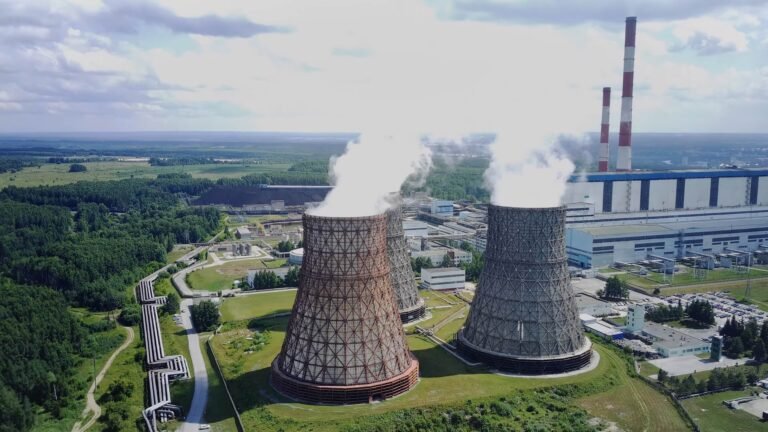
There is no denying Curio is entering a part of the nuclear industry with significant untapped potential. However, the $2.5 million grant reflects an earlier-stage investment, enabling further testing rather than funding the significant infrastructure required to manage the back end of a growing nuclear fleet. Even if technologies like NuCycle can substantially reduce the volume of material requiring final disposal, they do not by themselves solve the wider challenge of collecting, transporting, monitoring and ultimately disposing of spent fuel across a more geographically distributed fleet of reactors.
Company News:
World Nuclear News: US collaboration to study used nuclear fuel recycling
Interesting Engineering: US targets 4,000 tons of nuclear fuel recycling with new $2.5 million funding push
Verdeindex View
This edition has sought to highlight a systemic issue with SMRs. As nations without long-term disposal methods for spent nuclear fuel explore the potential for expanding SMR capacity, a genuine assessment of the implications for nuclear waste is overdue.
When we assess new energy systems and technologies, cost and value are naturally central to the discussion. Risks tend to be assessed around development, construction and operation, rather than what happens at the end of an asset’s life. In the case of SMRs, focusing on installation and generation while leaving the end-of-life management of spent fuel unresolved means overlooking a significant part of the risk puzzle.
The question therefore isn't whether SMRs are good or bad. It is whether the infrastructure required to manage their consequences can scale at the same pace as the technology itself.
Sign up to the newsletter
New editions, sent as they're written. No spam, unsubscribe any time.
Sign up →