
Verdeindex Edition 05
By Oscar Petterson Fuentes
Non-profit: GreenWave
GreenWave is a non-profit that focuses on supporting fishermen or ‘sea farmers’ scale regenerative ocean crops in order to produce meaningful economic and climate impact yields. It was co-founded by Bren Smith, who previously worked as a commercial fisherman. In the 1990s a surge in commercial fishing, characterised by trawling and overfishing, led to a crash in the Northern Cod Fishery. Since then, Bren has been on an ‘ecological redemption’, looking for sustainable alternatives, which led to the foundation of GreenWave alongside co-founder Emily Stengel.
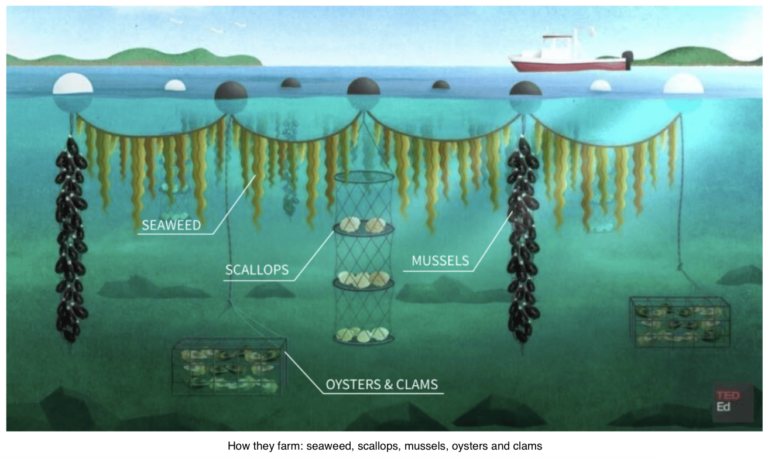
GreenWave’s approach is based on regenerative ocean farming, which is almost like an underwater garden, in which a variety of farmable species such as: scallops, mussels and seaweed are grown together. The farms are vertical and this is crucial as it increases the harvestable volume of shellfish and seaweed for each acre. Bren estimates that per acre he can harvest 10 tonnes of seaweed and 150,000 pieces of shellfish. Moreover, these species require zero input from fertilisers, freshwater or feed; instead they soak up nutrients in the water, making this technique one of the most sustainable on the planet. The quantity of food this method produces is not the only benefit. In terms of the environment, if you were to build underwater farms in less than 5% of US waters, this would sequester as much carbon as 20 million cars, create 50 million jobs and produce the protein equivalent 2.3 trillion burgers. The potential is huge.
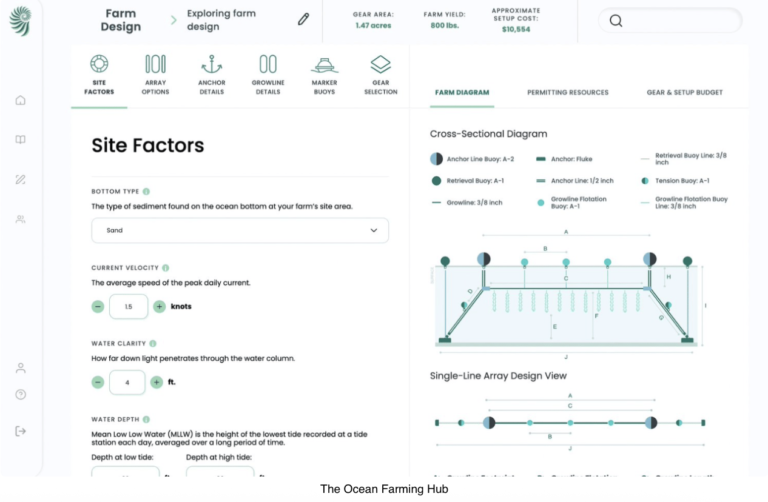
Regenerative farming is great, but GreenWave have gone a step further and developed an online ocean farming hub. This online platform: provides courses, includes an interactive Ocean Farm Design Tool to help early-stage ocean farmers generate key information and has built a community for farmers to interact and share knowledge. This online platform helps to make regenerative ocean farming accessible, especially for the younger generation who can benefit from a centralised digital network and platform.
On top of this, GreenWave has developed a number of apps to facilitate the growth of regenerative ocean farming. One of the apps is called Seaweed Source that connects: seaweed hatcheries, farms, processors, buyers, and other businesses actively producing and/or buying farmed seaweed; to align kelp supply and demand. GreenWave has a fund called the Kelp Climate Fund, which is a subsidy for ocean farmers to support a bundle of climate impacts, including carbon, nitrogen, and reef restoration. The farmers who have used this fund have access to GreenWave’s other app called My Kelp. This app allows farmers to measure and track crop yields and the environmental benefits of their farms.
GreenWave are revolutionising regenerative ocean farming through their investment into developing apps, funds and online platforms that will undoubtedly facilitate the growth of the regenerative ocean farming industry.
Website: https://www.greenwave.org/
Tech start-up: Submer
I previously wrote an article on generative AI and I talked about the huge environmental impacts from the recent surge in AI use. One of the main issues comes from the expansion of large data centres, which stores all the hardware needed for this new AI boom. These data centres require huge amounts of energy, but excessive water usage is another critical issue, which is needed to cool the hardware down. Today’s tech start-up Submer, founded by Daniel Pope, solves this issue by developing an immersion liquid to be used for cooling.

Water usage is a growing concern with the data-centres surrounding Ashburn, VA (estimated to host 70% of the world’s internet traffic each day) consuming more than seven billion litres of water in 2023. Unlike green energy, fresh-water is a finite resource, meaning managing this sustainably is crucial. Submer aims to solve this with their single-phase immersion cooling technology. This involves submerging computer components in a thermally conductive and dielectric liquid, made from synthetic hydrocarbons. This coolant captures heat from all components, including hot DIMMs and GPUs. The heated coolant is then circulated through a heat exchanger to transfer the heat away and once again cool the liquid.

Pyka’s other autonomous aircraft is called the Pelican Cargo, the world’s first electric aircraft capable of heavy payload, long-range travel and off-airport operations. The Pelican Cargo has also interestingly received attention from the US Department of Defence (DOD) after a recent $40 million investment round to help Pyka scale up its electric autonomous cargo planes. Militaries are amongst the biggest consumers of fossil fuels and the possibility of an investment into electric planes is a great sign. The benefit of Pelican Cargo for militaries is that it is unmanned, a literal life-saver in the delivery of supplies in contested environments. What’s more, due to the electrification of the planes, less thermal heat and sound is produced making planes harder to detect. Replacing batteries or charging planes is also much easier than transporting vast amounts of fuel across war zones.
Both aircraft address safety and environmental concerns in both the agricultural and transportation sectors. The DOD’s interest in the technology is promising for Pyka as the US military’s huge budgets can propel clean tech companies towards further scaling and commercialisation. Moreover, the Pelican Spray has already received a lot of attention from large commercial farms, which can be taken as a positive for sustainability as the adoption of zero-emission, efficient systems within the intensive agriculture industry is an important step towards sustainable agriculture.
Website: https://www.flygaft.com/
Challenge: Are our carbon sinks failing?
A couple of weeks ago the The Guardian released an article titled ‘Trees and land absorbed almost no CO2 last year. Is nature’s carbon sink failing?’. This alarmed many, as forests and trees through their carbon sequestration potential has been a major buffer against the catastrophic consequences of climate change. However, this is not to say that nature is no longer absorbing carbon, as the title of the article seems to suggest, but rather that on a net-carbon removal basis it is human activities that are hampering nature’s ability to sequester more carbon than is emitted.
From 2010 to 2022 two gigatons of carbon were removed from the atmosphere each year, through natural carbon sinks. However, in 2023 many of the sinks collapsed, removing approximately 0.23 to 0.65 gigatons of carbon, the lowest amount since 2003 and more than three times lower than the average over the past decade. This can largely be attributed to the extreme temperatures and drought experienced in 2023, partly due to the El Niño climate phenomenon, which has driven a decrease in the productivity of carbon sinks globally.
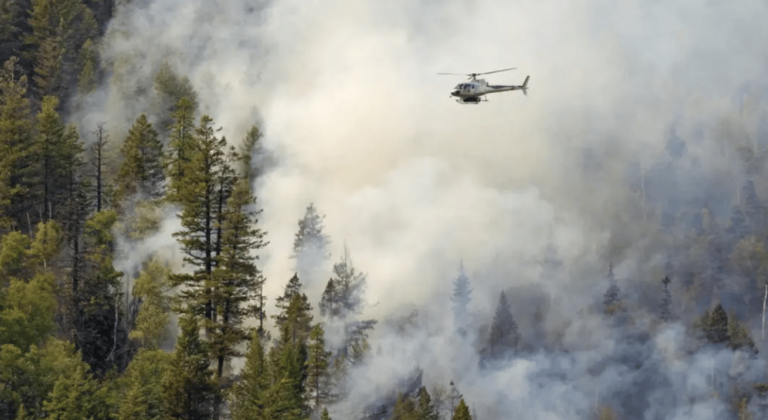
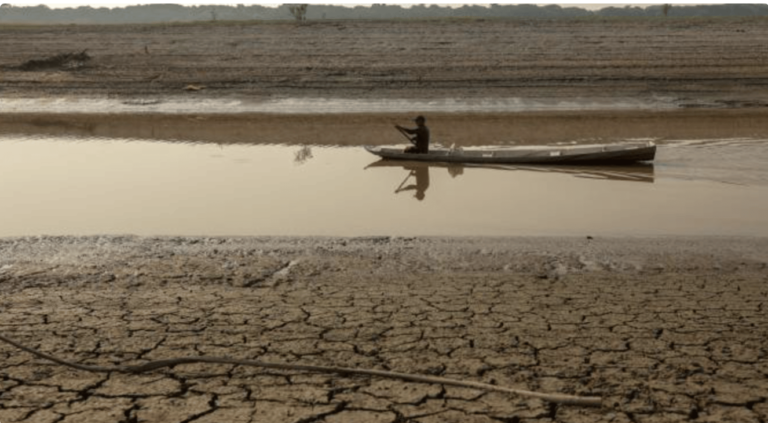
For example, in September Amazon basin rivers were at a record-low as a result of the most “intense and widespread drought” ever recorded. These droughts have occurred not only as a result of El Niño, but deforestation is reducing the amount of moisture that trees release into the atmosphere, thereby altering rainfall patterns. Less trees and a lack of moisture induces drought and heat that damages the productivity of carbon sinks by causing stress-related declines in photosynthesis; therefore, leading to a decrease in carbon dioxide intake. Although this decrease in productivity is likely to be temporary, if we continue to accelerate global warming through fossil fuels and deforestation this may become an increasingly common trend across many of the most valuable carbon-sinks around the globe.
The rise in temperatures globally coupled with the loss of nature from human activities is particularly worrying. The Guardian article finishes on a sombre note, stating that “we cannot rely on natural forests to do the job”. However, I disagree and instead cite the opinion of two scientists Will Turner and Bronson Griscom from Conservation International’s Center for Natural Climate Solutions who argue the opposite, arguing:
- “You can invest in the resilience and the restoration of ecosystems and that can be a great set of solutions, which is to say why statements in the article indicating that we can’t assume forests will remove CO2 (carbon dioxide), I would argue, are deeply problematic”.
Nature holds four times the amount of Carbon that is in the atmosphere. Disregarding this importance is damaging, but can also be a huge risk. If we do not determinedly protect our natural world and restore biodiversity and nature wherever we can, we face the risk of releasing huge amounts of previously stored carbon dioxide, whilst simultaneously losing one of humanity’s most important safety nets against a climate catastrophe.
Articles on the topic:
Conservation.org : Is nature failing to curb climate change? Not quite
The Guardian : Trees and land absorbed almost no CO2 last year. Is nature’s carbon sink failing?
The Week: Earth’s carbon sinks are collapsing
Hope: Tackling Greenwashing
Greenwashing is defined as a form of marketing that deceptively uses green PR and green marketing to persuade the public that an organisation’s products, goals, or policies are environmentally friendly. These claims can be exaggerated, misleading or simply untrue. The rise in greenwashing has come as a result of increased environmental consciousness within the public, which for many, dictates environmentally friendly purchasing decisions. This creates a real incentive for companies to appear sustainable and socially conscious.
Spotting greenwashing can be tricky. Many products will have labels with climate buzzwords such as ‘eco-friendly’, ‘sustainable’ or ‘plastic-free’, which can easily deceive consumers into thinking they are purchasing something with a low environmental impact. However, these terms are not regulated and it may only imply a certain feature of a product without providing context on a bigger picture. For example, a dress might be described as being ‘green’ because it is made from 50% recycled materials, but when you look at its entire production process, it is produced by a fast fashion brand in a highly polluting factory. In this case, research is important and really thinking about the product in question can help to identify greenwashing. Is a sustainable clothing brand really going to be selling their product on fast fashion retailers such as Shein?. Looking for companies that display a B-corp certification can be another solution. Companies with this certification are vetted for a minimum of 6-months before they are given this certification and they have to demonstrate high social and environmental performance and exhibit transparency.
Apart from products, companies in a variety of industries have also been perpetrators of greenwashing. A positive news story came out this week from Australia in which the world’s first greenwashing case is now taking place. Santos, an oil and gas company, is being sued by the Australian Centre for Corporate Responsibility for misleading consumers and shareholders about their plan to reach net zero by 2040. The Australian Centre for Corporate Responsibilities’ barrister, Noel Hutley, told the court that Santos’s plan was not a plan at all, but instead ‘little more than a series of speculations’. The company misrepresented natural gas as a clean energy and portrayed blue hydrogen (produced from natural gas) as emission free. This court case has the ability to set precedence as it hopes to tackle misleading polluting companies through consumer and corporate laws. The court case, regardless of the outcome, brings real hope that finally legal scrutiny is mounting against companies involved in greenwashing, which is currently unchecked and unregulated.
Articles on the topic:
The Guardian: Santos sued by its own shareholder in world-first greenwashing case
Island Conservation: You’ve heard of greenwashing, but do you know how to spot – and stop – it happening?
Image of the week
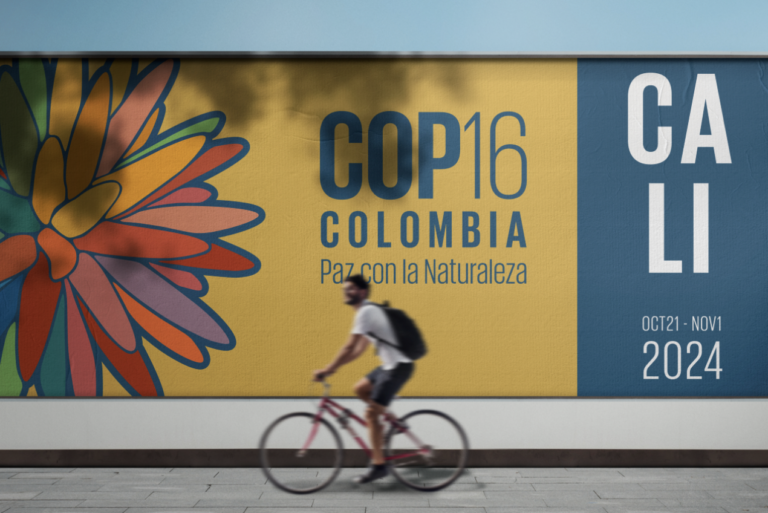
This edition’s image of the week comes from the biodiversity COP which took place between the 21st of October and the 1st of November in Cali Colombia. COP 16 was a continuation of the previous biodiversity COP in Montreal and sought to advance commitments to halt the destruction of nature.
Negotiations came to a halt towards the end of the Cali COP with no agreement on how countries were going to reach the estimated $700 billion needed annually for biodiversity. Countries only managed to pledge $163 million, showing a lack of ambition from the Global North, which impacts the ability for the biodiversity rich countries, mainly in the Global South, to finance restoration and conservation projects. Finally, countries failed to sign off how this decade’s 23 biodiversity targets, agreed on in COP 15, would be monitored.
Despite this, one of the highlights coming from these negotiations was the inclusion of indigenous voices within biodiversity governance. This COP was one of the most diverse decision making processes that has ever occurred on a global level and has set precedence for future sustainability conferences. The inclusion of indigenous voices proved pivotal in the agreement to establish a subsidiary body that will include indigenous peoples in future decisions on nature conservation. This is an important step towards recognising the role of Indigenous peoples in protecting land and helping combat climate change.
Additionally the ‘Cali Fund’ was established, which works to encourage (contributions are voluntary) corporations to share financial benefits when using genetic materials sourced from natural ecosystems. This is known as Digital Sequence Information (DSI) and this data is currently accessed for free on global databases with no compensation being given to the nature-rich countries from where the data originates. Companies that meet two of three criteria – sales of more than $50m (£39m), profits of more than $5m, and $20m in total assets – will need to contribute 1% of profits or 0.1% of their revenue to the DSI fund. While the deal is voluntary and national governments will need to introduce the rules domestically, some estimate that the fund could generate more than £1bn a year for nature conservation; a significant step forward for biodiversity financing.
Articles you may have missed:
1. Conservation policies must address an overlooked issue: how war affects the environment
2. We need a dash of hope, but is too much diverting our gaze from the perils of the climate crisis?
3. New insights from Shakespeare’s England reveal striking parallels to contemporary climate change
4. If fossil fuel dependency is a global addiction, climate activists are prophets trying to save us
5. Current climate pledges by nations ‘miles short’ of 2030 goal, UN body says – Al Jazeera