
Verdeindex Edition 07
By Oscar Petterson Fuentes
Non-profit: Just Diggit
Just Diggit is a non-profit that, much like many of the non-profits and tech startups I like to feature in the Verdeindex newsletters, believes in harnessing the power of nature to address the serious issues facing our planet. In this case, Just Diggit has a mission to regreen African landscapes with the help of millions of farmers. Based in Amsterdam, with offices in Kenya and Tanzania, Just Diggit was founded by Dennis Karpes and Peter Westerveld, and currently Marjolein Albers holds the CEO position. Desertification is a growing concern in Africa, with deforestation, overgrazing, and unsustainable land practices coupled with high temperatures degrading productive land. Africa relies heavily on agriculture, so the process of desertification poses huge economic uncertainty, whilst also exacerbating problems such as water scarcity, biodiversity loss, and food insecurity.
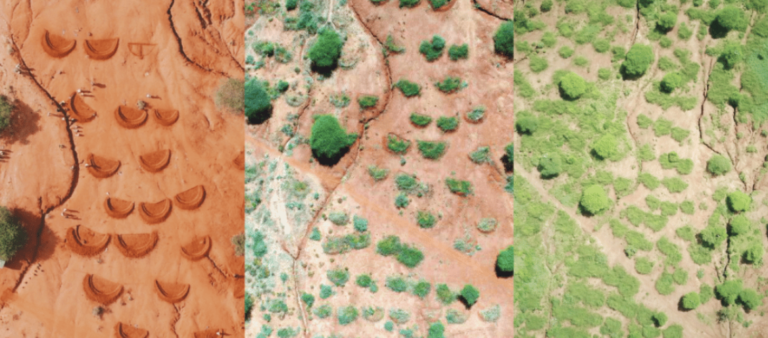
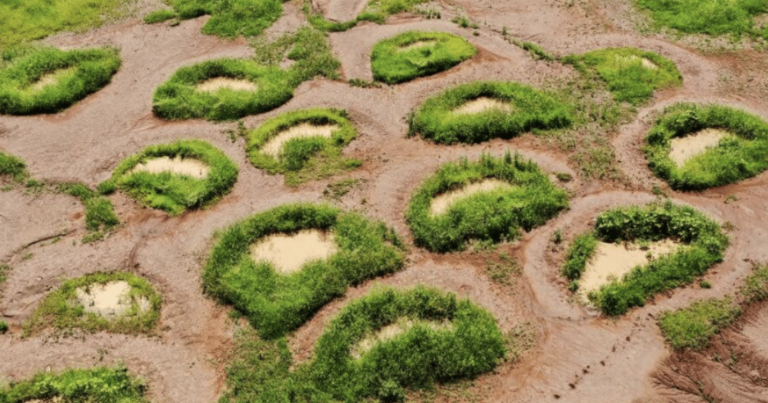
Just Diggit is unique in its approach towards promoting a form of sustainable land management that is linked to the traditional techniques used in places such as Tanzania, Senegal, and Kenya, in which they work closely with farmers from these regions. One of the practices they have deployed at scale is called ‘waterbunds.’ This is a practice that involves digging a semicircle hole into the soil top layer. This is a depression towards the bottom of the slope that then captures rainwater running down hills. This leads to a decrease in soil erosion and an increased water availability for seeds, allowing them to sprout and regreen the landscape. A similar technique that Just Diggit urges farmers to deploy is called Fanya Juu and Fanya Chini. This similarly involves digging contours in farms to prevent rainwater outside from coming into the farm and eroding soil but also prevents rainwater that has fallen within the farm from leaving and therefore increases water availability.
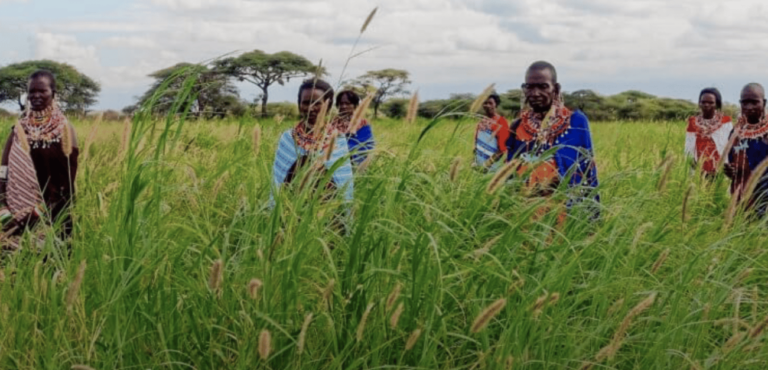
In some of their locations, Just Diggit has placed an important emphasis on the role of women in natural resource management. They have done this through grass seed banks, which are areas of land in a community, specifically used for the production of grasses and grass seeds that are protected from agriculture, grazing, and wildlife. This is important from both a social and environmental perspective. On one hand, women who collect the seeds and grass can sell this at local markets and generate income, supporting their families and increasing their status in the community. Moreover, by protecting these grasslands, indigenous spaces are subsequently protected, areas that are often neglected and underdeveloped in terms of conservation. From an environmental standpoint, these grass meadows attract insects and small animals, stimulating the recovery of surrounding ecosystems and promoting biodiversity.
The emphasis on sustainable farming practices as a way to regreen Africa’s landscape is ingenious, as these practices benefit both locals and the environment. They have been able to expand at scale due to something they call capacity building, in which trained ‘Champion Farmers’ from these communities reach out to other villages, spreading these sustainable techniques. Over two-thirds of Africa’s land is degraded, and this is why Just Diggit has focused their efforts on this content. There is huge potential for biodiversity regeneration in a continent that holds some of the most precious ecosystems and biodiversity hotspots on earth.
Website: https://justdiggit.org/
Tech start-up: Seabound
This article’s tech start-up is called Seabound, a company based in London and co-founded by Alisha Fredriksson and Roujia Wen. Their aim is to decarbonise the shipping industry, which, alongside the aviation industry, has fallen behind other sectors in reaching sustainability. Shipping is emitting roughly 3% of global emissions, similar to the aviation industry, which accounts for 2.5%. To put this into context, if the shipping industry were a country, it would be the 6th largest emitter in the world. Whilst this is concerning, it also shows the huge potential Seabound has in helping decarbonise a highly polluting industry.

Shipping companies are facing increasing pressure to reduce greenhouse gas emissions, with the International Maritime Organisation requiring ships to reduce their CO2 emissions by 40% by 2030. Unfortunately, shipping is very hard to decarbonise. Due to the tremendous amount of energy needed to move ships carrying thousands of containers, electrification is not an option, and sustainable fuels are still overcoming challenges with scaling.

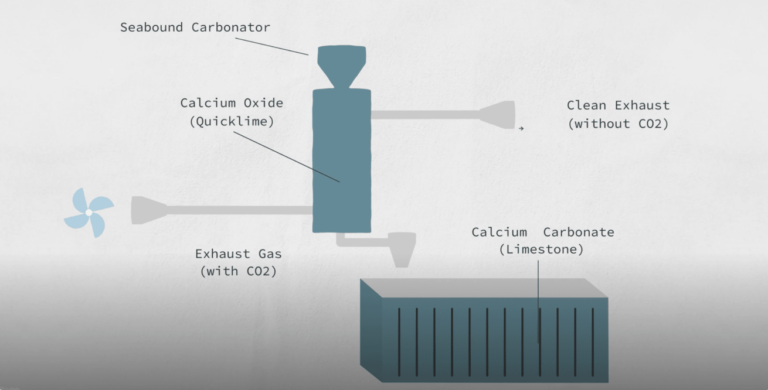
Seabound has come up with an ingenious idea, which attaches an onboard carbon capture system to large freights. The CO2 released from combustion in the engine goes through the Seabound system, which brings the exhaust gas into contact with calcium oxide. This reacts at high temperatures, and the product is solid carbon carbonate, also known as limestone, which stores 95% of the CO2. Interestingly, the limestone can then be sold as building material or once again separated into calcium oxide, to be used in the carbon capture process, and carbon dioxide, which can then be stored underground or used in industrial processes. This allows for a circular production system, which for many green tech companies is a huge benefit.
Seabound is in the process of scaling; they have secured 6 letters of intent from major ship owners to purchase the system, secured $7 million from investors such as Lowercarbon Capital, and won several grants from the UK government. Their system is simple, safe, and circular and has the possibility to be one of the most affordable solutions for net-zero shipping. This, coupled with sustainable fuels, can allow for the exciting possibility of carbon-negative ships, where the Seabound carbon capture system captures carbon from fuels derived in themselves from sequestering carbon, such as biofuels and solar fuels.
Website: https://www.seabound.co/
Challenge: TikTok and climate denialism
In March 2024, 76% of young people aged between 15 and 24 engaged with TikTok, and with this incredibly high user rate, TikTok, as a social media platform, wields a huge amount of influence. This is why reports of TikTok failing to tackle climate denialism during the COP process are concerning.
TikTok is one of the few social media platforms that explicitly forbids climate change misinformation from being posted on their platform. In November of last year, just before the COP 28 summit, TikTok proudly stated that
- “Our policies prohibit climate change misinformation that undermines well-established scientific consensus, such as content denying the existence of climate change or the factors that contribute to it.”

International NGO Global Witness reported on 20 comments, including statements such as: ‘There is no such thing as climate change,’ Climate change is a ‘hoax,’ and that climate change is not being accelerated as a result of human activity. These all go against TikTok’s community guidelines; however, only one of the 20 comments was removed. These comments were found under trending posts with millions of views, and although the posts in themselves were not denying climate change, 77% of TikTok users actively read the comment sections, and as a result, these denialist comments have the possibility of swaying opinion.
The failure of moderating comments poses a huge risk, as it risks spreading unscientific climate denialism on posts that are supposed to promote the opposite. TikTok is replacing human moderators with AI, and a quarter of the 500 human moderators in the UK were told in October that they could be at risk of layoffs. John Chaufield, the national officer for tech for the Communication Workers Union, stated in the Global Witness report that
- “”Diverting investment to known problematic ‘AI’ solutions puts TikTok’s users at risk. We want to engage with TikTok and encourage them to support and reinforce their in-house moderation teams.”
TikTok is becoming synonymous with the younger generation, and on one hand, they should be commended for being one of the few platforms that prohibits climate denialism; however, saying this is one thing, and enacting it is another. If comments that deny climate change continue to trend on posts that are trying to promote environmental awareness, scepticism towards climate change will undoubtedly grow. This is extremely worrying, as we cannot afford misinformation, which has been a growing concern in many of the political elections in recent years, to push back any of the advancements we are making as a humanity in terms of our understanding of the environment and the real issue of climate change.
Articles on the topic:
Global Witness: Global Witness: TikTok fails to take down climate denial during COP
Hope: Food and nature can co-exist!
The pressure on land is growing due to an increasing demand for food, growth in urbanisation and importantly, the increased awareness that we need to protect and restore nature. This has led many to believe that there is no way we can continue to feed our growing populations while also leaving sufficient space to sequester CO2 through nature-based solutions (NBS).
However, a recent study was published in the Frontier journal, which asserted that “with proper regulatory policies and radical changes in current policies,” there is sufficient land to provide an increased consumption of food per capita whilst also using 3.5 billion hectares of land for NBS in order to sequester 6 gigatonnes of CO2 per year. In terms of land area, this is a staggering 27% of all land on earth (agriculture currently uses 37%).
In terms of the amount of CO2 this will sequester, it is over double the amount released by the EU (2.5 gigatonnes) in a given year. The study focuses on Sky 2050, a scenario developed by the oil and gas company Shell, which is a scenario designed to achieve net zero in total anthropogenic CO2 emissions in the year 2050. Shell is one of the largest oil and gas companies in the world, which means creating climate scenarios for reducing CO2 does seem hypocritical. The study does have a longer plateau and slower decline in fossil fuels compared to other 2050 scenarios, yet there is a unique consideration of NBS as being one of the most effective tools available in achieving emission goals.
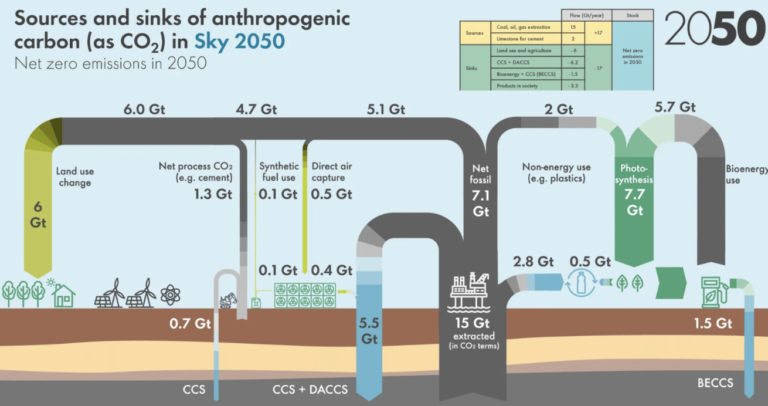
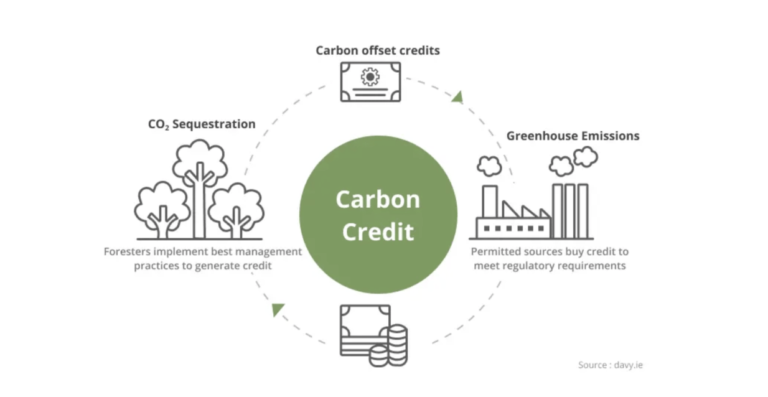
NBS achieves atmospheric CO2 reduction through the conservation, restoration and management of natural ecosystems. Examples of NBS include agroforestry, an agricultural technique that combines a number of cultivable trees and plants to mimic a native forest. This improves soil health and yields and, importantly, provides sanctuary for wildlife, as opposed to unproductive monocultures. The study shows that NBS can be deployed on a great scale—3.5 billion hectares—whilst also allowing for a 161% increase in nutrients per capita between 2020 and 2100. The deployment of NBS to achieve this equilibrium between food production and nature-based carbon sequestration will require effective policy-making on a global scale. This must be done through policies that incentivise farmers to look beyond the cheap and easy tools for land management and instead deploy resources in ways that are best for both human and environmental goals. A stringent global crediting of emissions is also needed, and following models of voluntary carbon markets, in which emitters can buy credits that fund further projects that support NBS, a global market must be introduced, which, in so far, has not been successful.
Overall the study highlights an important point, that it is possible to increase our demand for food whilst also protecting and conserving nature, which benefits us as much as it will benefit biodiversity. This will be realised as long as a strict framework for biodiversity protection exists. This vision will require a coordinated mobilisation of policy around the world, which will not be an easy task, but without a doubt a necessary task.
Articles on the topic:
Frontiers: Land-use competition in 1.5°C climate stabilization: is there enough land for all potential needs?
Anthropocene: Is there enough land on Earth to feed the world and store carbon?
MSN: Is there enough land on Earth to fight climate change and feed the world?
Image of the week
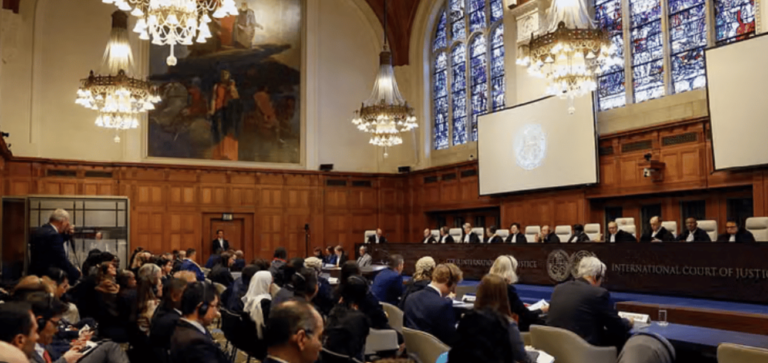
This editions picture of the week comes from the world’s top court in the Hague. It is the largest climate case in history that reflects the urgency of addressing ongoing climate destruction. Small Island nations such as Vanuatu are seeking the court’s legal opinion on two questions: What are the obligations of governments under international law to protect the planet’s climate system and environment? And what are the legal consequences for countries that have caused significant harm to the climate, environment and people?
This court, whilst recongised by the US and China, could set precedence. The outcome could be used in other legal cases where small island states are seeking financial recompense from the developed world over the loss and damage they have suffered as a result of historic emissions of planet warming gases.
The case will end on the 13th of December with the official results of the case expected to be announced in 2025.
Articles you may have missed:
1. Climate change is about money
2. Climate Change Must Be Taught in Our Schools
3. Colorado researchers are one step closer to taking the ‘forever’ out of forever chemicals
4. Cocoa crisis: Ghana’s farmers want next leader to tackle climate change
5. Earth’s lands are drying out. Nations are trying to address it in talks this week