
Verdeindex Edition 09
By Oscar Petterson Fuentes
Non-profit: Cape Farewell
Cape Farewell was founded by artist, designer and filmmaker David Buckland in 2001 to highlight the importance of art in the sustainability movement. Cape Farewell aims to change how people think about climate change using art’s unique ability to evoke emotion and create urgency.
Cape Farewell has created art, books, films, poetry and community projects with the help of over 350 creatives, who are all joined by a responsibility to use their powerful storytelling abilities to create awareness around climate change and biodiversity decline. In addition, Cape Farewell has interestingly incorporated rigorous and up-to-date scientific knowledge within their creative endeavours. Cape Farewell works with scientists such as Joe Smith, Director of the Royal Geographic Survey, climatologist and author of ‘How to Save Our Planet’ Mark Maslin and action researcher Tom Wakeford to give a scientific base to all of their projects. The binding together of the arts and science is unusual, however, in the climate change discourse is pivotal as on one hand climate change is understood through science and on the other hand art enables science to be dispersed to a wider audience through mediums that elicit the seriousness of what we are facing.
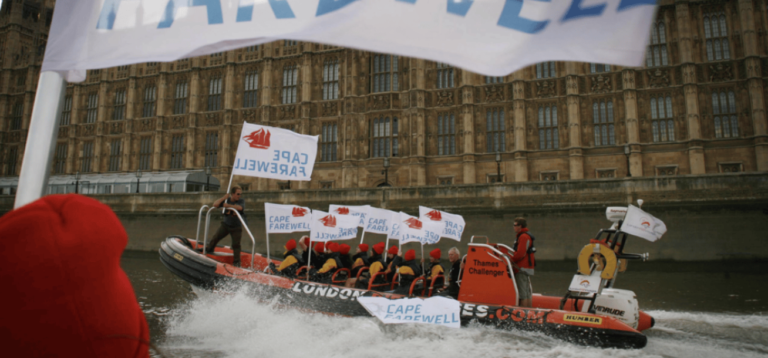
- “We’ve got scientists doing research, teachers explaining what we’re seeing, and artists gathering some extraordinary images. We’re going to take it all back… whatever we can to get the message about how climate change will affect this beautiful place.” David Buckland
In 2016 Cape Farewell published the book Burning Ice, which detailed the experiences of these artists who voyaged with Cape Farewell to the Arctic. The book also includes essays from leading scientists on various topics such as: climate change, energy efficiency and carbon trading.
The importance of writers, artists and musicians seeing and learning about the impacts of climate change can not be understated. As Cape Farewell puts it ‘climate is culture’. When it comes to shifting people’s attitudes to climate change towards more sustainable behaviour, changing the narrative is fundamental. Artists, writers, musicians etc. through creativity can create a new narrative to engage with the public on a more emotional level than what science or politics can provide.
- “Climate change is a reality. Caused by us all, it is a cultural, social and economic problem and must move beyond scientific debate. Cape Farewell is committed to the notion that artists can engage the public in this issue, through creative insight and vision.” David Buckland
Website: https://www.capefarewell.com/
Tech start-up: GAFT
The aviation industry, as I have explored in previous newsletters, is difficult to decarbonise. Making up around 3% of global CO2 emissions (in addition to the greenhouse gas water vapour), makes solving this issue paramount if we want to achieve net-zero targets and reduce global warming. Green Air Fuel Technology (GAFT), under the direction of CEO Frank Schreurs , has implemented a solution to use CO2 to produce lipids, which can then be processed into sustainable aviation fuels (SAFs).
SAFs are being seen by many as the primary way in which we can achieve a decarbonisation of the aviation industry. Batteries are currently too heavy for flying and technology to reduce the weight of batteries is still far off. Moreover when it comes to sustainable aviation fuels a significant benefit is that these fuels can be used in existing airline infrastructure, meaning that aeroplanes, with a 30+ year lifespan, being manufactured today will not need to be discarded. However, an issue that GAFT seeks to overcome is an expected shortage in feedstock by 2030, a crucial component in the making of SAFs. Currently, used cooking oil is utilised as the primary feedstock and the EU has seen 80% of this come from Asia. Therefore, having a reliable supply of feedstock, without the need for long-haul importation or the use of cooking oils, will be essential as mandates and legislation hopefully come into place, requiring SAFs by law and subsequently increasing demand for feedstock.

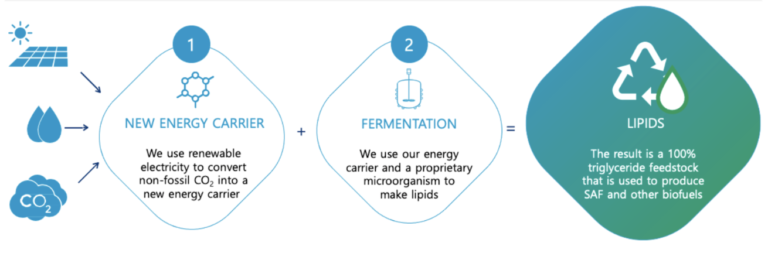
GAFT has created a solution for SAF feedstock, which incorporates biogenic CO2 (CO2 stored in plants), water and renewable electricity. The renewable electricity turns the biogenic CO2 and water into a liquid energy carrier that is safe to handle and does not require expensive pressurised or cryogenic storage systems used in other SAF processes. This liquid energy carrier is then fermented producing a high-quality liquid fat feedstock, which due to its clean production, free from metals or other contaminants, can be easily processed into SAFs.
Heathrow recently announced £86 million in SAF funding to airlines for 2025, which follows a growing trend towards airlines and companies attempting to make aviation sustainable for their own climate goals and also to prepare for future mandates requiring the use of SAFs. As a result, the feedstock shortage is a very possible outcome as SAFs begin to go mainstream and it will be down to tech start-ups such as GAFT to scale and combat this shortage to ensure the transition away from fossil fuels.
Website: https://www.flygaft.com/
Challenge: LA Fires, climate change and more
The recent LA wildfires are yet another warning of the impacts of climate change. Changing and more unpredictable weather is a primary cause behind the extreme conditions that propelled these wildfires into a historical climate disaster. On one hand, extreme rain leading to an exponential growth in vegetation, followed by extreme drought created the perfect fuel for this ravaging fire. On the other hand, the now infamous dry Santa Ana Winds, which many experts have cited as the reason behind the rapid spread of the fire, are becoming more likely in areas experiencing hotter conditions.
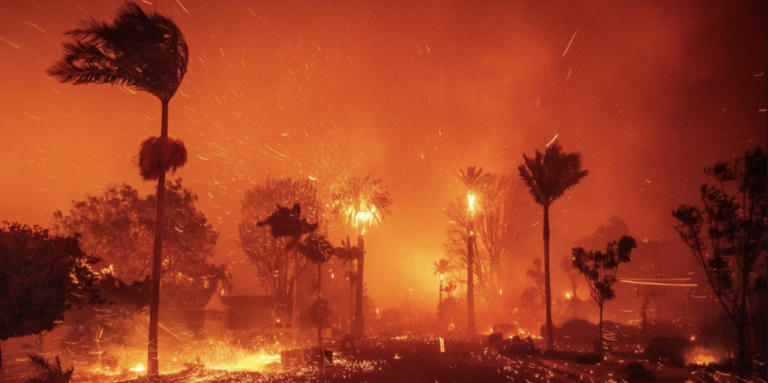
Climate change is an obvious culprit, but a few other factors, such as an increase in invasive plant species and the encroachment of human settlements near woods and nature, must also be considered when understanding why these fires were so destructive.
Invasive species of plants and vegetation out-compete native flora, growing exponentially and creating dense fuel beds for fires. The main issue is invasive grass species that cover vast areas and are highly flammable in fire-weather conditions. Unfortunately, this is an issue that requires significant intervention to fix. Around 40,000 acres of land have been burnt down in the LA fires and it isn’t the native flora that will recover first, it will be the invasive species that thrive better in extreme conditions. This makes California and LA more susceptible to wildfires, making the controlling of invasive species of vegetation critical.
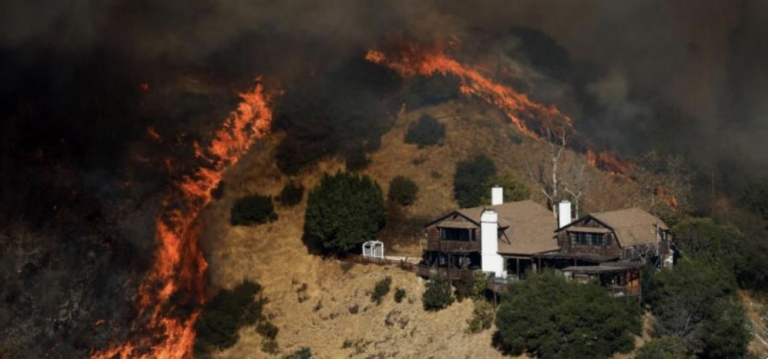
Another issue that has been cited by wildfire experts and politicians is the expansion of urban settlements into nature and woodland areas. Is it still safe for people to be living in areas that are so prone to fires? Well, insurance companies have gradually backed away from the state limiting the number of insurance premiums available to homeowners. This makes property cheaper, likely attracting lower-income households and thereby causing these fires to have a disproportionate income on the poor, who have uninsured homes and lose everything. These fires will hopefully push governments to act and ensure that commercial greed does not continue to override common sense, which should protect both homeowners and nature in the process.
Articles on the topic:
The Conversation: Why LA is on fire (it’s not just climate change)
The Guardian: What is happening in Los Angeles is our future | Francine Prose
Al Jazeera: Is climate change to blame for the California wildfires?
Hope: Our journey to climate awareness
As climate laws and regulations come into place around the world there is a growing importance in enforcing these laws and holding malpractice to account. I wrote about Earthjustice in edition #3 of the newsletter and they are one of the big non-profits, made up of lawyers, that fight climate change in the courts and ensure that companies and governments adhere to environmental laws. This hope section will outline how scientists entering the legal sphere can be a huge benefit for climate litigation.
Climate litigation refers to taking legal action regarding climate and environmental law. LSE in a recent study reported that almost 230 climate-aligned lawsuits have been filed since 2015, with more than two-thirds of them filed after 2020. Climate litigation is on the rise and it’s for the best. The 2022 IPCC report explicitly stated that climate litigation has influenced the outcome and ambition of climate governance and that:
- “outside the formal climate policy processes, climate litigation is an important arena for various actors to confront and interact over how climate change should be governed.”
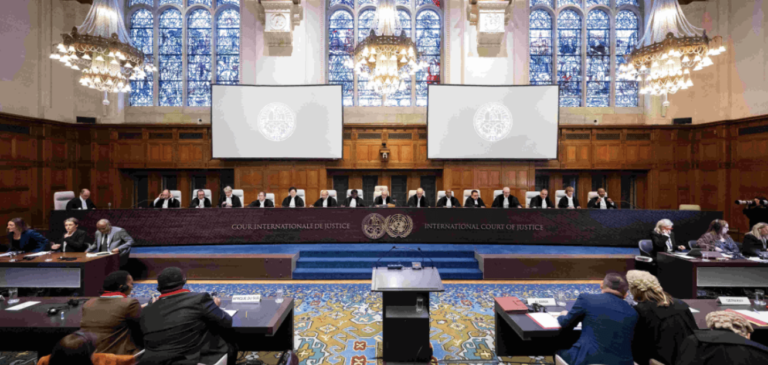
Scientists bring evidence and credibility to these high-stakes lawsuits and this has led a growing body of scientists to focus on finding the evidence and proof just like any legal process. Scientists, when writing scientific papers, already interrogate their evidence, outline criticisms and present findings in a structured and clear manner and this framework follows what is expected in legal cases. Scientific findings are also critical in establishing causal links between climate impacts, such as the relationship between health issues and emissions. If science can interlink these issues, filing lawsuits against governments and corporations will become much more straightforward.
2025 will be a year of climate litigation and the stakes are high. More than a quarter of people in the USA are now living in a state that is suing major oil companies for deceiving people about climate change. The LA wildfires will likely be followed by lawsuits, as has been seen in the wildfires in Hawaii, which argue that governments did not do enough to prepare for foreseeable climate risks. 2025 will also mark the beginning of the second Trump presidency and with an expected expansion of fossil fuels and the axing of climate regulation and funding, it becomes so much more important to ramp up our legal fight for the environment and not allow reckless governance to damage our future.
The Equation: Ask A Scientist: How Can Scientists Drive Change Through Climate Lawsuits?
LSE: Global trends in climate change litigation: 2024 snapshot
The Law Society Gazette: Climate litigation: A change in the weather
Image of the week
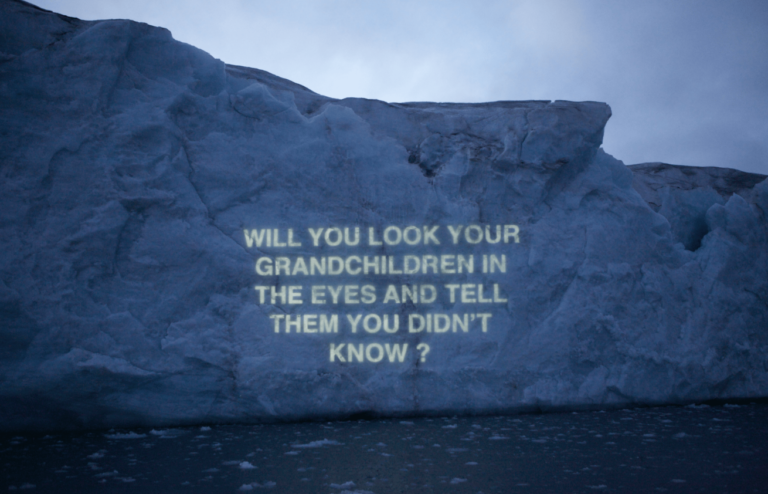
David Buckland- Ice Texts 2005 – 2009: Didn’t Know?
Today’s image of the week comes from artist David Buckland, founder of Cape Farewell. This image is part of a series of artworks called the ‘Ice Texts’, which are messages projected onto icebergs that highlight the effects of global warming and the lack of human response to this overwhelming challenge.