
Verdeindex Edition 10
By Oscar Petterson Fuentes
Non-profit: Citizen Zoo
A non-profit centred around rewilding, Citizen Zoo looks to the past to bring habitats and ecosystems back to their functional states by reintroducing species back to their former ranges and importantly empowering the local community to take action in protecting nature.
Citizen Zoo operates in London and as one of the most influential cities in the world, the work done in London can inspire other cities to implement similar measures and spread urban rewilding globally. London underneath the surface is a coastal city, something that is easily forgotten, home to over 16000 species that only need some political will and community involvement to be included in a future London, as much for the benefit of nature, as the benefit that nature gives back to its citizens.

One of the projects Citizen Zoo has participated in is the Ealing Beaver Project. The successful introduction of a beaver family to an 8-hectare beaver enclosure in the urban heart of London. This is not a new or abstract idea, beavers have been living in the hearts of cities such as Berlin, Munich and Vancouver for years, bringing significant benefits to biodiversity and the city itself. Beavers are known as ecosystem engineers, they dam streams to produce wetlands, creating habitats for countless plant and animal species. In addition to this, these wetlands are on one hand proven flood defences, regulating water flow after heavy rainfall and on the other hand, one of the most effective carbon sinks on our planet. The Ealing Beaver enclosure is also free to access and this is important as there should be no paywall to learn to live amongst nature and wild animals, especially if we want to educate people to embrace nature within an urban context.
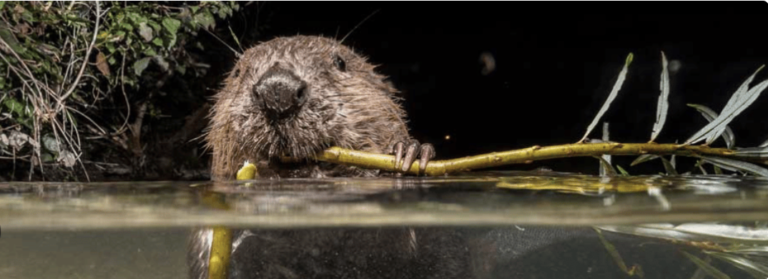
It is an injustice that so many people across the world have no access to nature, which is why it is so important that Citizen Zoo targets urban spaces. It takes one unforgettable and unique experience with nature, such as seeing a peregrine falcon hunt or a family of beavers in your local park, to catalyse a fascination with nature. Without giving people this chance to connect with nature we fail to achieve a huge component of the climate movement; the widespread understanding that humans and nature are interconnected and of our intrinsic relationship with it that propels many to protect the natural world.
Website: https://www.citizenzoo.org/
Tech start-up: Pyka
In my previous editions, I have talked extensively about the difficulty in decarbonising the aviation industry. Pyka aims to do just that by developing electric aircraft. Pyka has four co-founders: Michael Norcia, Chuma Ogunwole, Kyle Moore and Nathan White, who all had a vision of solving one of the industry’s greatest problems. Interestingly, instead of spending years attempting to develop electric passenger jets, an extremely difficult task, they focused on small aircraft, capable of spraying fertilisers on large farms, and small cargo planes. What is even more fascinating about Pyka is that their aircraft are fully autonomous.
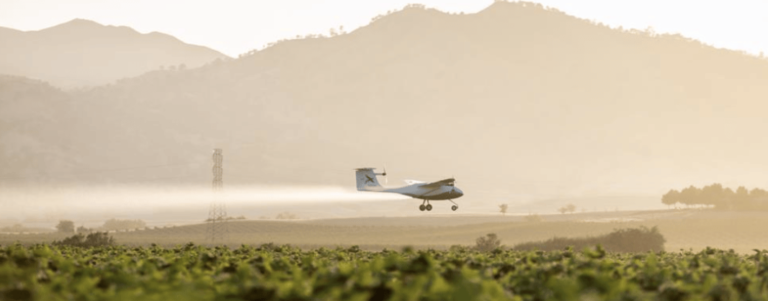
Pyka has two autonomous aircraft models, the largest ever unmanned aircraft systems to be approved by the Federal Aviation Administration (FAA). One of these is Pelican Spray, an aircraft designed for agricultural operations, such as crop dusting. The aircraft can cover 150 acres an hour and by replacing manned aerial crop protection aircraft, this solution is enticing for large commercial farms, who are looking for efficient, sustainable and safer ways to increase yields. Pyka recently signed an agreement with one of Brazil’s largest agricultural producers, SLC Agricola, for the delivery of the Pelican Spray, which SLC Agricola hopes will reduce chemical wastage and lower carbon emissions to meet their business and sustainability goals.
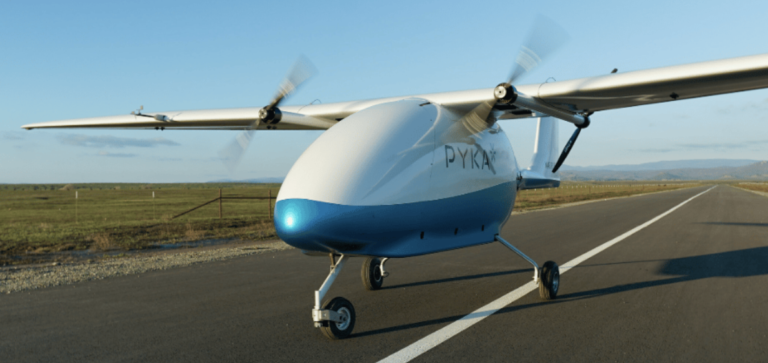
Pyka’s other autonomous aircraft is called the Pelican Cargo, the world’s first electric aircraft capable of heavy payload, long-range travel and off-airport operations. The Pelican Cargo has also interestingly received attention from the US Department of Defence (DOD) after a recent $40 million investment round to help Pyka scale up its electric autonomous cargo planes. Militaries are amongst the biggest consumers of fossil fuels and the possibility of an investment into electric planes is a great sign. The benefit of Pelican Cargo for militaries is that it is unmanned, a literal life-saver in the delivery of supplies in contested environments. What’s more, due to the electrification of the planes, less thermal heat and sound is produced making planes harder to detect. Replacing batteries or charging planes is also much easier than transporting vast amounts of fuel across war zones.
Both aircraft address safety and environmental concerns in both the agricultural and transportation sectors. The DOD’s interest in the technology is promising for Pyka as the US military’s huge budgets can propel clean tech companies towards further scaling and commercialisation. Moreover, the Pelican Spray has already received a lot of attention from large commercial farms, which can be taken as a positive for sustainability as the adoption of zero-emission, efficient systems within the intensive agriculture industry is an important step towards sustainable agriculture.
Website: https://www.flygaft.com/
Challenge: Linguistic Loss: A Silent Threat to Sustainability
Areas rich in biodiversity are home to some of the most linguistically diverse regions in the world. Unfortunately, many of these areas are at the frontline of the impacts of climate change and just as plants and animals are subsequently in decline, researchers are finding a similar correlation with language.
This language diversity can mainly be attributed to indigenous populations, who have lived on the land they inhabit for thousands of years. As a result, indigenous language has a much deeper connection with its surroundings, with a much wider vocabulary relating to describing natural systems. It is estimated that a language dies every 40 days. Linguist Kenneth Hale has described losing just one language as:
- ‘equivalent to dropping a bomb on the Louvre because of the culture and intellectual wealth contained in each of them’

Languages contain wisdom and therefore much of the indigenous wisdom on ecology that we so much need in our aim for our sustainable future is contained within language. The Indigenous American Lakota phrase ‘“Mitákuye Oyás’iŋ,” meaning both ‘all my relatives’ and ‘all is related’, referring to the human and non-human, highlights the importance of preserving the language. These languages express an interconnectedness with nature and if they disappear so does this crucial mindset, based on caring and respecting nature, that comes with it.
Biodiversity hotspots are home to 70% of the world’s languages, which sheds light on the parallels between biodiversity and linguistic diversity. Both shaped by colonialist histories, both threatened by a future of environmental neglect. As climate change impacts communities across the world, the migration of people away from their ancestral lands into cities and other countries, where they are expected to speak a different language, culminates in a tragic loss of linguistic diversity and the magnitudes of wisdom and knowledge to do with nature and humans’ bond with it. Ultimately preserving linguistic diversity is not just about saving words, but it can provide us immeasurable knowledge on how we can take care of the systems that sustain us.
Articles on the topic:
Noema Magazine: The Languages Lost To Climate Change
Inside Climate News: Climate Change is Fueling the Loss of Indigenous Languages That Could Be Crucial to Combating It
Hope: Trump’s War on Carbon Markets: Will It Prevail?
Trump has already pulled the US out of the Paris Agreement and declared a “national energy emergency” in which his solution is to “drill, baby, drill”. Whilst his neglect of sustainability and climate goals set an appalling example on the world’s stage, it must be recognised that a significant proportion of current efforts to reach sustainability is bigger than Trump.
A good example of this can be seen through the compliance carbon markets. These carbon markets are bound through regulation in response to legally binding emission reduction targets. These markets aim to establish a carbon price through a carbon tax, higher taxes on those who emit more, or cap and trade schemes, where the government sets a cap on the amount of emission within an industry and these carbon allowances are bought and sold between firms. Both these measures, when implemented effectively, incentivise innovation towards decarbonisation as emitting less would result in lower costs and therefore higher profits for firms. However, as stated carbon markets rely on government regulation and therefore carbon markets in the US seemingly face an inevitable demise.
However, in the US carbon markets are largely determined on the state level. Both California and Washington, huge economic hubs in the USA, already have their own carbon compliance schemes, with states such as Maryland, New York, Pennsylvania and Vermont considering making their own carbon markets, despite battling federal lawsuits and a decrease in interest following the election of Trump. Experts have also cited an opportunity for carbon markets on the backdrop of Trump’s promised tariffs on foreign exports. The US has the opportunity to introduce a carbon tariff similar to the EU and UK’s Carbon Border Adjustment Mechanism (CBAM). These tariffs ensure that companies importing foreign goods into the EU pay a fair price for the carbon embedded in their products. This is an avenue for Trump to discourage foreign imports and make US firms more competitive.
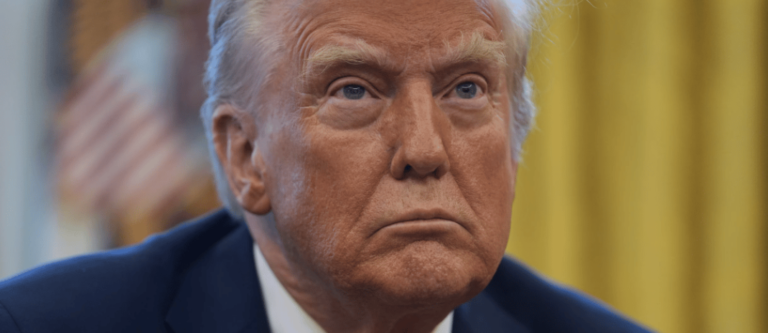
Trump clearly has no interest in the climate movement and portrays climate measures as barriers to growth and prosperity. However, one of his closest allies Elon Musk has become the richest man on earth through Tesla, a company based on the decarbonisation of the transport industry. More importantly, Tesla is a key player in the carbon compliance market and in the last quarter of 2024 earned approximately $692 million from selling regulatory carbon credits within cap and trade schemes, accounting for nearly 30% of its quarterly net income of $2.33 billion. Will Musk, a significant donor and ally of the Trump campaign, allow a misinformed political narrative to disrupt Tesla’s revenue? Hopefully not, and the question of whether carbon markets will pick up under Trump has yet to be answered, with this section outlining a hopeful outlook within a bleak US climate context.
Articles on the topic:
POLITICO: They hoped new carbon markets would offset Trump. Advocates are glum.K
Krane Shares:5 Reasons Why Trump’s Administration Could Strengthen Carbon Allowance Demand
Image of the week

The Drowned World, Peter Freeman
On a recent trip to Copenhagen, I visited the stunning Lousiana Museum of Modern Art. The exhibition was about the ‘Ocean’ and it merged science and art to teach us about the present issues we are facing. This work by Peter Freeman was particularly powerful showing a harpoon piercing JG Ballard’s novel ‘The Drowned World‘.
The artwork’s description:
‘The first edition of J.G. Ballard’s science fiction novel The Drowned World from 1962 is pierced by a harpoon inspired by tribal cultures. Ballard’s book takes us into the postapocalyptic future of the year 2145. Global Warming has created a sun storm that has melted the poles, flooding large areas of planet Earth. We follow researchers in the unbearable tropical heat investigating the fauna and flora of a lagoon that was once London. It soon emerges that it is not only nature that has been changed in the wake of environmental collapse, but also the human psyche
Articles you may have missed:
1. Six reasons Trump isn’t the end of the world for climate change
2. Environmental groups in UK ‘still very white – especially at the top’ – The Guardian
3. Can board games help environmental movements? One local group rolls the dice
4.Ancient Trees Hold Hope for Climate Change Fight
5.Amsterdam, New York, Toronto: The cities where climate change is causing a rat population overload