
Introduction:
This edition highlights Mikoko Pamoja, a pioneering non-profit restoring mangroves, and Wren, a tech start-up helping individuals take climate action. We also confront the challenge of language and power in ‘Rewriting Reality: Trump’s War on Climate Terminology.’ Yet there’s hope ahead, as COP16.2 delivers progress and a reminder that global cooperation is still possible.
Oscar Petterson Fuentes
Non-profit: Mikoko Pamoja
Mikoko Pamoja, meaning ‘mangroves together’ in Swahili, is a pioneering initiative focused on mangrove conservation and restoration in Gazi Bay, Kenya. Mangroves are seen as one of the most important ecosystems to conserve in our fight against climate change, as much for the carbon sequestration potential of these forests as for the natural storm and flood barriers that help communities adapt to climate change. Mikoko Pamoja was launched in 2010 and was interestingly the first mangrove project globally to be funded through the sale of carbon credits. They have protected over 117 hectares and reforested over 8000 mangroves annually. Excitingly, they have incorporated seagrass conservation into their projects and alongside the United Nations Environmental Programme (UNEP) and Edinburgh Napier University, they have explored the potential for introducing seagrass carbon financing to the global carbon markets.
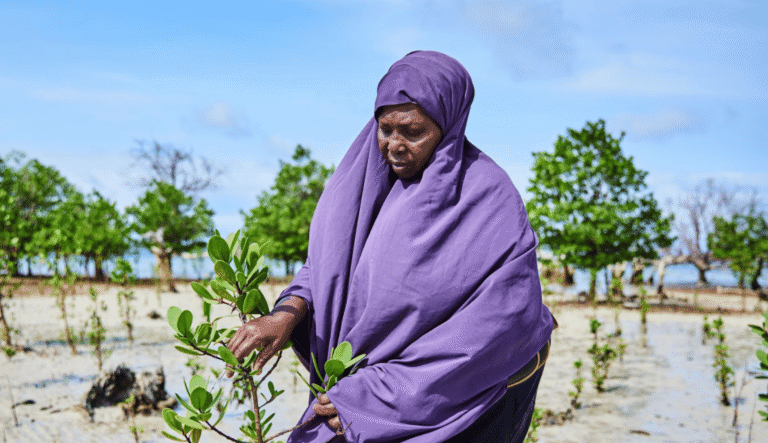
Mikoko Pamoja’s efforts go beyond just conserving mangroves as the revenue they earn from carbon credits is reinvested into the building of wells, school books and funding for local community groups, such as a children’s football club. In my newsletters I always try to emphasise the importance of including local communities into any conservation project and Mikoko Pamoja is an excellent example of this as on top of the 177 hectares of protected mangrove forests their initiatives in the local community has provided fresh water for 3500 people and over 700 school children have received educational materials. It is important to realise that conservation projects are only truly sustainable if local communities benefit from the conservation, making it important to look beyond just conserving nature.
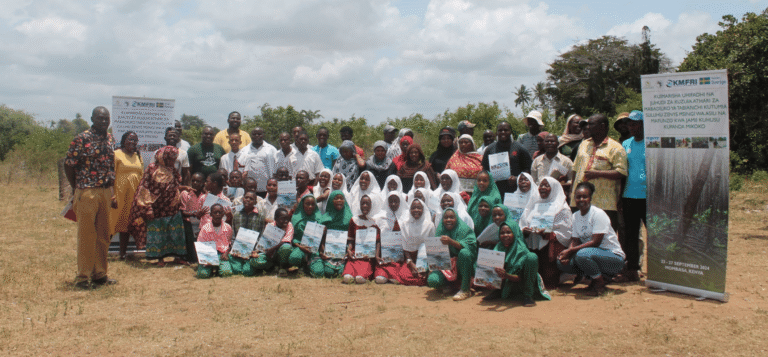
The project has received a lot of international attention with various NGOs and academic research institutions taking part in this conservation project. The project is managed by three groups: the Mikoko Pamoja Community Organization (MPCO), consisting of representatives from the local villages, the Mikoko Pamoja Steering Group (MPSG), which provides the technical support to do with conservation strategies and finally the Association for Coastal Ecosystem Services (ACES), a charity registered in Scotland, where donation and carbon credits to support the Mikoko Pamoja project can be bought from. The Mikoko Pamoja initiative is a compelling example of how we can utilise the growing carbon credit market to fund sustainable projects, that go beyond just sequestering tonnes of carbon to ensure sustainability through involving communities and sharing the benefits with them.
Website: https://mikokopamoja.org/
Tech start-up: Wren
Many people want to do something to contribute to the environment, but many people don’t exactly know how. This can lead to all sorts of problems, notably climate anxiety, which is on the rise across the globe. Wren, co-founded by Landon Brand, Mimi Tran Zambetti and Ben Stanfield, has created a platform that allows people to fund some of the most impactful initiatives and technologies to drive sustainability.
Wren allows people to calculate their carbon footprint through a short questionnaire, users then have the option to offset a % amount of this through a monthly subscription, or a one-off contribution, that funds a range of technologies and projects. Wren has two portfolios, one is the Wren trailblazer at £318.00 per ton of carbon, that solely funds permanent carbon removal technologies and the other, more common portfolio, used for the monthly subscription plans, the Wren classic portfolio at £19.88 per ton. The Wren classic portfolio ensures that members fund a range of climate solutions, specifically tree planting projects, conservation projects, technologies and leading policy groups, such as the Clean Air Task Force, that push for changes in vital areas for sustainability. With donations from users sometimes reaching over $400,000 a month, it provides a substantial revenue stream for their entire portfolio.
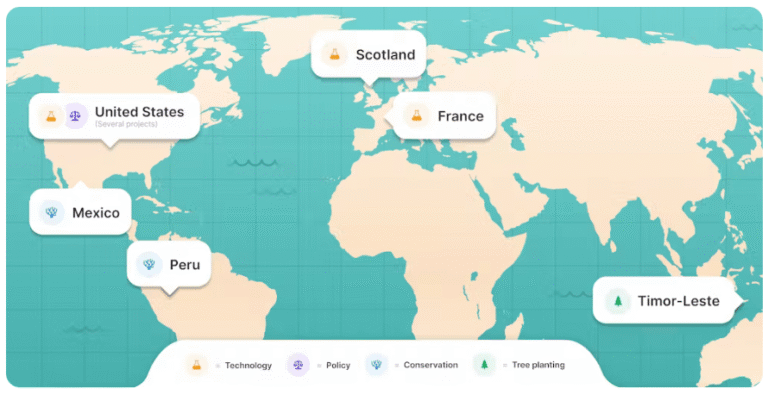
Wren chooses their projects through a meticulous process that involves ensuring a project is driving change by assessing over 90 indicators. They also ensure that these projects have a lasting impact, for example, ensuring that there is a buffer built into tree planting project designs to account for risks like wildfire or logging. Wren also insists on only funding projects that depend on funding to succeed, if they are profitable without it they do not qualify. Finally, as highlighted in the Mikoko Pamoja conservation project, Wren ensures that their projects support systems change by contributing to social, cultural and political change.
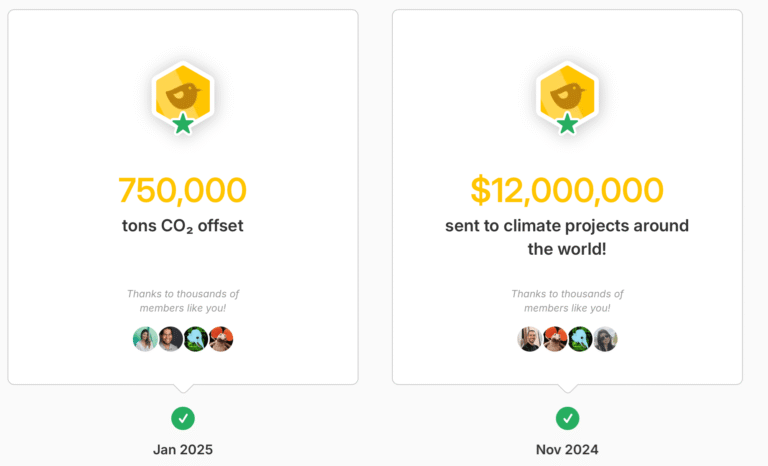
There is a gamification of the platform through the sleek platform design coupled with leaderboards and project updates that makes Wren highly accessible and therefore a platform that people are willing to donate to. In addition, Wren has expanded to accommodate offsets for businesses and this can drive even further funding and expansion globally.
Website: https://www.wren.co/
Challenge: Rewriting Reality - Trump’s War on Climate Terminology
Trump has featured in the challenge section in various Verdeindex newsletters, however, this edition’s feature may be the most worrying. Over the past month, the Trump administration has gone out of its way to attack, undermine and politicise climate science. He has withdrawn support for research that contains the words climate change, he has purged any mention of climate change on federal websites and enacted harmful policy through Lee Zelding, administrator for the Environmental Protection Agency, who has recommended that the agency reverse its 2009 finding that GHG emissions endanger human health and welfare, which would eliminate the legal basis the government’s climate laws, such as limits on pollution.
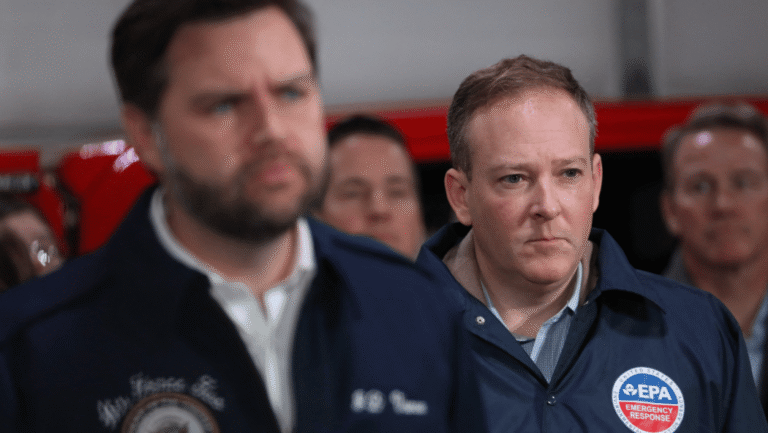
All of this is happening as we are experiencing the hottest temperatures ever-recorded and more frequent and extreme wildfires and weather events across the globe. Trump is condemning science in plain view. By removing the word climate change from federal agencies he’s preventing the public from accessing scientifically accurate information on climate change and by freezing grants to any research that mentions climate change he has managed to upend scientific work across federal agencies, hospitals and universities, placing the future of hundreds of millions of dollars of research into question. Scientists losing funding for research weakens the ability for the US to come up with climate solutions, eroding the US’s capacity to lead in climate technology and knowledge. Jennifer Jones, director of the centre for science and democracy at the Union of Concerned Scientists, states
- “This administration doesn’t have a plan to advance science, they have a plan to remove obstacles for the oil and gas industry…This administration wants scientists to feel threatened. We’ve seen this before but Trump is doing it at an unprecedented scale now.”

The impact on the US is huge and the implications globally are also pronounced as losing the US from climate research and negotiations is an obvious setback. Projects, such as the Internet Archive’s Wayback Machine, that aims to preserve web pages after they are removed, aims to preserve democracy and save government resources from vanishing entirely. Moreover, on the international stage, not being able to rely on the US can allow diplomatic capacity building elsewhere. Americans have a battle on their hands to avoid their country from completely falling out of the sustainability discourse, but at the same time the rest of the world must step up their efforts on climate change if we want any chance of mitigating the worst effects of climate change.
Articles on the topic:
The Guardian: Outcry as Trump withdraws support for research that mentions ‘climate’
The Conversation:Trump’s war on climate science is
Hope: COP16.2 Delivers
COP 16 took place in Cali Colombia last year, with some important outcomes such as the creation of a new fund for the sharing of benefits from the use of genetic data, the creation of a dedicated subsidiary body for Indigenous peoples and local communities and a new process to identify ecologically and biologically significant marine areas. One important issue remained unanswered, financing for biodiversity, and talks were resumed in Rome.
COP talks are about the slightest details and the big breakthrough came when all the parties agreed to set up a “permanent arrangement for the financial mechanism” under the COP by 2030. The word ‘permanent’ ensures that this financial mechanism, whatever form it takes, is future-proofed beyond 2030. In addition, a roadmap to decide what financial mechanism would be instituted, was agreed upon. By next year at COP 17 in Armenia, countries will have to decide on a criteria for the mechanism and by COP 18 they will decide where this will be in the form of a new fund and if so make it operational by COP 19 in 2030. This is a huge win for developing nations, who are now assured that a permanent financing mechanism will be agreed upon over the coming COPs.
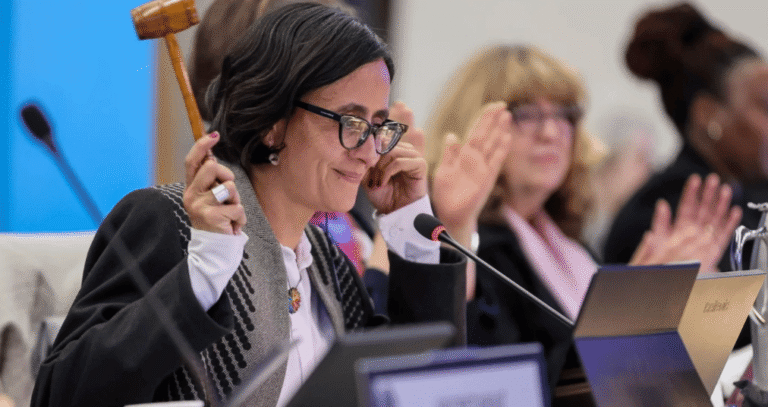
COP 16 in Rome also agreed on the first ever framework to monitor a country’s own progress towards the Global Biodiversity Framework, 23 biodiversity targets for 2030 and 4 goals for 2050, agreed upon in COP 15. This will push transparency and despite no follow-up measures after this reporting stage, provides an important base to build through diplomatic discourse. However, a common critique of these COP events is that these COP processes prolong a lot of important matters, such as financing, that require urgent attention, and despite some important developments at COP 16, critics such as Bolivian negotiator Juan Carlos Alurralde Tejada state that:
- “Biodiversity cannot wait for a bureaucratic process that lasts forever, while the environmental crisis continues to get worse…Forests are burning, rivers are in agony and animals are disappearing.”
There will be a financing mechanism beyond 2030 and countries have agreed to transparent reporting and monitoring of their biodiversity commitments; two significant agreements that will be built upon at next year’s biodiversity COP in Armenia. Diplomacy is crucial and although urgency is paramount, seeing an agreement like this on the world stage is hopeful, especially as many countries are becoming increasingly polarised and self-interested.
Articles on the topic:
Carbon Brief:COP16: Key outcomes agreed at the resumed UN biodiversity conference in Rome
The Guardian:Cop16 nature summit agrees deal at 11th hour but critics say it is not enough
New York Times:EU welcomes positive outcome of COP16 biodiversity negotiations in Rome
Image of the week:

Banksy’s Crude Oil (Vettriano) This edition’s image of the week is a painting by Banksy who has co-opted a famous painting by Jack Vettriano ‘The Singing Butler’ to highlight an important message on selective attention. The artwork is set to go on auction at Sotheby’s on the 4th of March for a guide price between £3-5 million.
Artwork description:
‘By using Vettriano’s romanticized imagery with scenes of ecological catastrophe, Banksy compels the viewer to confront the tension between privilege and environmental neglect. The presence of figures in protective gear signals an impending crisis—one that the dancers remain oblivious to.
Banksy consistently uses his art to expose society’s selective attention, particularly regarding environmental and political issues. Crude Oil (Vettriano) serves as an important reminder for how disaster is often dismissed by those untouched by its consequences. The carefree dancers embody an elite, detached from the realities of industrial pollution, corporate exploitation, and climate decay.
The hazmat figures, struggling to contain the spill, stand in stark contrast to the unbothered couple. Their efforts are undermined by the scene itself and highlight a stern truth that while some fight to preserve the environment, others carry on as if nothing is wrong.
By altering an image widely associated with decorative art and mass reproduction, Banksy forces his audience to reconsider not just this work, but the broader tendency to overlook urgent global crises.’
Articles you may have missed:
1. Kew Gardens to open garden focusing on climate change – BBC
2. DeepSeek’s AI disruption: Implications for global climate policy | Opinion | Eco-Business
3. BP Strategy Reset: Time for government to step in on climate – Greenpeace UK
4. The Great Green Wall : Taking Root – Africa Outlook Magazine
5. A sign of hope? Sustainable travel helps restore Nepal’s forests
Thank you for reading!
To sign up to the newsletter, go to www.verdeindex.com
Or follow Verdeindex on LinkedIn at: https://www.linkedin.com/company/verdeindex/