
Introduction:
This edition brings together four powerful stories at the intersection of sustainability, innovation, and resilience. From Barefoot College’s transformative work empowering rural women through solar energy to Twelve’s pioneering efforts in turning carbon emissions into valuable products, we see how both community-led initiatives and cutting-edge technology are driving meaningful change. We also examine the growing threat of algal blooms and their impact on ecosystems and food security, a stark reminder of the environmental pressures we face. Yet amid the challenges, the recent UN Ocean Conference offered glimmers of hope, with renewed commitments to marine protection and action against destructive practices like bottom trawling.
Oscar Petterson Fuentes
Non-profit: Barefoot College
Barefoot College is a transformative non-profit that aims to cultivate global equity through education and empowerment. Operating in over 90 countries across the world, Sowmya Kidamb and her team foster resilience and self-management in rural communities through vocational training, which is specifically aimed at empowering women and girls to be catalysts for change.
Barefoot College is best known for their ‘solar education’, which is an initiative that trains rural semi-illiterate women – affectionately known as ‘solar mamas’- on the benefits and how to assemble, install and maintain solar equipment. They return to their communities as solar engineers and key actors who socially and economically uplift their entire communities. These women can go on to earn a living through maintaining solar systems, training other women or even selling solar products such as torches and lanterns, enabling upward social mobility and fostering equity in marginalised communities. The introduction of solar energy in rural communities reduces dependency on kerosene, cutting both environmental pollution and health risks.
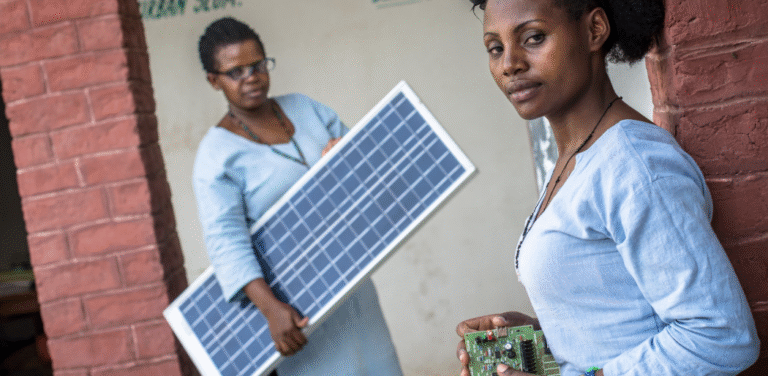
Barefoot College’s impact goes far beyond clean energy; they also provide an enrichment training that is designed to teach women about their rights, their bodies, digital literacy and business saving skills to ensure that women who are involved in their programmes leave with a sense of confidence to shape their futures. In addition, the college even provides solar-powered nighttime teaching in rural communities for girls who have to work during the day, which importantly ensures that young girls benefit from education, despite their social expectations.

At its core, Barefoot College proves that investing in women is one of the most effective ways to drive both social equity and environmental resilience. It’s a powerful model of grassroots sustainability that deserves a global spotlight.
Website: https://www.barefootcollege.org/
Tech start-up: Twelve
This week’s tech start-up is a carbon transformation company called Twelve. Co-founded by CEO Nicholas Flanders, they use electrochemistry to transform CO2 from a climate liability into a valuable resource. At the heart of their operations, Twelve has developed an industrial-scale electrochemical production technology, the Opus™ System. This technology essentially works like photosynthesis, using renewable energy to break apart CO2 and water, and then using a proprietary catalyst to recombine the elements into high-value chemicals that would otherwise be made from fossil fuels.
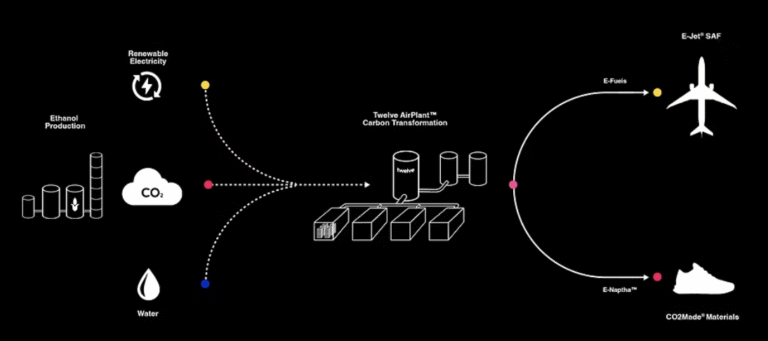
One of Twelve’s biggest breakthroughs has been in the production of electrofuels (e-fuels) that serve as a direct substitute for petroleum-based fuels. These drop-in fuels can be used within existing engines across aviation, shipping, road freight, and heavy machinery, while reducing emissions by up to 90% and significantly reducing harmful pollutants such as sulfur oxides, nitrogen oxides, and particulate matter.
Beyond fuels, Twelve has launched CO2Made®, which refers to a portfolio of consumer products made from CO2 and water. Brands such as Mercedes-Benz and Patagonia, which face increasing pressure from consumer demands for sustainable products, have partnered with Twelve to use their molecularly identical, zero-emission materials. These materials include ethylene and polypropylene, key materials in conventional consumer products, with no trade-off in quality or performance.

Twelve has raised over $900 million from various sources, including Microsoft’s Climate Innovation Fund and Amazon’s Climate Pledge Fund, placing them in an exceptional position to scale. As demand grows for sustainable aviation fuel (SAF) and low-carbon materials, Twelve stands out as a pioneering force in the carbon tech space, turning yesterday’s emissions into tomorrow’s infrastructure.
Website: https://www.twelve.co/
Challenge: Green Waters, Red Flags: Algal Blooms Threat to our Food System
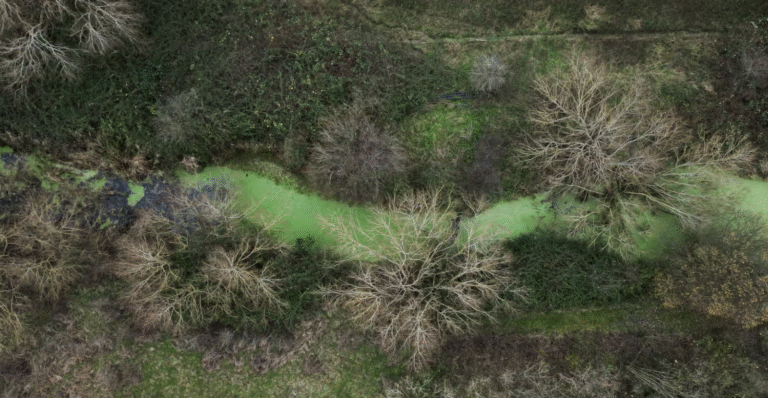
Lakes and seas turning a vibrant, almost glowing green might look stunning, but beneath this beauty lies a growing ecological crisis.
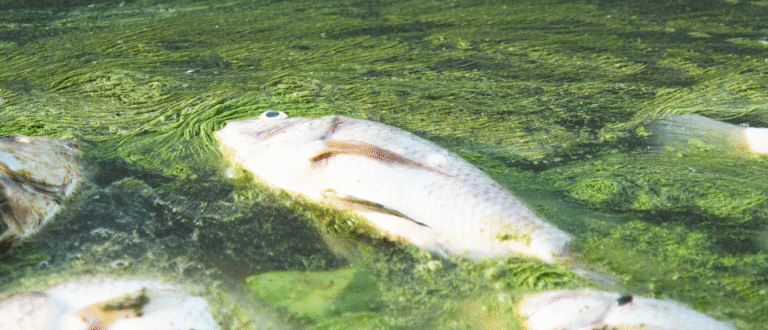
Algal blooms refer to the rapid increase in algae in our waterways. Algae in itself is not bad, and some blooms even sustain fisheries. However, increasingly these algal blooms have either become so thick that sunlight cannot penetrate the surface or certain types of algae, such as Cyanobacteria (blue-green algae), can release harmful toxins. Worse still, when these algae die, bacteria decompose the dead algae and consume large amounts of oxygen, leading to dangerously low oxygen levels in the water or “dead zones”, where most species cannot survive.
So, what is causing this rapid growth in Algae?
On one hand, climate change is an obvious candidate. Rising water temperatures favour algae growth, especially harmful cyanobacteria. At the same time, climate change is driving increased rainfall, particularly in agricultural regions. Here is where an interesting connection lies. The agricultural industry relies on phosphates and nitrogen as fertilisers, which supercharge Algal growth when they enter waterways.
This raises a difficult question. Is there a trade-off between food security and protecting our environment?
At first, it may seem as if there is, but if we disregard the environmental cost and continue to allow fertilisers to enter our waterways, marine ecosystems will die and put food security itself at risk. This is because marine ecosystems are a vital source of animal protein for 40% of the world’s population, who rely on fish and other seafood. We are already seeing the impacts of algal blooms on our fisheries. In northern Norway, repeated Algal blooms have killed millions of farmed Salmon, with a 2019 algal bloom killing more than seven million.
Ultimately, algal blooms represent not only an environmental challenge but also a significant challenge to global food security. We simply have to regulate the agricultural industry’s fertiliser usage, as although they enable terrestrial food systems to produce high yields, they are simultaneously perpetuating the failure of our aquatic food systems.
The Guardian: Dead elephants and feral sea lions: how poisonous algal blooms harm the planet
Oceanographic Magazine: US algal bloom death toll raises “serious concern for ocean health”
Global Seafood Alliance: U.K. initiative to combat rising threat of harmful algal blooms to aquaculture
Hope: Turning the Tide: How a New Wave of Ocean Protection Is Gaining Momentum
David Attenborough’s latest documentary ‘Ocean’, demands attention and provokes an awareness of the importance of our oceans. Only 5% of our oceans have been explored, yet they make up 71% of the Earth’s surface. It is this unknown that creates a disconnect between humans and our seas that ultimately serves to blind us to the exploitation and damage that the fishing industry is driving on an industrial scale.
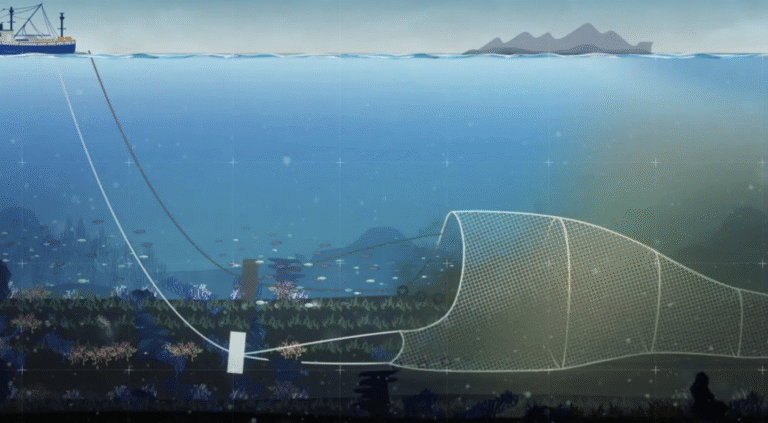
A key focal point of the documentary was bottom trawling, and startling first-of-a-kind footage shows the devastating impacts bottom trawling has on the sea floor; once abundant and full of life, now reduced to sediment and debris. Even more concerning is that the majority of marine protected areas (MPAs), which sound like sanctuaries, continue to allow bottom trawling, undermining their very purpose.
But there are signs of hope. At the UN Ocean Conference last week, the progress made was hailed as “a record”, with President Macron stating that “never before have so many heads of state and governments met to discuss the seas”. The biggest win? The long-awaited High Seas Treaty has been ratified by enough countries to move towards implementation. This treaty, which seeks to create a first-of-a-kind legal framework to establish marine protected areas (marine national parks) in the open ocean, will play a significant role in achieving our target of protecting 30% of the ocean.
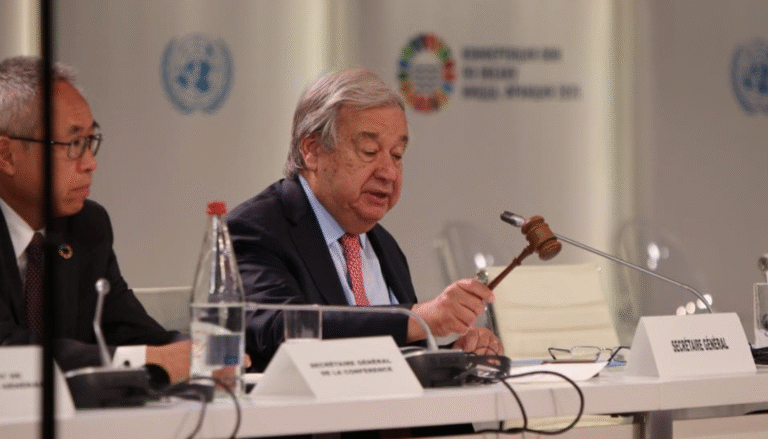
However, caution must be exercised; the treaty does not explicitly ban bottom trawling, and this issue must be solved to avoid these MPAs from becoming ‘paper parks’- protected in name only.
Encouraging progress on this issue has been made, with the UK announcing last week that they would seek to ban bottom trawling in nearly a third of English MPAs, enough to allow for critical ecosystem habitats to regenerate. Even more impressively, French Polynesia announced the largest ever MPA, of which 900,000 sq km, an area 4 times the size of the UK, will be a fully protected ocean, banning both extractive fishing (bottom trawling) and seabed mining.
This commitment now brings the share of protected ocean to around 10% – an important milestone in preparation for the important COP 30 in Brazil this November. With growing political will and public pressure, we may finally be seeing the tide turn for our oceans.
UN Ocean Conference: UN ocean summit in Nice closes with wave of commitments
BBC: UN Ocean conference gives ‘glimmer of hope’ for marine life
The Guardian: Is the ocean ‘having a moment’? This was the UN summit where the world woke up to the decline of the seas
Image of the week:
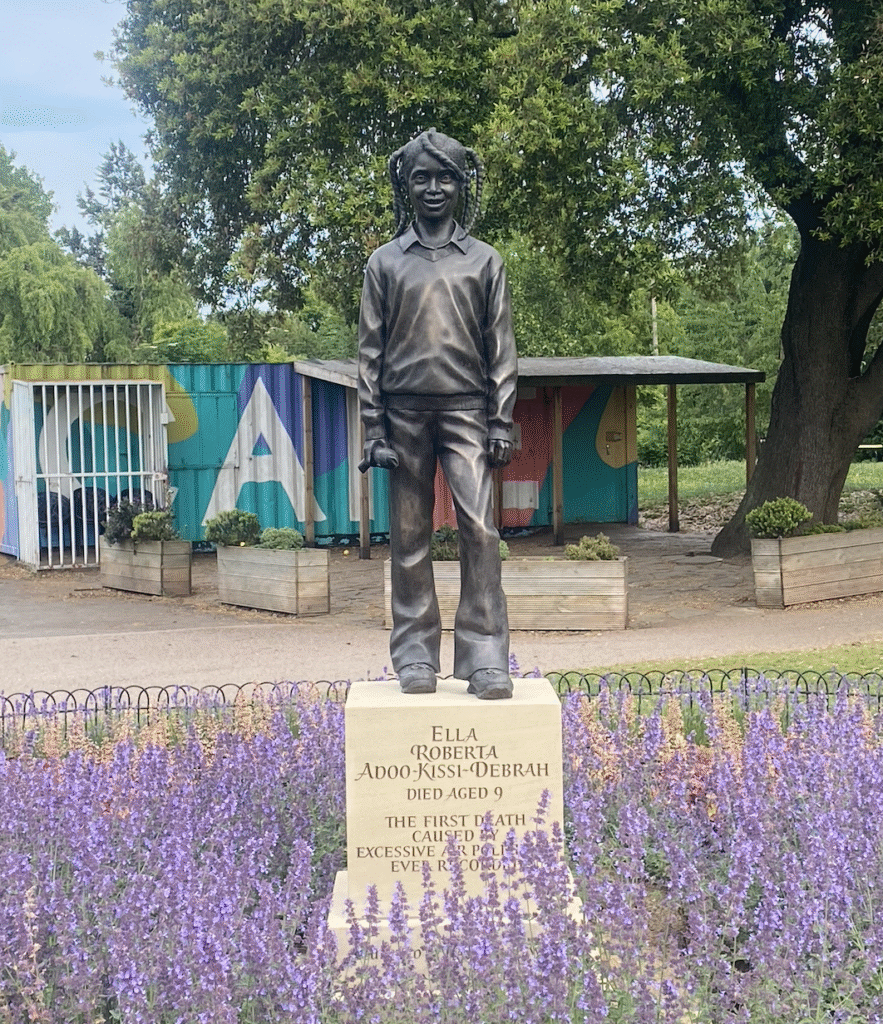
This week’s image of the week comes from my local park in South-East London. This statue was erected in April of this year and commemorates a young girl called Ella Roberta Abdo-Kissi-Debrah, who became the first person in the world whose death was officially attributed to air pollution.
Ella grew up near the traffic-heavy South Circular Road in South London and subsequently developed asthma at the age of six. Over the next two years, repeated seizures meant she was admitted to the hospital a total of 27 times, and sadly passed away in 2013 following an Asthma attack, aged 9. In 2020, a coroner ruled that air pollution had made a “material contribution” to Ella’s death.
The statue serves as a reminder of the invisible threat air pollution poses in our city, which is not only an environmental issue but also a matter of social justice.
“Ella would be 21 now, and if it wasn’t for the illegal levels of air pollution near our home, she would be alive today…The statue will be a constant reminder of not just her, her spirit and her warmth, but of the need for us all to continue to talk about air pollution and raise awareness about the damage it is doing to people’s health. We cannot see the toxic air we are breathing in every day, but hopefully this statue will remind us to stop and think, and for decision makers and politicians to do what is right and clean up the air we breathe.” Rosamund Adoo-Kissi-Debrah, Ella’s mum
Articles you may have missed:
1. A useful enemy? Why Tories and Reform are calling net zero policy into question – The Guardian
2. People were wrecking the climate 140 years ago — we just lacked the tech to spot it – Nature
3. Space-laser AI maps forest carbon in minutes—a game-changer for climate science
4. The Hidden Cost of the Internet: Why the Web’s Environmental Impact Matters Now More Than Ever
5. Community-led conservation offers new hope for the world’s most trafficked mammal
Thank you for reading!
To sign up to the newsletter, go to www.verdeindex.com
Or follow Verdeindex on LinkedIn at: https://www.linkedin.com/company/verdeindex/